











Description
Between 1156 and 1178, the town of Montfoort in the Bishopric of Utrecht was founded as a strategic stronghold to defend against the expansion of the powerful Counts of Holland. At that time, Bishop Godfrey of Rhenen appointed one of his trusted ministeriales as castellan of Montfoort, placing him in charge of both the fortress and the surrounding territory. This position was of great importance, as Montfoort lay in a contested border region where political and military tensions were frequent. Over the course of four generations, this family governed the castle and its lands, establishing a stable local rule. Eventually, through the marriage of the last castellan’s daughter, control of Montfoort passed to the Flemish noble family De Rover. The new rulers adopted the name Van Montfoort and held the title of burgraves, exercising considerable regional authority and influence.
In 1329, the settlement surrounding the castle was granted official city rights, marking Montfoort’s rise as a recognized urban center with economic and administrative significance. Despite this progress, conflicts with the territorial ruler—the Bishop of Utrecht—remained a constant challenge. These tensions escalated dramatically in 1387, when Montfoort was besieged and captured by the bishop’s forces, highlighting the ongoing struggle for control in the region. During the 15th century, the Van Montfoort family became actively involved in the Hook and Cod Wars, a series of civil conflicts in the County of Holland. They sided with the Hook faction and supported the influential Countess Jacqueline of Holland, further demonstrating their political engagement and ambitions. However, in 1481, the family suffered significant losses, including the forfeiture of important lordships such as Purmerend-Purmerland and Polsbroek to the Lords of Bergen from the House of Glymes.
After a long line of ten ruling burgraves, Montfoort eventually passed by inheritance in 1545 to the noble House of Merode, one of the oldest and most respected noble families in the Low Countries. Under their rule, the legacy of Montfoort continued, although its political importance gradually declined. The line of De Merode-Van Montfoort came to an end in 1675 with the death of Maximilian de Merode, who was killed when French troops stormed Montfoort Castle during the turbulent conflicts of the time. Following this event, Montfoort came under the direct control of Utrecht, marking the end of its era as a semi-independent noble lordship.
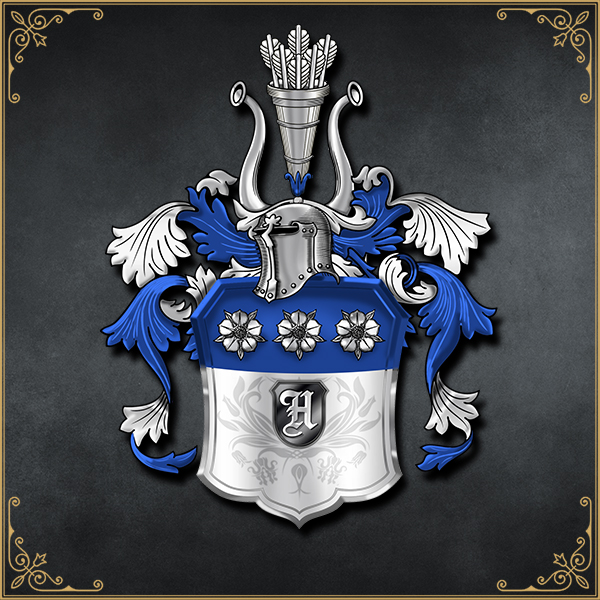
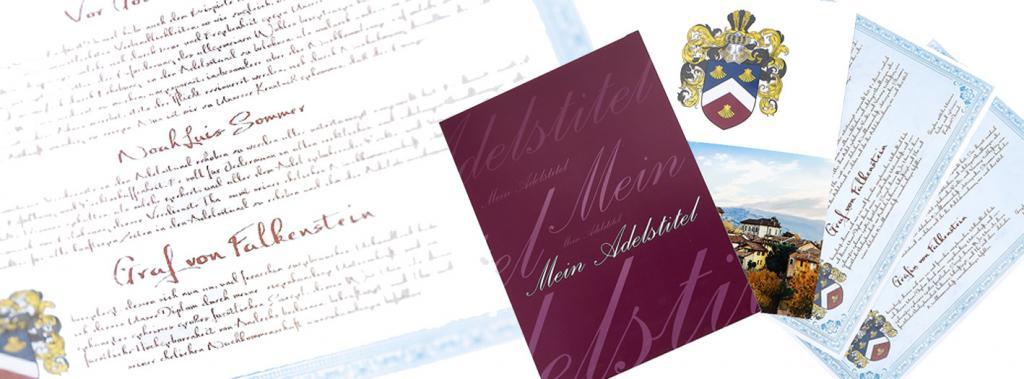
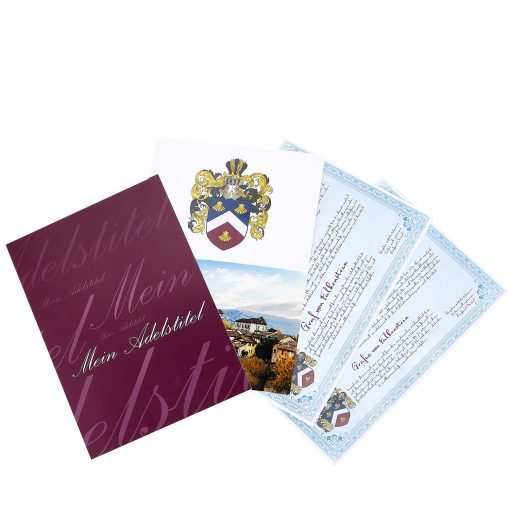
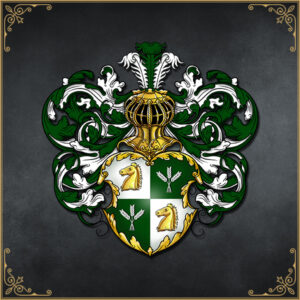
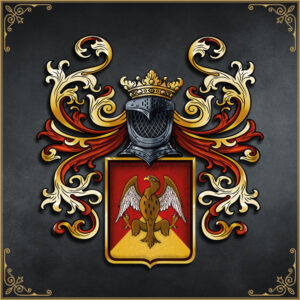
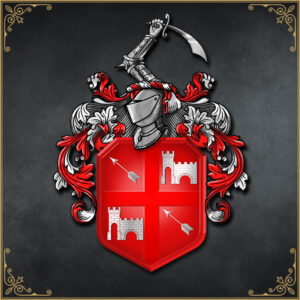
With your title, you will receive complete documentation for the entire family, reflecting both tradition and exclusivity. The accompanying coat of arms is provided as a high-quality PDF and is also available as a vector graphic upon request, allowing for flexible use in print or digital form. We are happy to customize the coat of arms according to your personal preferences, including colors, symbols, and stylistic elements, creating a unique heraldic identity tailored to you. All certificates are delivered together in an elegant presentation folder, complemented by detailed information on the correct use and presentation of your title.
The traditional forms of address include Illustrious or Most Honorable, reflecting the dignity associated with the rank. The male title is Count, the female title Countess or Comtesse, while sons bear the title Hereditary Count and daughters Hereditary Countess or Comtesse, preserving the noble designation across generations and emphasizing the continuity of aristocratic tradition.
Reviews
There are no reviews yet.