

Description
Information about the family history and the coat of arms
Family history
▼
Family history of the Daimyo of Kamakura
Daimyō of Kamakura
The history of the ruling families of Kamakura begins with the Minamoto clan, whose connection to the coastal town dates back to the 11th century. Minamoto no Yoritomo made the decisive break: After many years in exile, he gathered his followers in 1180 and turned the mountain- and sea-surrounded Kamakura into his headquarters. With determination, political skill, and a loyal circle of samurai, he established Japan’s first permanent warrior government here. In 1185, he appointed administrators and guards in the provinces; in 1192, he was made a Shogun.
The cityscape also bore the hallmarks of his family. The wide Wakamiya-Ōji led to the shrine of Tsurugaoka Hachimangū, while residences, temples, and administrative buildings in Kamakura made it a brilliant political center. Following Yoritomo were his sons Yoriie and Sanetomo. Together, these three generations represent the powerful beginning of a new era in which the samurai permanently shaped the political life of Japan.
After that, the Hōjō family, closely connected to the Minamoto, came to the fore. Yoritomo's wife Hōjō Masako and her father Tokimasa led the transition; as regents, the Hōjō henceforth directed the government. Hōjō Yasutoki created a pioneering legal work for the samurai in 1232 and promoted ports and transportation routes. Under Hōjō Tokimune, Japan emerged in the 13th century against two Mongol invasions. At the same time, trade, Zen Buddhism, architecture, and sculpture flourished.
1333 marked the end of the political chapter of the Kamakura government. However, its legacy remained alive: the samurai culture shaped by the Minamoto and Hōjō, their temples, and their ideas about governance and duty still influenced Japan for many centuries. Kamakura still preserves this impressive history of family and rule.
Sources: City of Kamakura (city.kamakura.kanagawa.jp), National Library of Japan (ndl.go.jp), National Museum of Japanese History (rekihaku.ac.jp)
Coat of arms & Heraldry
▼
Family coat of arms of Daimyo of Kamakura
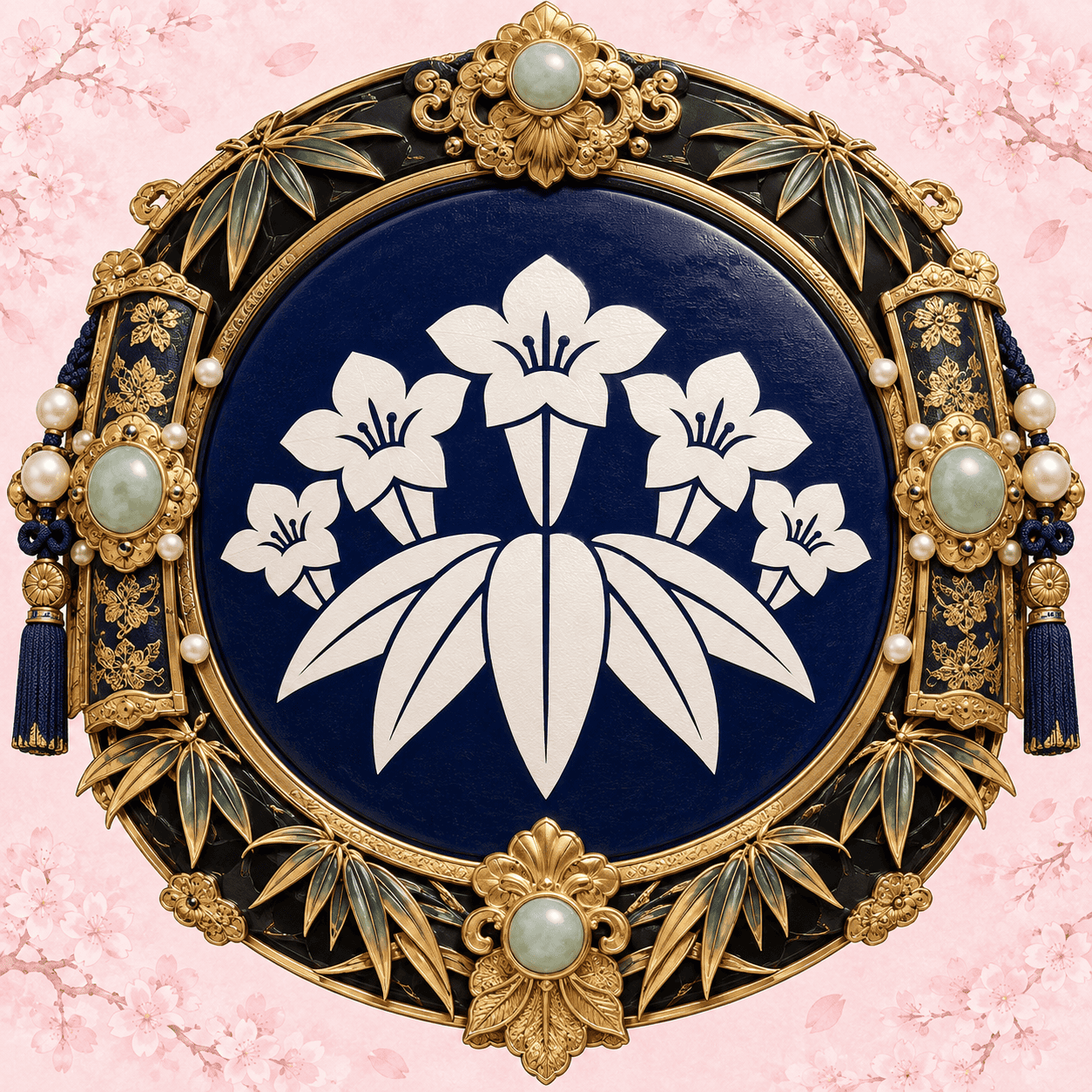
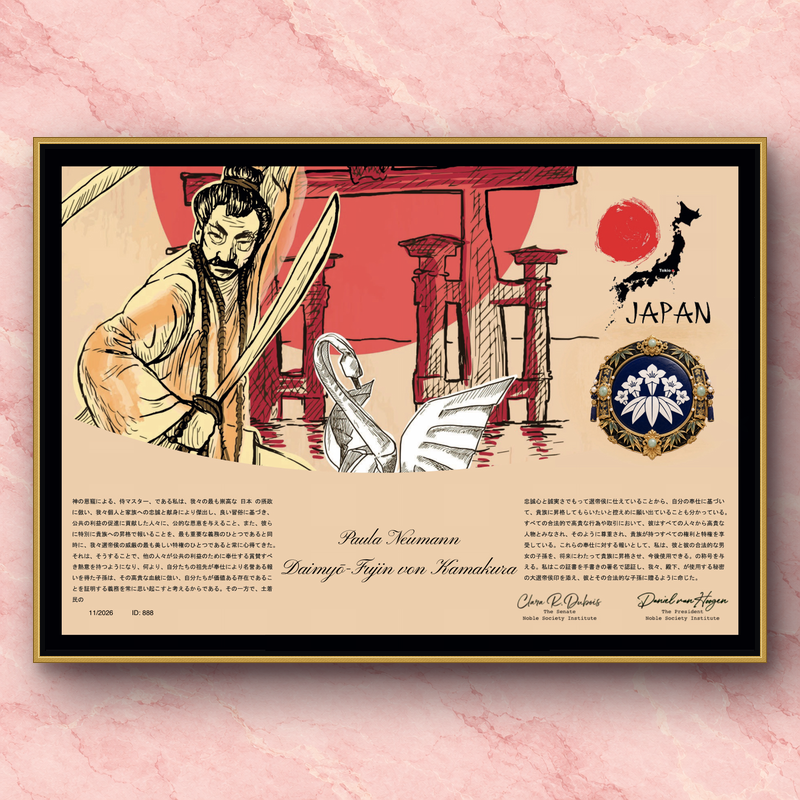
The Sasa-rindō mon of the Minamoto as a historically appropriate designation for the Kamakura Shogunate.
On a round indigo-blue lacquer plate, a white, circularly arranged Sasa-rindō adorned with stylized lilies of the valley over bamboo leaves; above it is a black Kabuto adorned with a golden Kuwagata, accompanied by indigo-blue strings and bamboo and wave ornaments.
Minamoto no Yoritomo founded the Kamakura Shogunate. The Sasa-rindō is associated with the Minamoto tradition and the Kamakura Shogunate; a European Wappensystem did not exist.
Sources: Kamakura City, Tokyo National Museum, Sano Art Museum
Overview of your title package
What the title of nobility contains
Discover the fascination of historical noble titles. With each appointment, you receive a first-class package that perfectly combines tradition, personal recognition, and stylish representation:
Your certificate
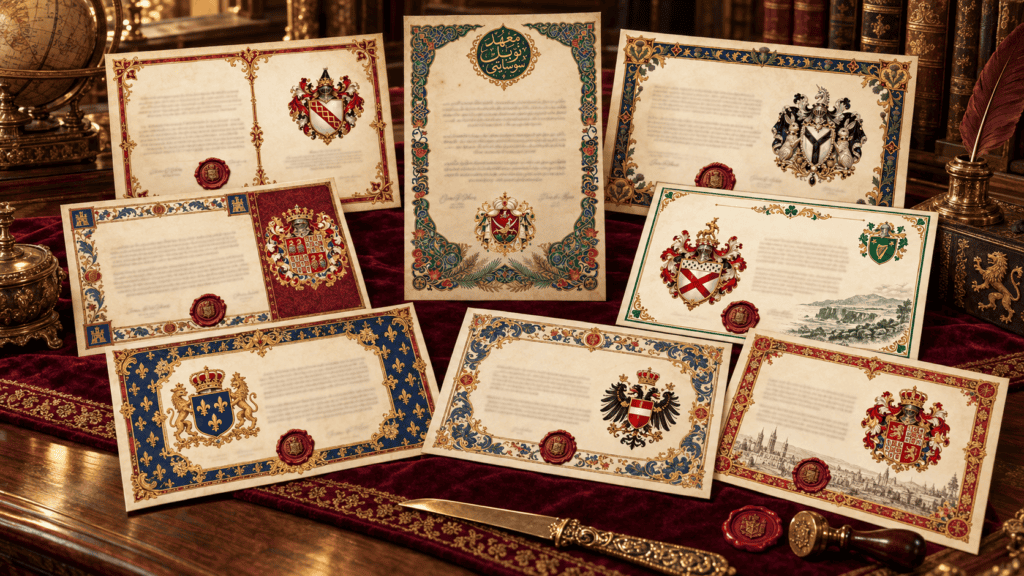
Authentic design with a historic flair: For each region, we create a certificate of appointment in the distinctive, country-specific style – complete with the appropriate coat of arms of your chosen title.
Share this special moment: Upon request, you will receive a free partner certificate and certificates for your children, so that the whole family can participate in the tradition.
Your own coat of arms
Each title comes with the corresponding historical coat of arms, which you receive as a high-resolution file. You can use it completely freely in private and professional contexts – whether on letterhead, business cards, or seals.

The Companion Book
The book „My Title“ takes you in detail into the multifaceted world of your new aristocratic title and offers valuable practical tips for everyday life, stylish guidance, and background information on history.

Our accessories
Golden ID Card
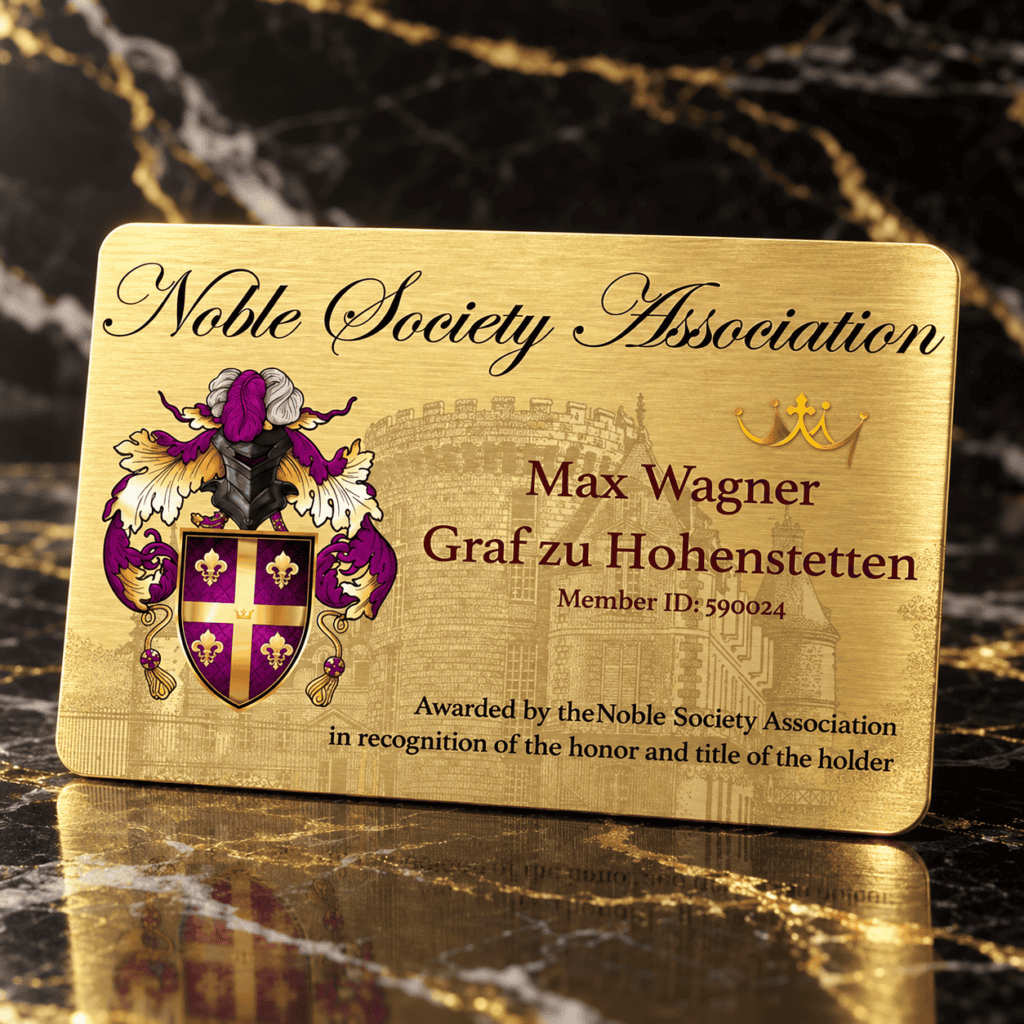
Crafted from premium aluminum in business card format, the gold ID Card makes your title look stylish and mobile.
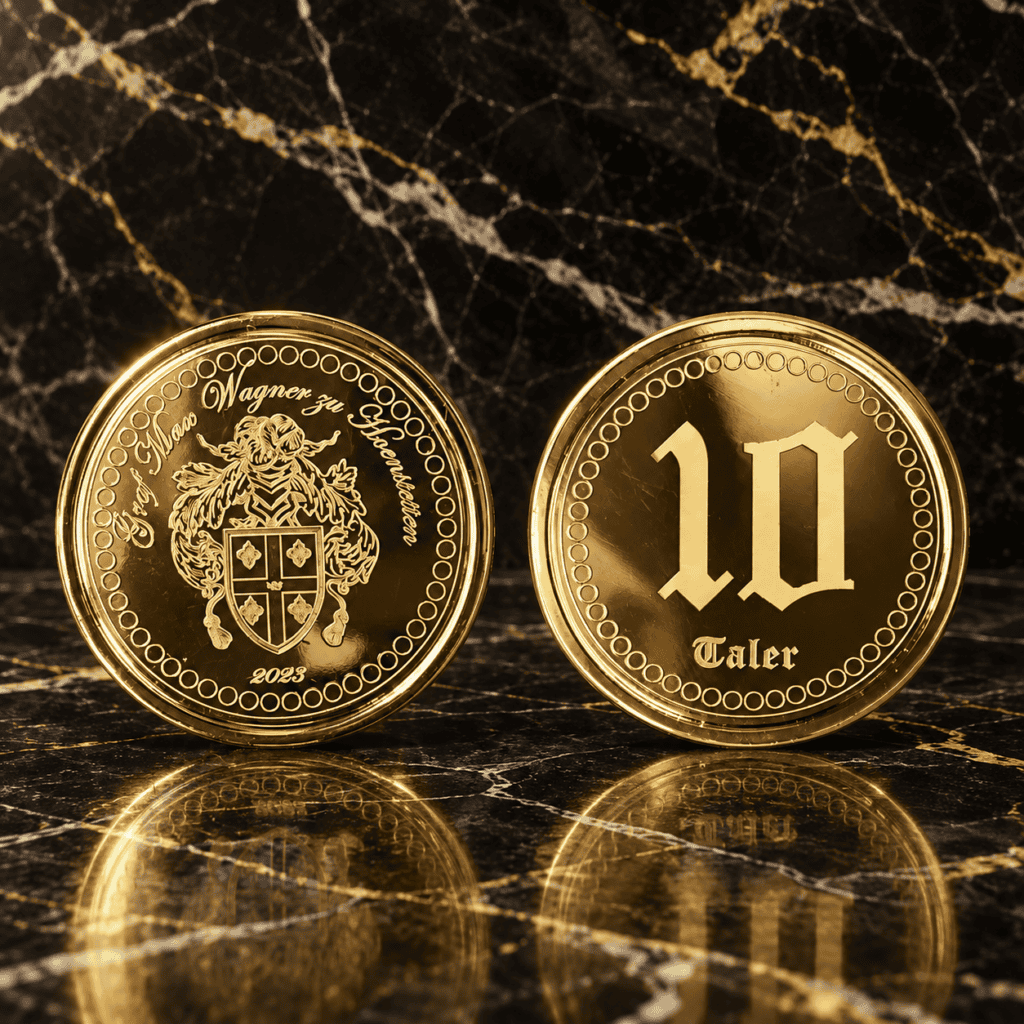
Gold coins
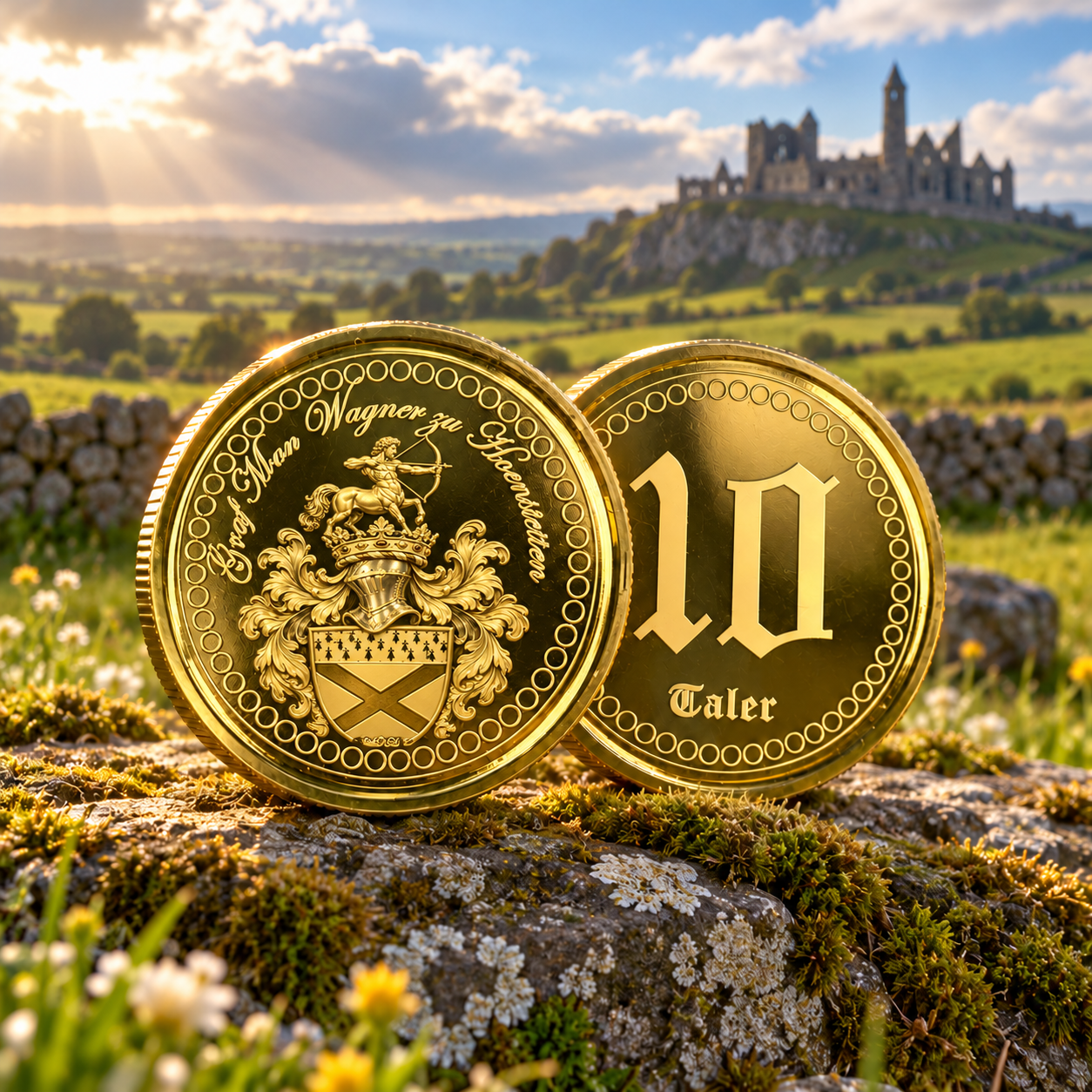
Fine gold and silver-plated medallions combine coats of arms, names and titles in a glossy, unique design.
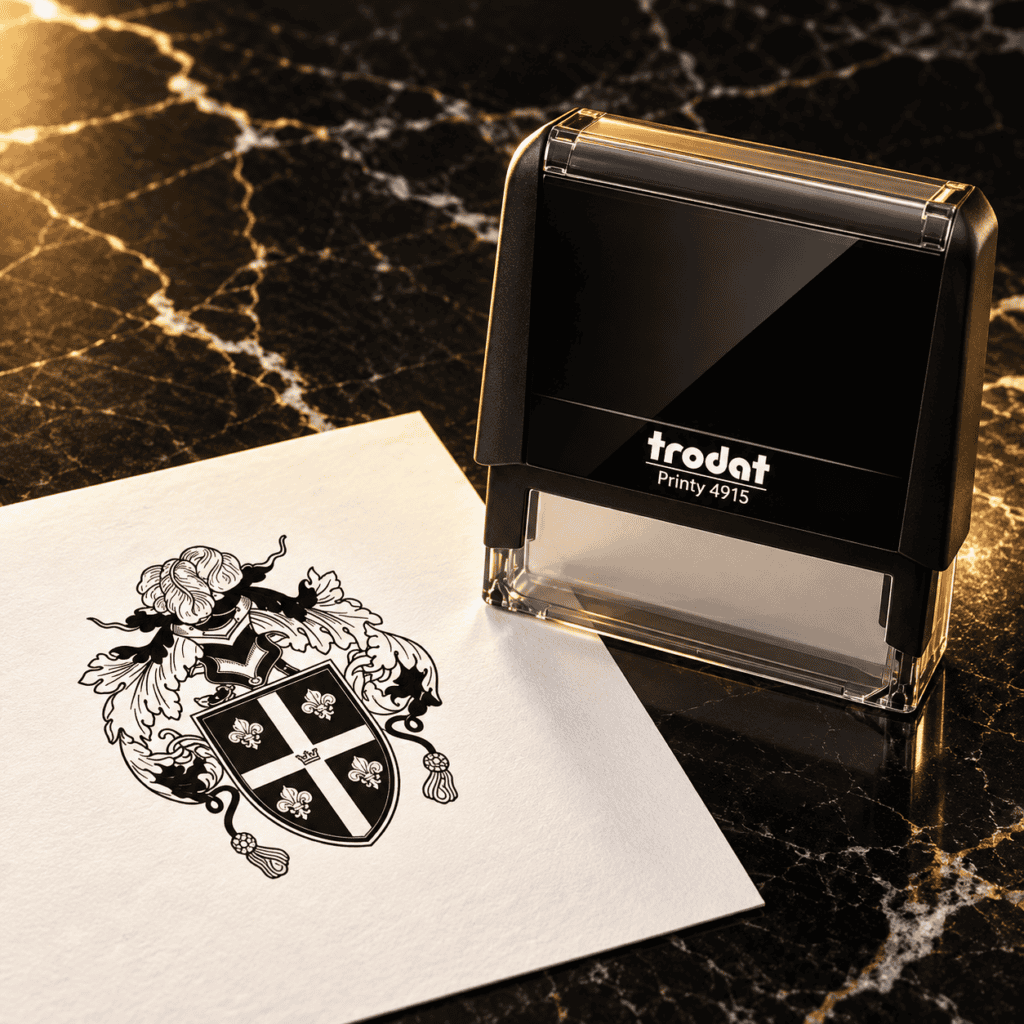
Emblem stamp
The self-inking stamp quickly, cleanly and precisely transfers your personal emblem onto letterhead paper.
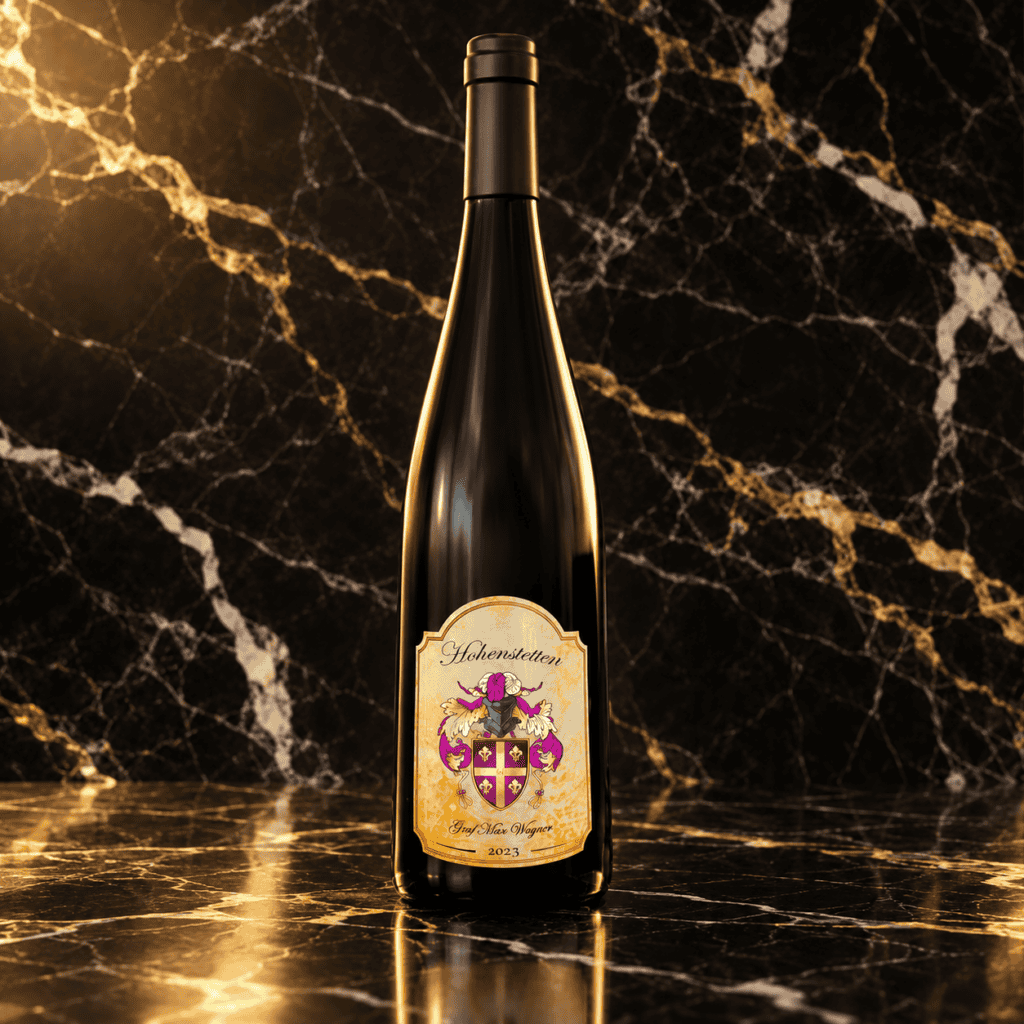
My own wine
Choose fine red or white wine with an elegant, personalized label for a stylish look.
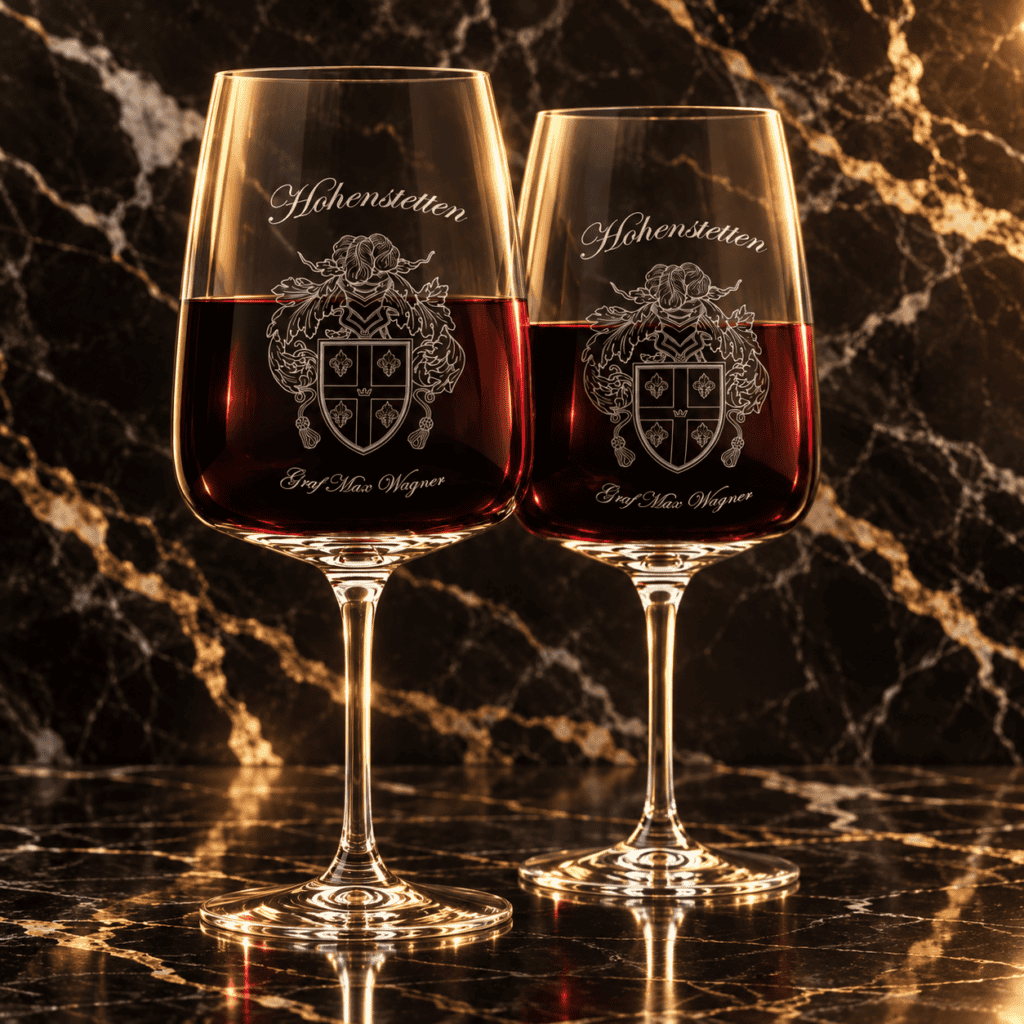
Wappen Gläser
The masterfully engraved wine glasses display their coat of arms, name and title in stunning brilliance.
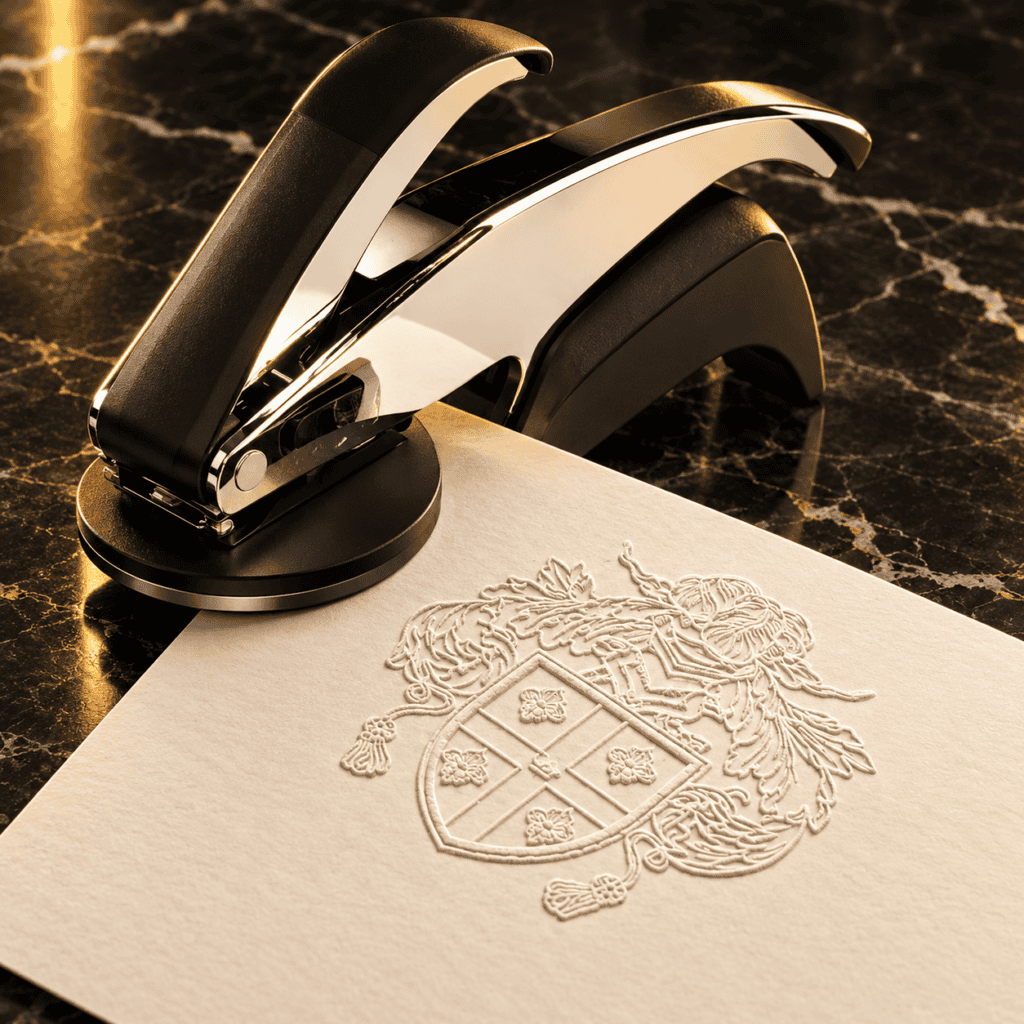
Precision pliers
The elegant embossing pliers embellishes letterheads or documents with a tactile, colourless relief embossing.
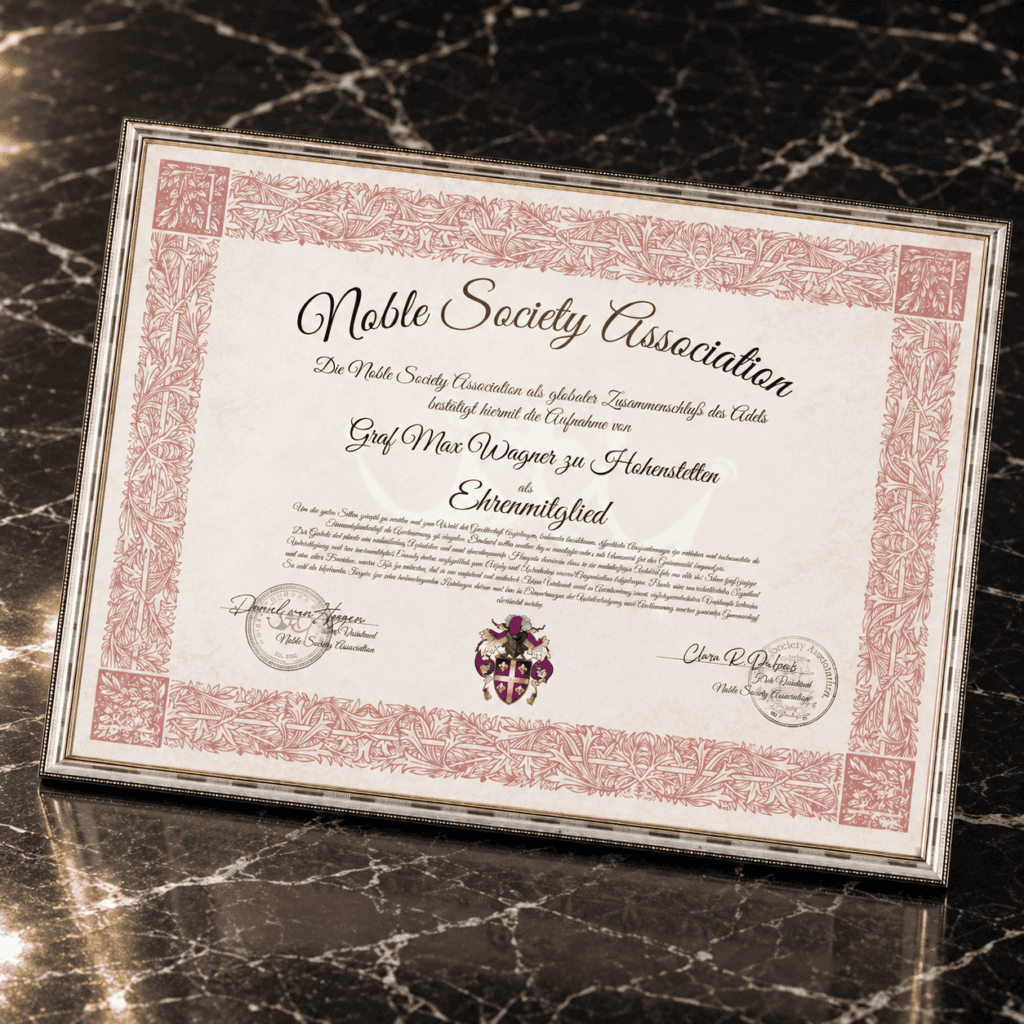
Honorary membership
Membership of the Noble Society Institute enriches your title with another dimension of exclusive representation. Validated by a magnificent certificate in your name, with no ongoing fees or obligations.