


Description
Information about the family history and the coat of arms
Family history
▼
Family history Baron Mortimer
Baron Mortimer – The History of the House of Mortimer
The Mortimers came to England with the Normans. Ralph de Mortemer, whose name refers to Mortemer in Normandy, received land after 1066. By 1075, Wigmore Castle at the Welsh border became the focal point of the family. From this castle, the Mortimers built over generations one of the most powerful ruling families in the Welsh Marches. They had Wigmore rebuilt in stone, founded the nearby Abbey of Wigmore in 1179, and combined military strength with careful administration.
In the 13th century, Roger Mortimer of Wigmore stood out particularly. As an ally of the later Edward I, he fought at Evesham in 1265 against Simon de Montfort. His grandson Roger Mortimer was elevated to the first Earl of March in 1328. Together with Queen Isabella, he briefly ruled England; his spectacular tournament of 1329 made Wigmore a site of royal festive culture.
Following a dramatic power shift, the family regained possession and rank. Roger Mortimer, 2nd Earl of March, was among the founding members of the Order of the Garter. His grandson Edmund married Philippa, the only daughter of Lionel of Antwerp, a son of Edward III. This connection gave the Mortimers a significant position in the royal succession. The 4th Earl Roger was even considered a possible successor to the throne by Richard II at one point.
In the early 15th century, the family seat moved to Ludlow. Edmund Mortimer, 5th Earl of March, maintained an esteemed role at court despite political tensions. His sister Anne married Richard of Conisburgh; their son Richard, Duke of York, united the Mortimer dynasty with the House of York. His son ascended the English throne as Edward IV in 1461, bringing possessions and titles into the crown. Thus, the Mortimers’ journey from a Norman border castle to the heart of English royal history continued. Wigmore Castle remains their silent, wild romantic monument.
Sources: English Heritage, The National Archives, Encyclopaedia Britannica, Historic England
Coat of arms & Heraldry
▼
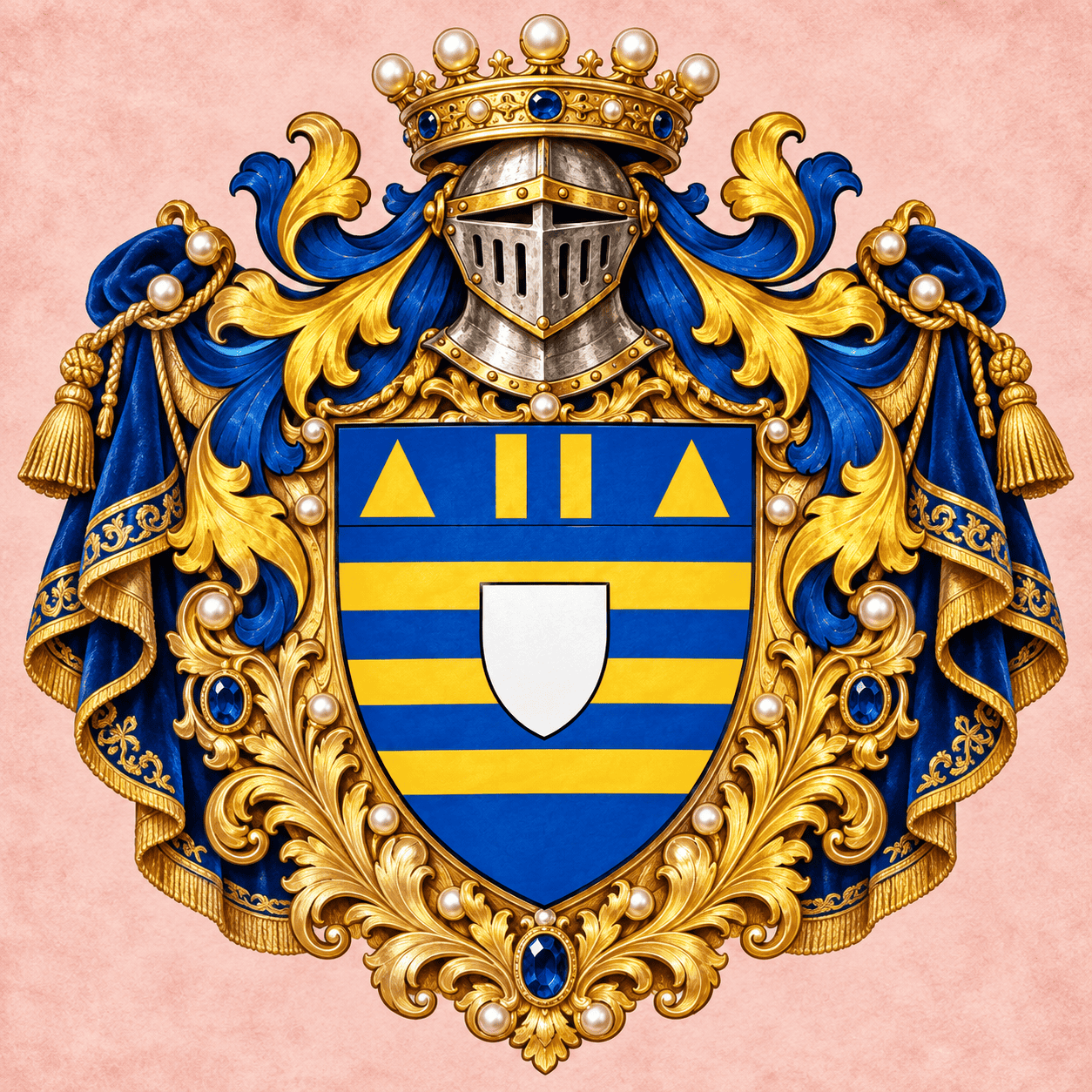
Family coat of arms Baron Mortimer
The depiction follows the traditional coat of arms of the Mortimer of Wigmore, whose members as Barons Mortimer were among the important Marcher Lords on the English-Welsh border.
In blue, three golden bars; in a blue shield head, two golden poles between two golden corner pillars; over all a silver heart shield.
The Mortimer of Wigmore were an Anglo-Norman noble family and powerful Marcher Lords. Roger Mortimer was born in the 13th century.
Sources: Mortimer History Society, Module 6, A Complete Guide to Heraldry
Overview of your title package
What the title of nobility contains
Discover the fascination of historical noble titles. With each appointment, you receive a first-class package that perfectly combines tradition, personal recognition, and stylish representation:
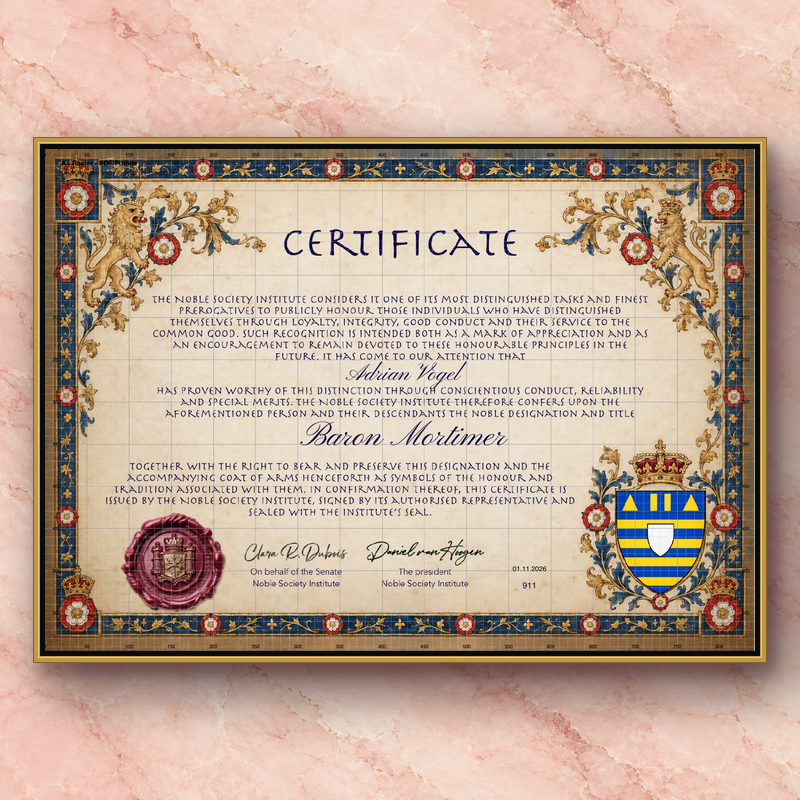
Your certificate
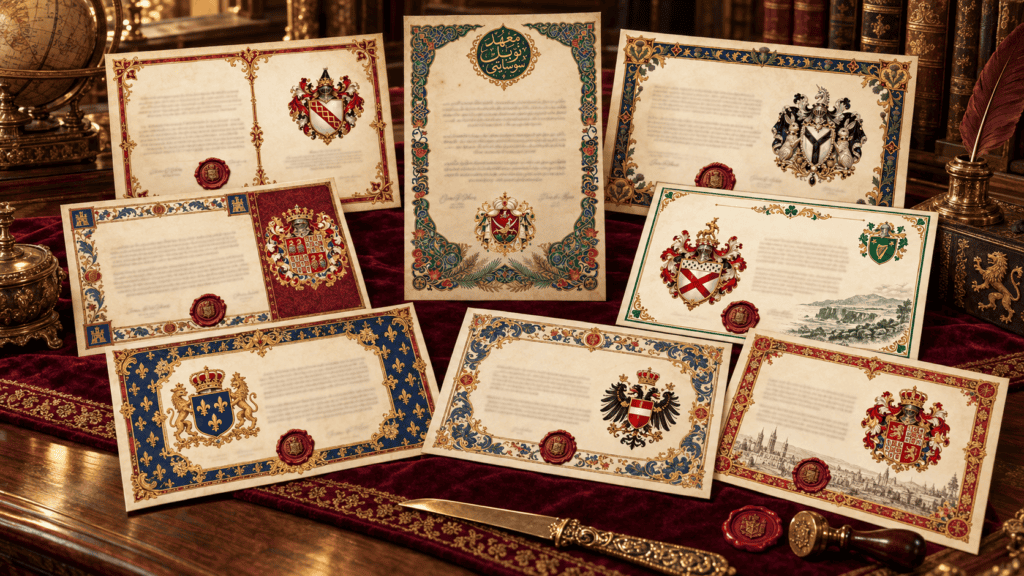
Authentic design with a historic flair: For each region, we create a certificate of appointment in the distinctive, country-specific style – complete with the appropriate coat of arms of your chosen title.
Share this special moment: Upon request, you will receive a free partner certificate and certificates for your children, so that the whole family can participate in the tradition.
Your own coat of arms
Each title comes with the corresponding historical coat of arms, which you receive as a high-resolution file. You can use it completely freely in private and professional contexts – whether on letterhead, business cards, or seals.

The Companion Book
The book „My Title“ takes you in detail into the multifaceted world of your new aristocratic title and offers valuable practical tips for everyday life, stylish guidance, and background information on history.

Our accessories
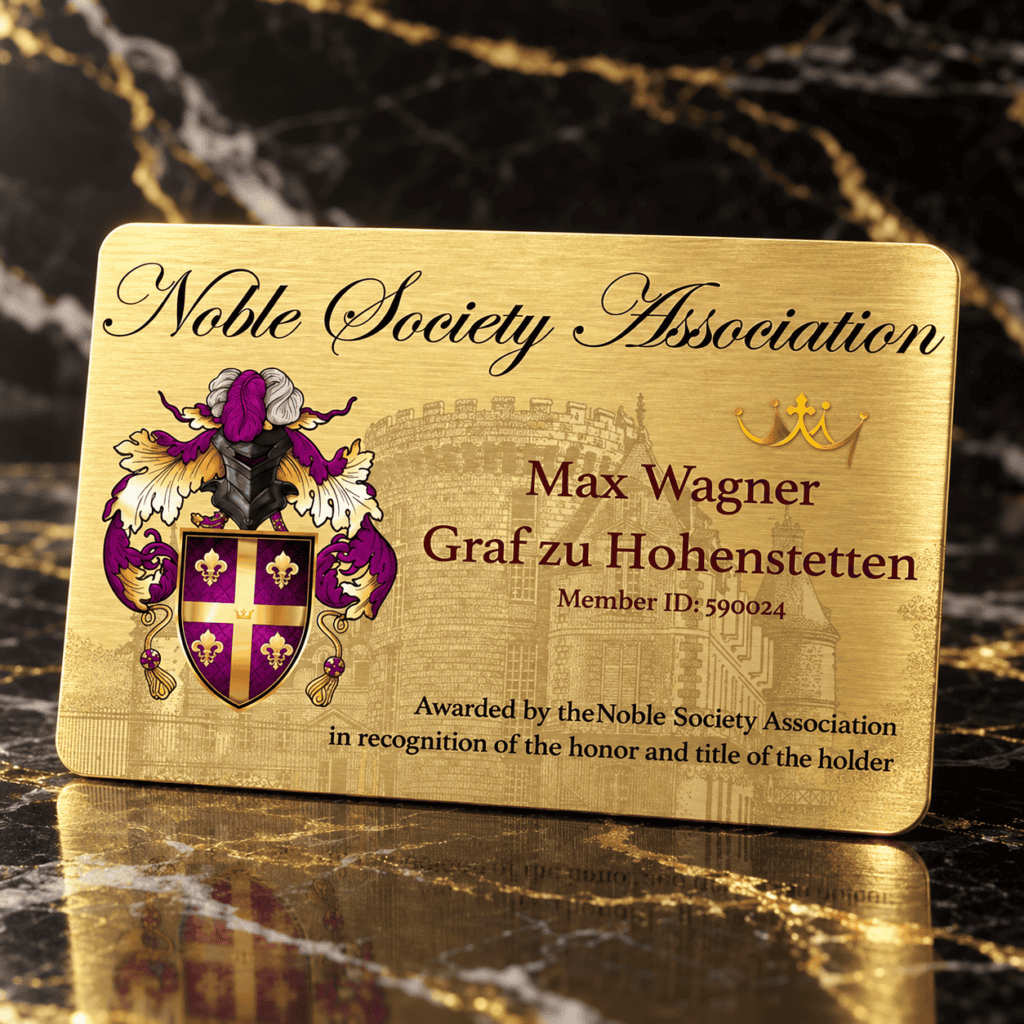
Golden ID Card
Crafted from premium aluminum in business card format, the gold ID Card makes your title look stylish and mobile.
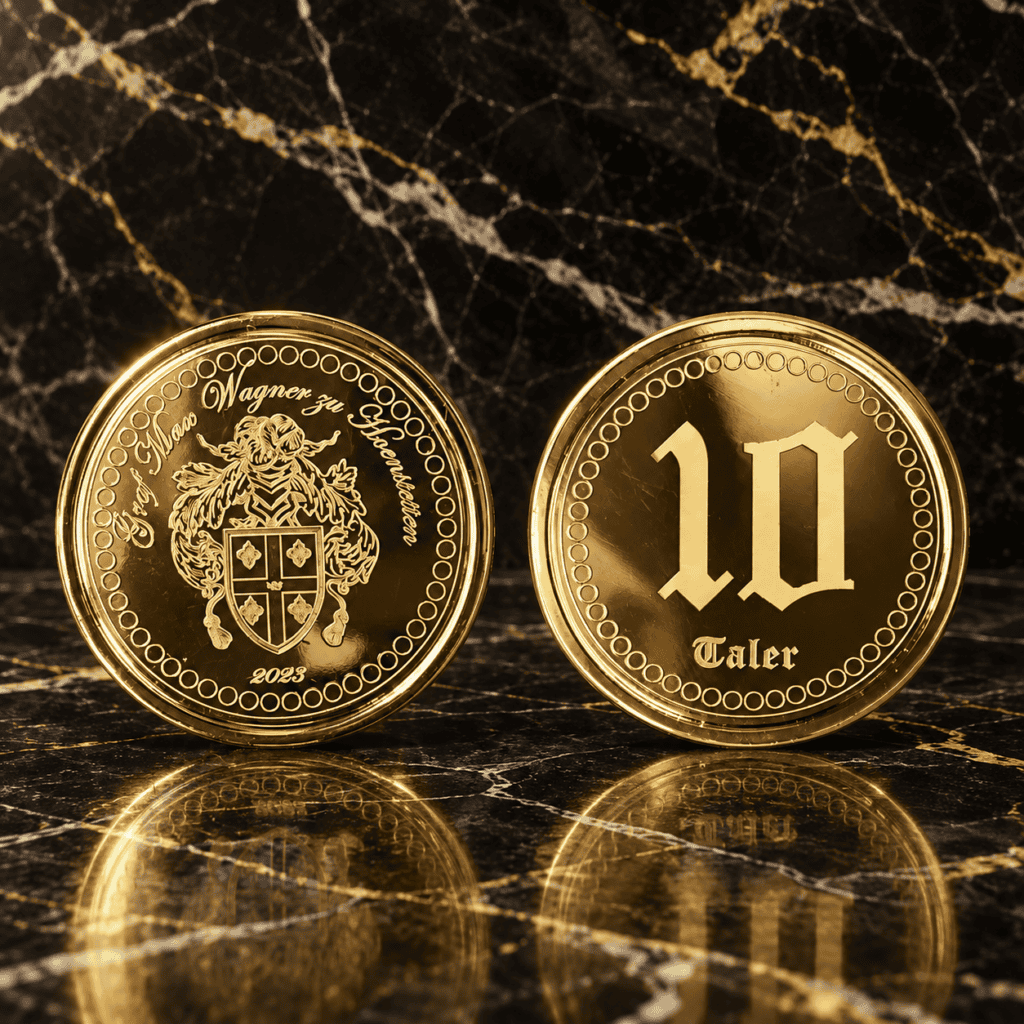
Gold coins
Fine gold and silver-plated medallions combine coats of arms, names and titles in a glossy, unique design.
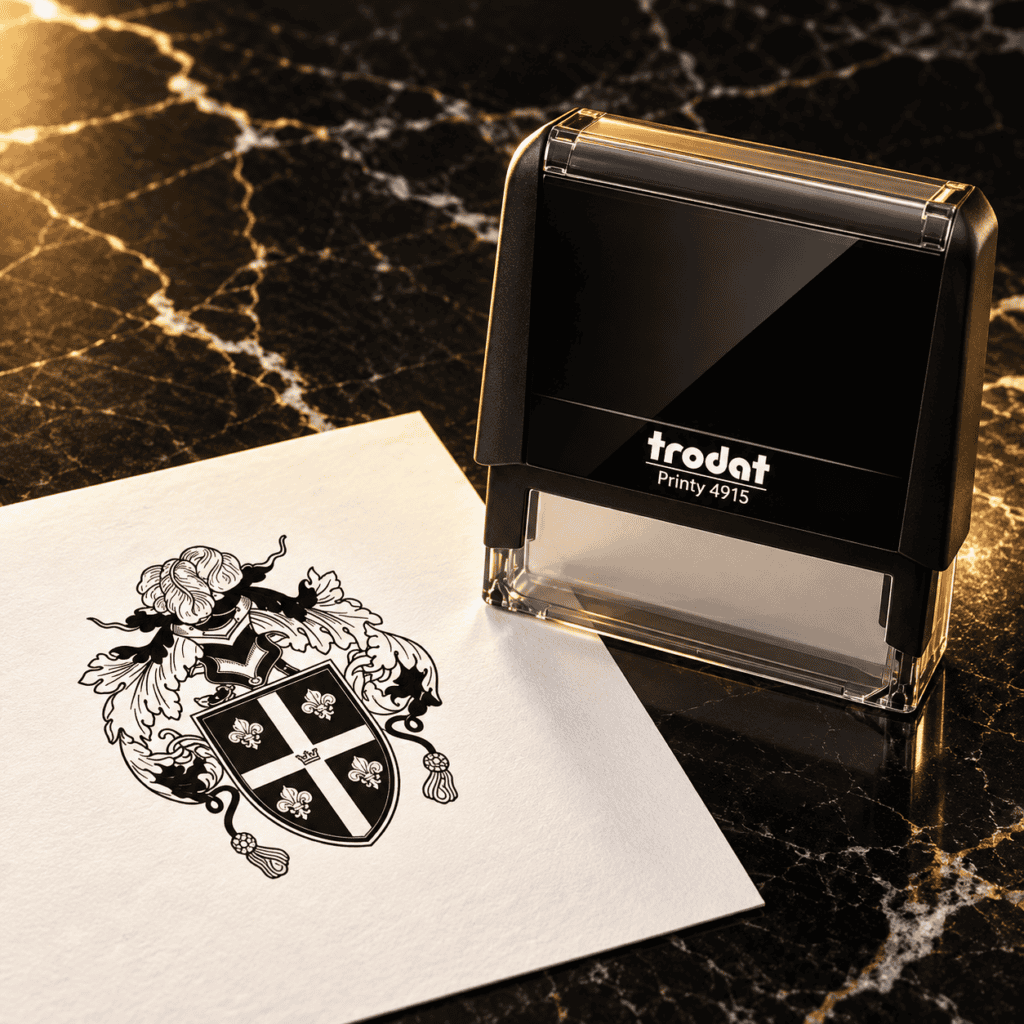
Emblem stamp
The self-inking stamp quickly, cleanly and precisely transfers your personal emblem onto letterhead paper.

My own wine
Choose fine red or white wine with an elegant, personalized label for a stylish look.
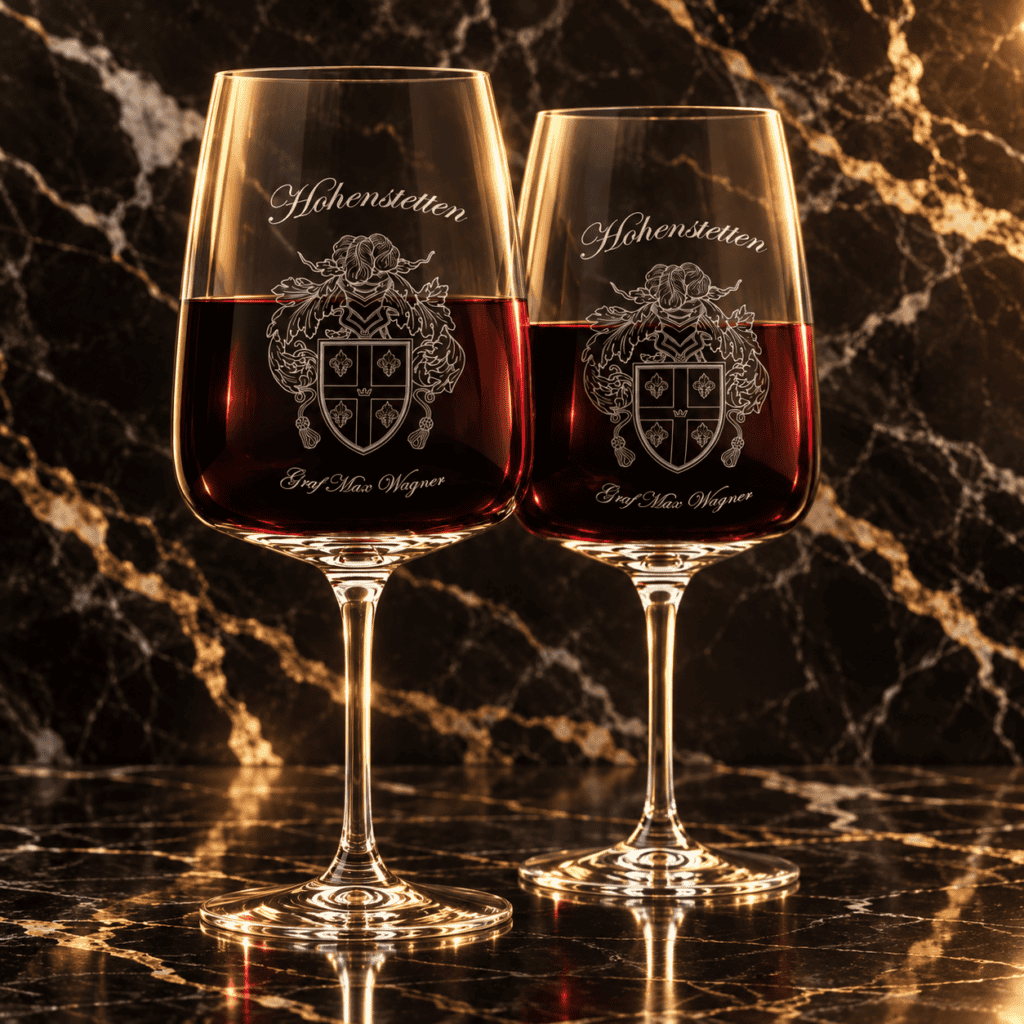
Wappen Gläser
The masterfully engraved wine glasses display their coat of arms, name and title in stunning brilliance.
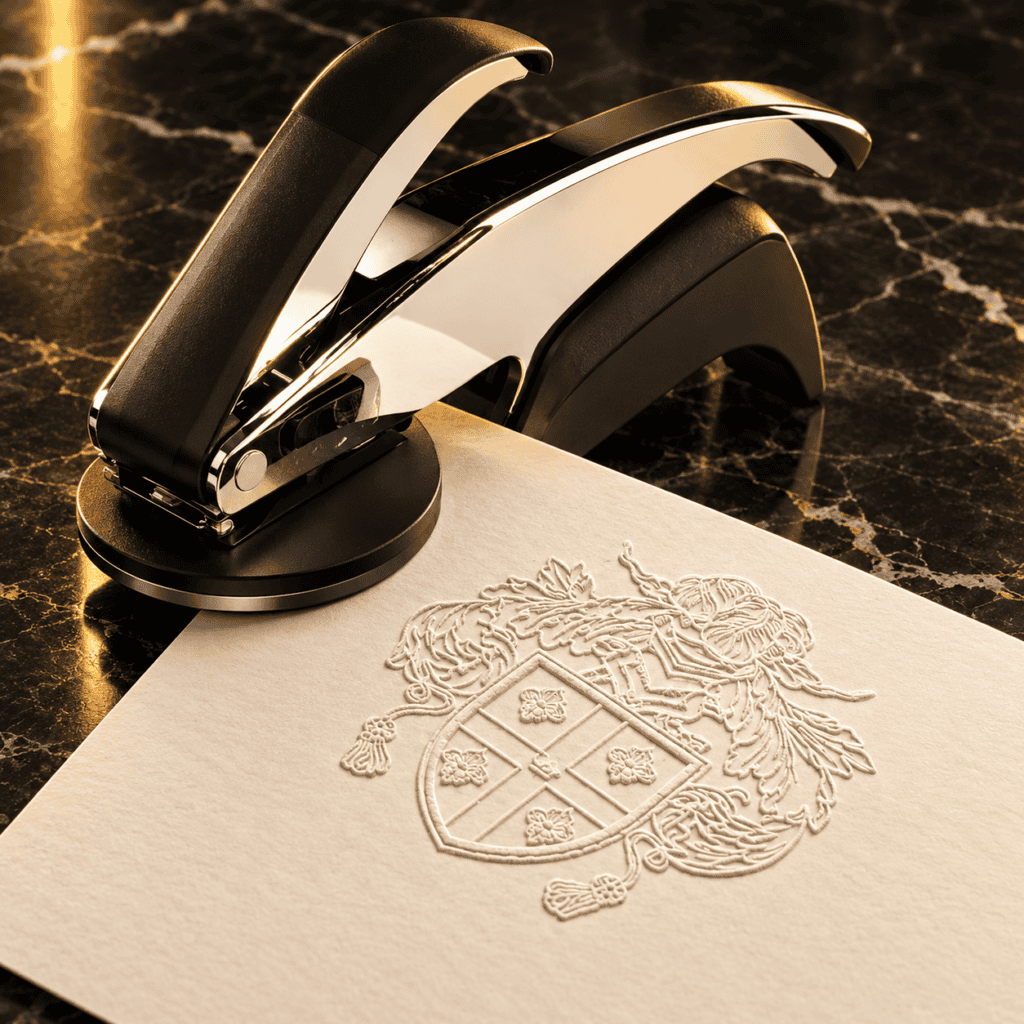
Precision pliers
The elegant embossing pliers embellishes letterheads or documents with a tactile, colourless relief embossing.
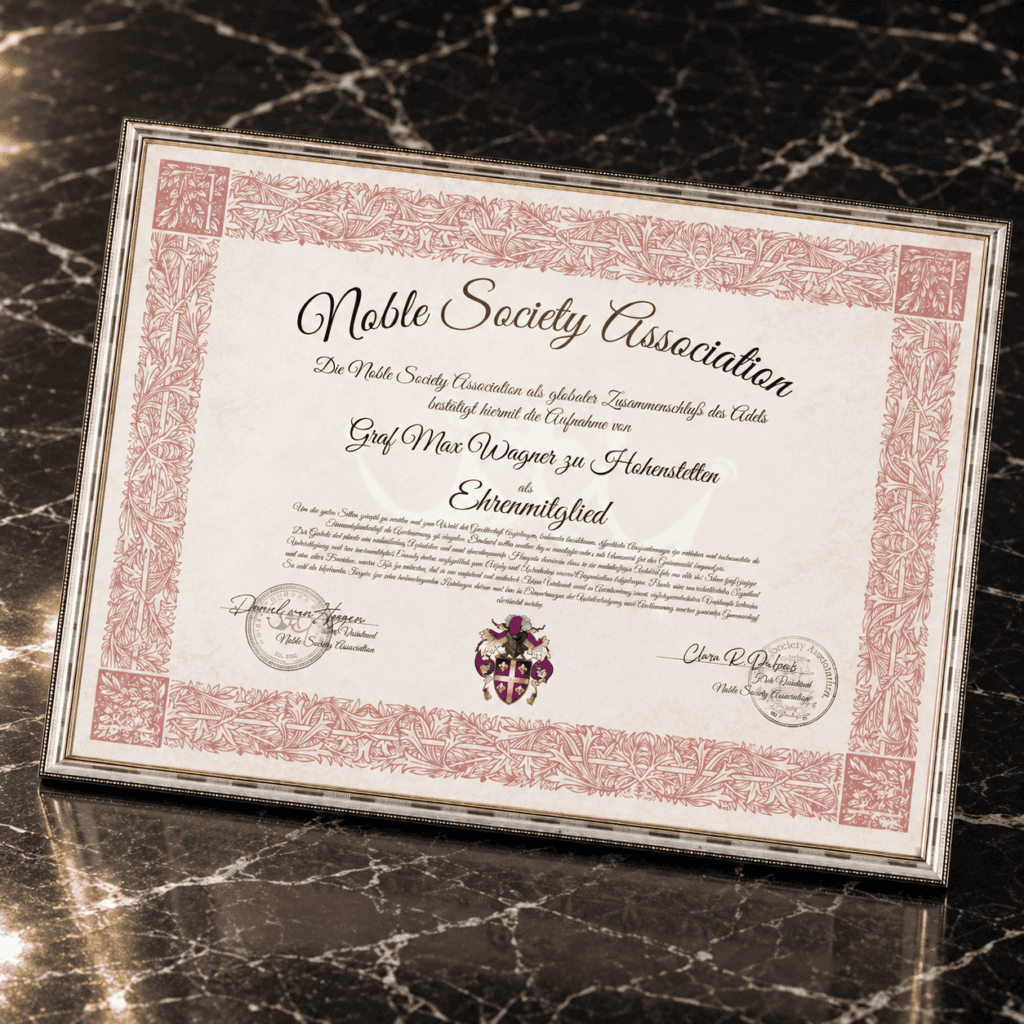
Honorary membership
Membership of the Noble Society Institute enriches your title with another dimension of exclusive representation. Validated by a magnificent certificate in your name, with no ongoing fees or obligations.