

Description
Information about the family history and the coat of arms
Family history
▼
Count of Ostermann family history
Count of Ostermann
The story of the Russian count Ostermann began in Bochum in Westphalia. There, Heinrich Johann Friedrich Ostermann was born in 1686 as the son of the Lutheran pastor Johann Conrad Ostermann. After studying in Jena, his path led him to Russia via Amsterdam in 1704. The gifted young man quickly learned Russian and joined Peter the Great's diplomatic service. From then on, he called himself Andrei Ivanovich.
Ostermann demonstrated exceptional talent for negotiations. He participated in the Nystad Peace Treaty, which ended the long Nordic War in 1721. In recognition of this, he was awarded the Russian Baronial Rank. His signature also adorned a trade agreement with Persia and the alliance with Austria from 1726. In addition to foreign policy, he worked on administrative reforms and on the famous ranking system of the Russian Empire.
In 1721, Andrei married Marfa Ivanovna Streschnewa, who came from an old Russian noble family. This union firmly rooted the family in its new homeland. Under Empress Anna, Ostermann was elevated to the rank of Count in 1730 and rose to become Vice Chancellor and leading cabinet minister. After the political upheaval of 1741, he spent his final years with his family in Berjósow in Siberia.
His children continued the public activities. Fyodor became a senator and left behind historical records. Ivan Ostermann served as an ambassador in Stockholm, headed the Foreign Affairs College and eventually became the Russian Reich Chancellor. The daughter Anna linked the house with the Tolstoy family.
When Ivan wanted to pass on his name and title as count, he designated the eldest son, Alexander Tolstoi, as his heir. He rose to prominence as Count Ostermann-Tolstoi and became one of the renowned Russian generals in the Napoleonic Wars. Thus, the family name continued in a new line. From Bochum to Saint Petersburg and to the battlefields of Europe, the Ostermann family tells of linguistic talent, diplomatic skill and remarkable adaptability.
Sources: Great Russian Encyclopedia (bigenc.ru), Deutsche Biographie, Britannica, Russian State Library (rsl.ru)
Coat of arms & Heraldry
▼
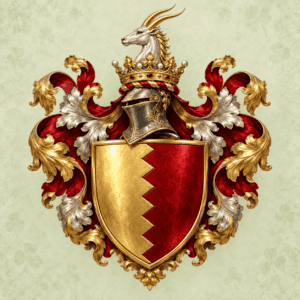
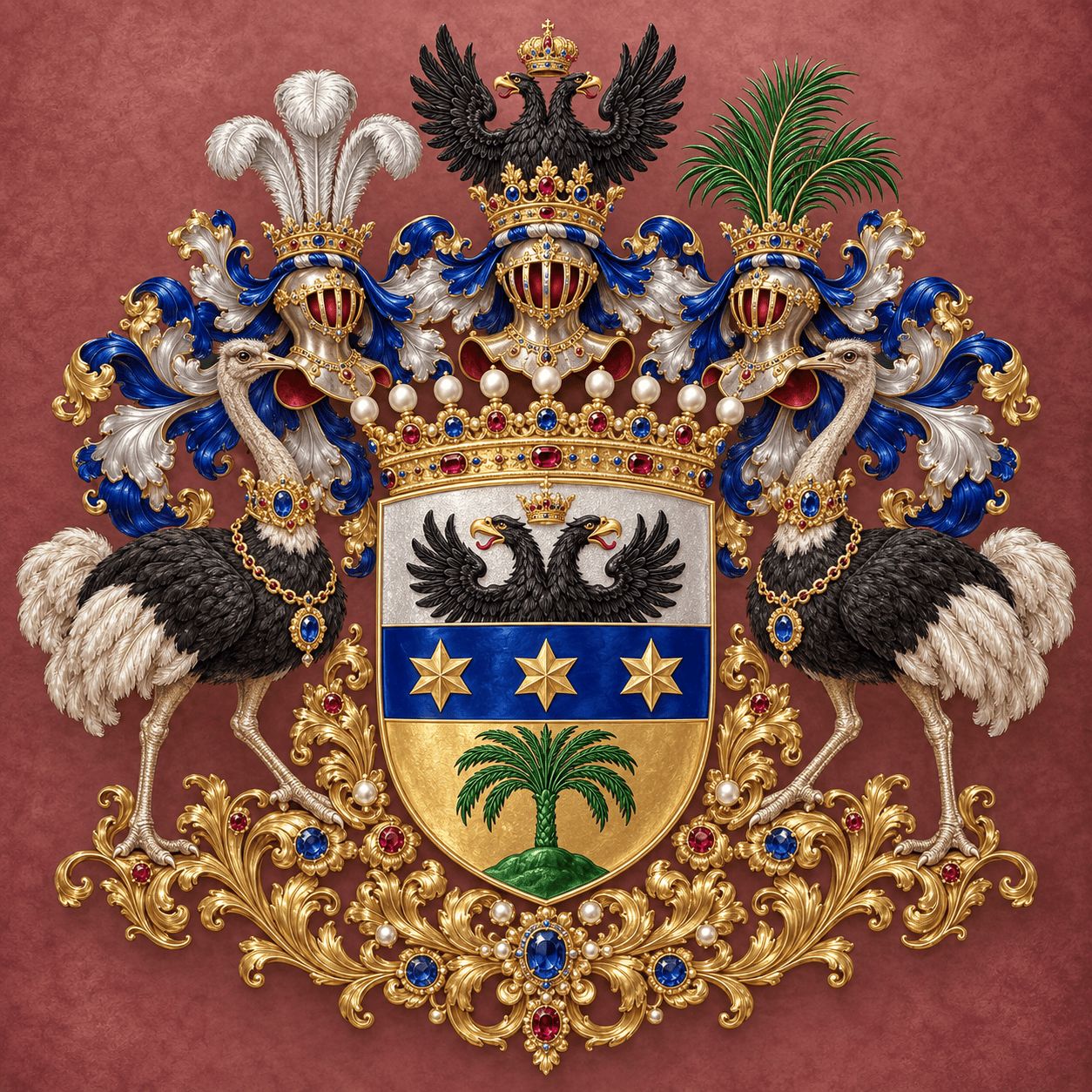
Family coat of arms Count of Ostermann
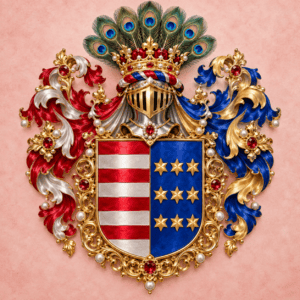
The depiction follows the Count's coat of arms Ostermann, which is recorded in the General Coat of Arms Book of the Russian Empire. It combines the imperial double eagle and three stars with the old family coat of arms, the palm on a golden background.
Divided by a blue bar adorned with three golden six-pointed stars: at the top in silver a growing black, golden crowned double eagle with outstretched wings; at the bottom in gold on a green hill a green palm tree. On the shield a count's crown and three helmets with blue-silver covers. Helm decorations: on the right the palm tree, in the middle the crowned double eagle, on the left three silver ostrich feathers.
Heinrich Johann Friedrich Ostermann, in Russia Andrei Ivanovich Ostermann, rose to become a leading diplomat under Peter the Great and was elevated to the Russian nobility in 1730. The coat of arms is generally recorded in the Russian Empire's General Book of Arms, Part II, No. 13.
Sources: General Book of Arms of the Nobility of the Russian Empire, Part II, No. 13, P. W. Dolgorukow, Russian Genealogical Book, Deutsche Biographie, Andrei Ivanovich Ostermann
Overview of your title package
What the title of nobility contains
Discover the fascination of historical noble titles. With each appointment, you receive a first-class package that perfectly combines tradition, personal recognition, and stylish representation:
Your certificate
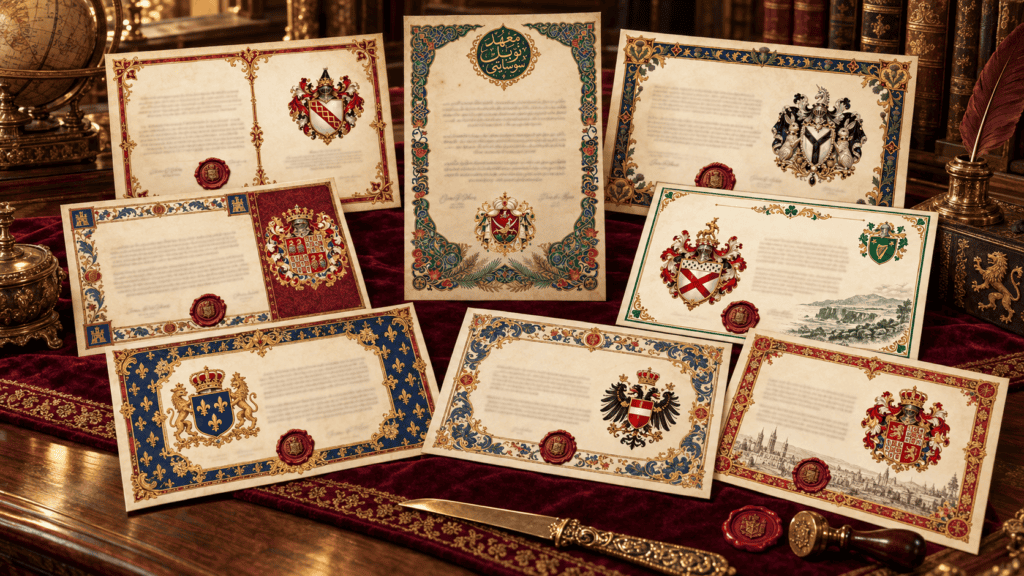
Authentic design with a historic flair: For each region, we create a certificate of appointment in the distinctive, country-specific style – complete with the appropriate coat of arms of your chosen title.
Share this special moment: Upon request, you will receive a free partner certificate and certificates for your children, so that the whole family can participate in the tradition.
Your own coat of arms
Each title comes with the corresponding historical coat of arms, which you receive as a high-resolution file. You can use it completely freely in private and professional contexts – whether on letterhead, business cards, or seals.

The Companion Book
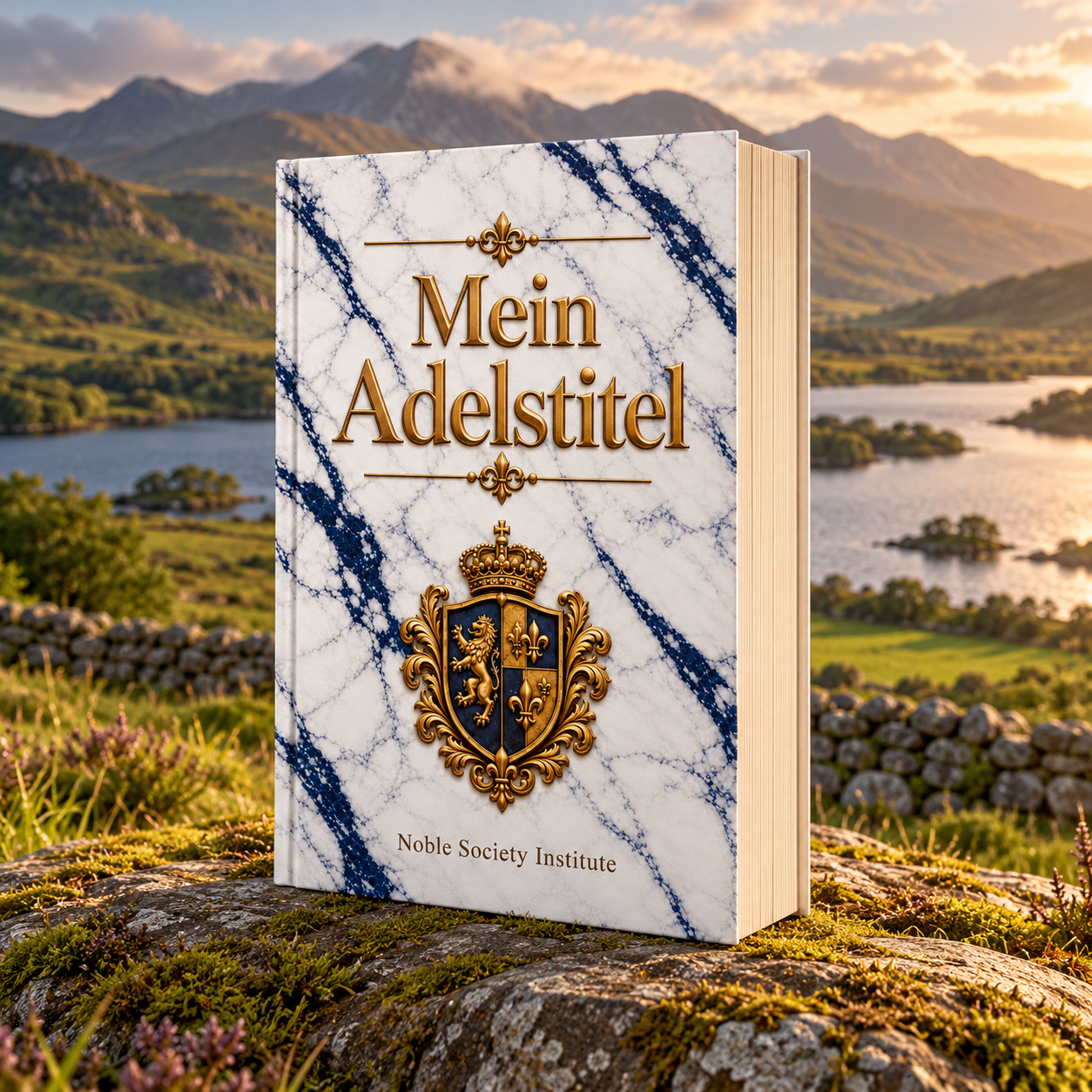
The book „My Title“ takes you in detail into the multifaceted world of your new aristocratic title and offers valuable practical tips for everyday life, stylish guidance, and background information on history.
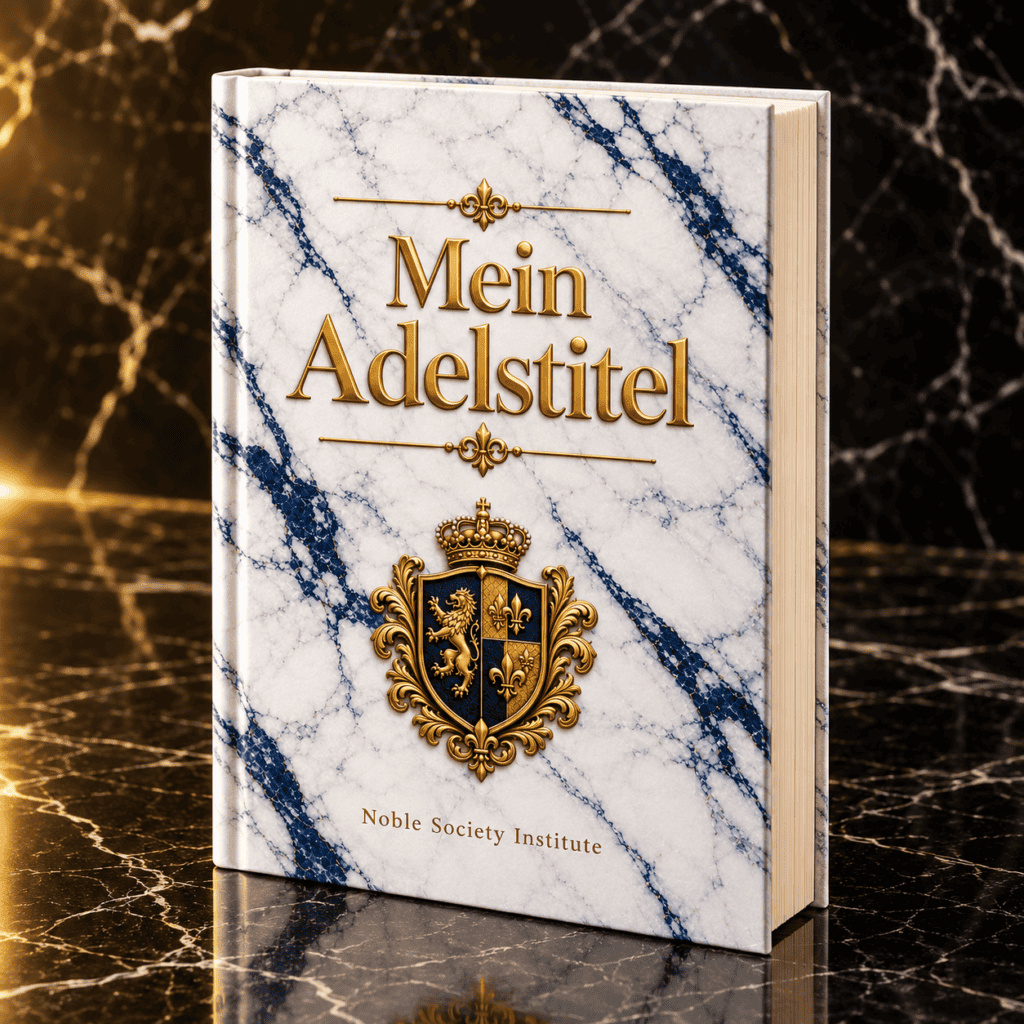
Our accessories
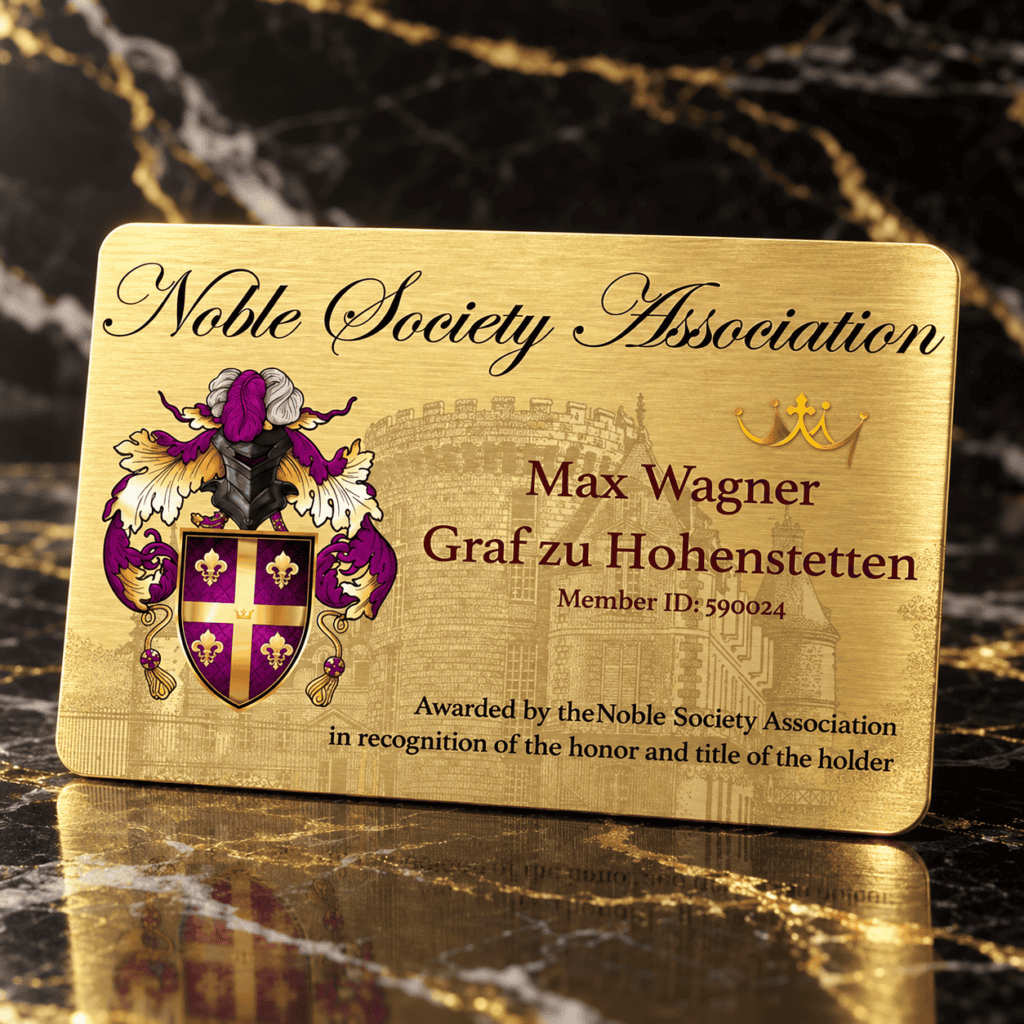
Golden ID Card
Crafted from premium aluminum in business card format, the gold ID Card makes your title look stylish and mobile.
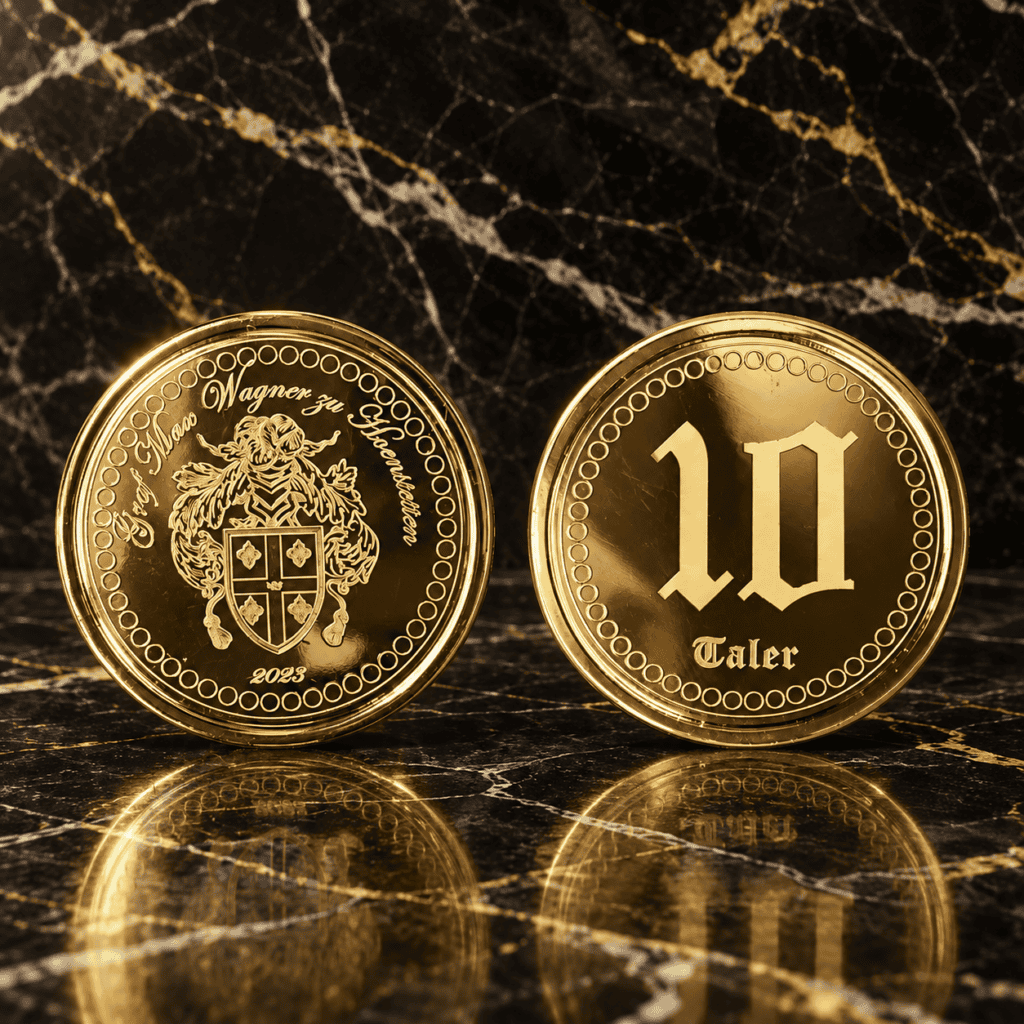
Gold coins
Fine gold and silver-plated medallions combine coats of arms, names and titles in a glossy, unique design.
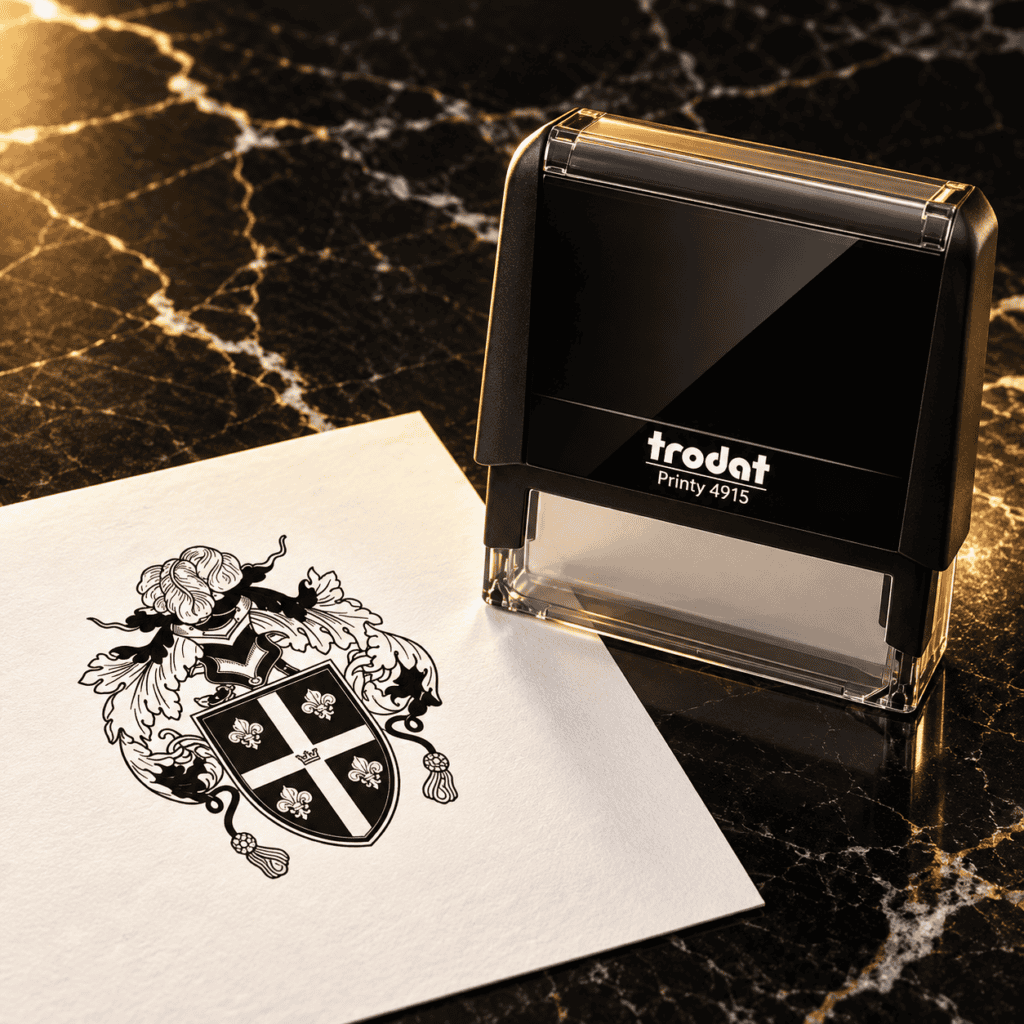
Emblem stamp
The self-inking stamp quickly, cleanly and precisely transfers your personal emblem onto letterhead paper.

My own wine
Choose fine red or white wine with an elegant, personalized label for a stylish look.

Wappen Gläser
The masterfully engraved wine glasses display their coat of arms, name and title in stunning brilliance.
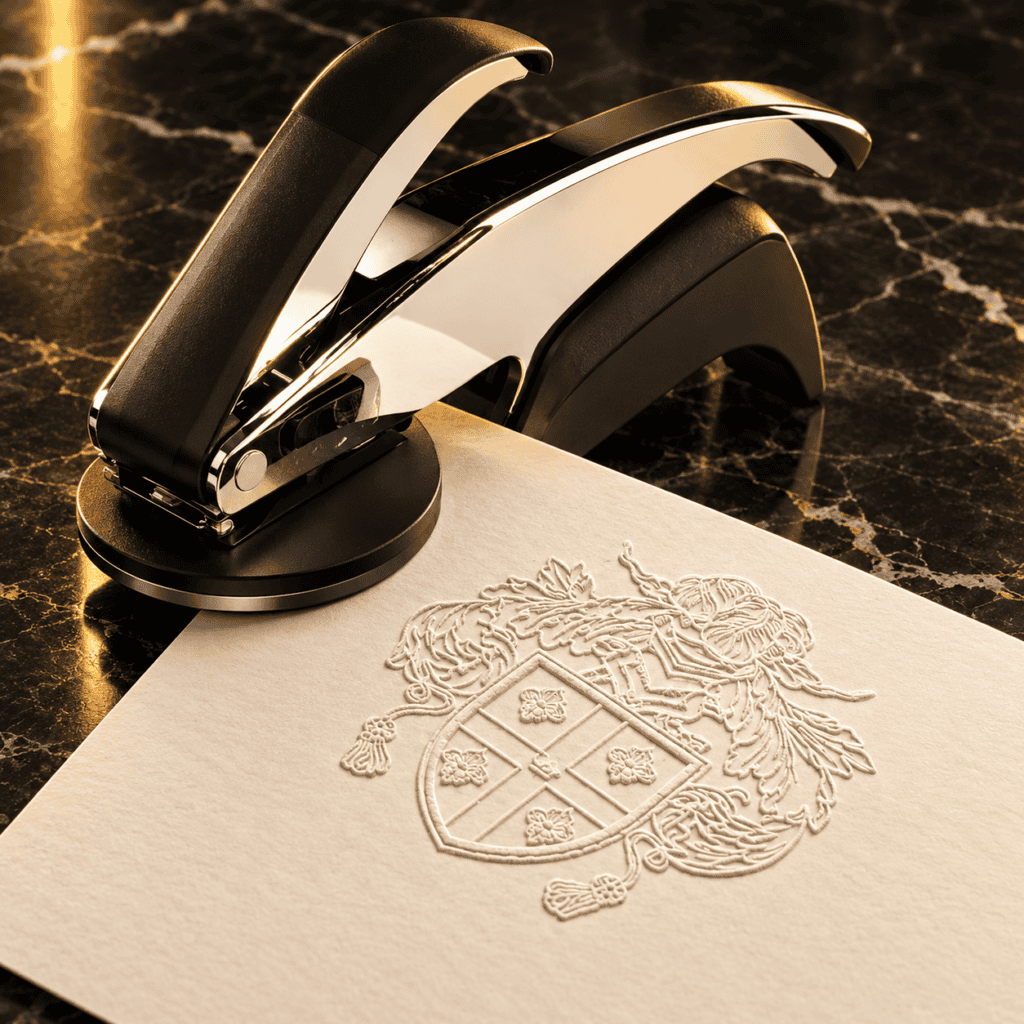
Precision pliers
The elegant embossing pliers embellishes letterheads or documents with a tactile, colourless relief embossing.
Honorary membership
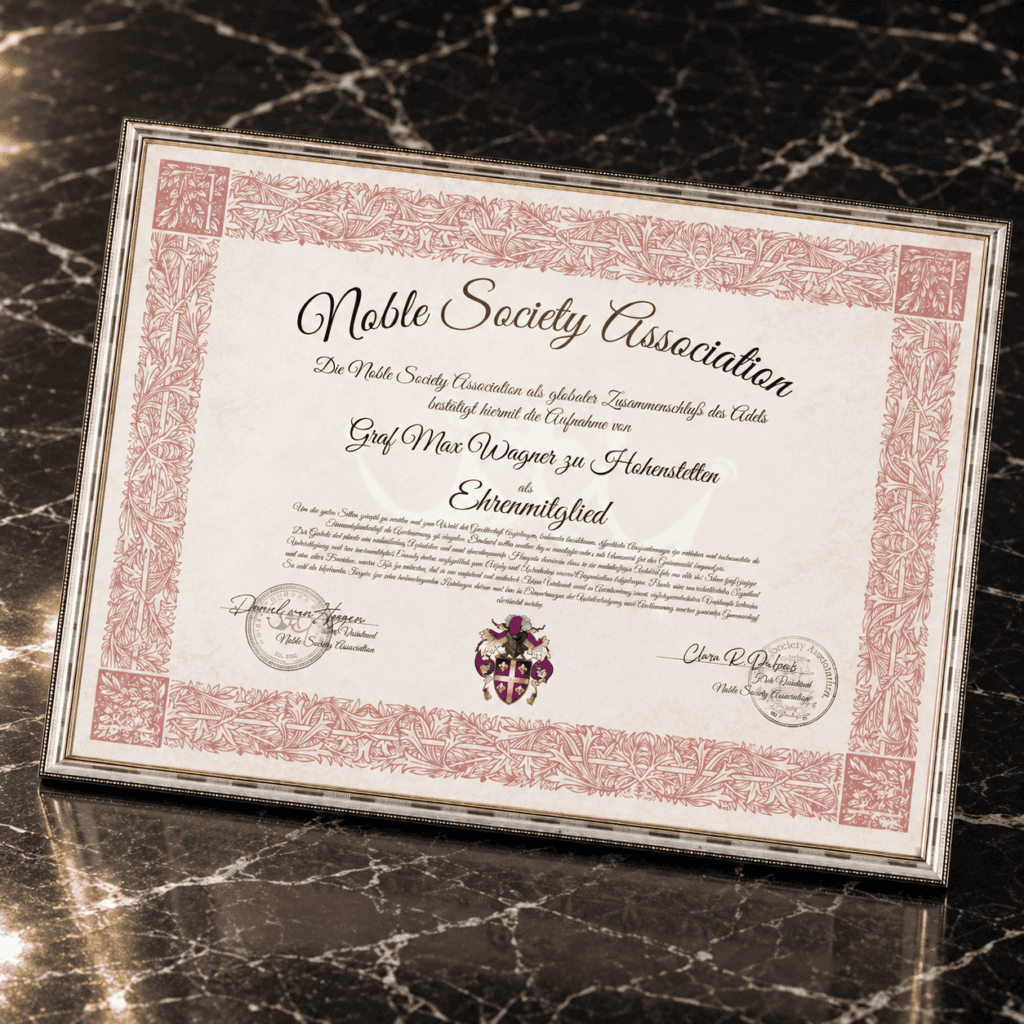
Membership of the Noble Society Institute enriches your title with another dimension of exclusive representation. Validated by a magnificent certificate in your name, with no ongoing fees or obligations.