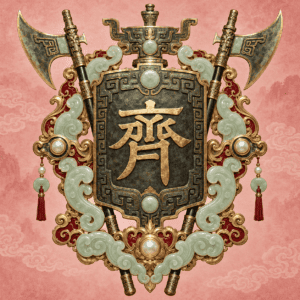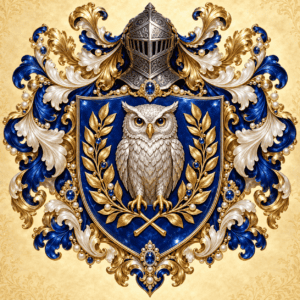
Description
Information about the family history and the coat of arms
Family history
▼
Family history Bey of Tunis
The Beys of Tunis – The Husayni Dynasty
The history of the Husaynids began in 1705 during a period of political unrest. Husain ibn Ali, an Ottoman officer of Cretan origin, organized the resistance against an army advancing from Algiers and was subsequently proclaimed Bey of Tunis. He founded a dynasty that would dominate the country for more than two and a half centuries. Formally, Tunisia remained part of the Ottoman Empire, but in practice the beys largely ruled independently.
Husain relied on local notables, Andalusian families, and experienced administrators. After early succession disputes, Ali Bey and especially Hammuda Pascha stabilized the empire in the late 18th century. Agriculture, crafts, and Mediterranean trade flourished; palaces, mosques, schools, and the family mausoleum Tourbet el Bey enriched Tunis. Summer residences of the dynasty also made Sidi Bou Saïd a preferred destination for the courtly society.
In the 19th century, the house faced growing European pressure with remarkable reforms. Ahmad Pascha Bey built a modern army and administration. Between 1841 and 1846, he closed the slave markets, freed enslaved children, and finally declared slavery abolished – an early step in the Islamic world. Muhammad Bey announced the Security Pact in 1857, which was intended to strengthen the rights and equality of the subjects. Under Muhammad as-Sadiq, the first modern constitution in the Arab world was created in 1861.
Financial difficulties and foreign influence led to the French protectorate in 1881. The Beys remained heads of state and retained ceremonial and cultural patronage, while France exercised political power. Muhammad VIII al-Amin, known as Lamine Bey, witnessed the independence of Tunisia in 1956. When the republic was declared in 1957, the role of rulers passed to the new state order.
The family continues to exist in numerous descendants. Their architecture, reform documents, and art collections still tell the story of a house that Tunisians shaped between Ottoman tradition, Mediterranean exchange, and modernity.
Sources: UNESCO, National Archive of Tunisia, Encyclopaedia of Islam, Library of Congress
Coat of arms & Heraldry
▼
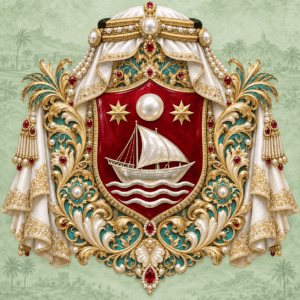
Family coat of arms Bey of Tunis
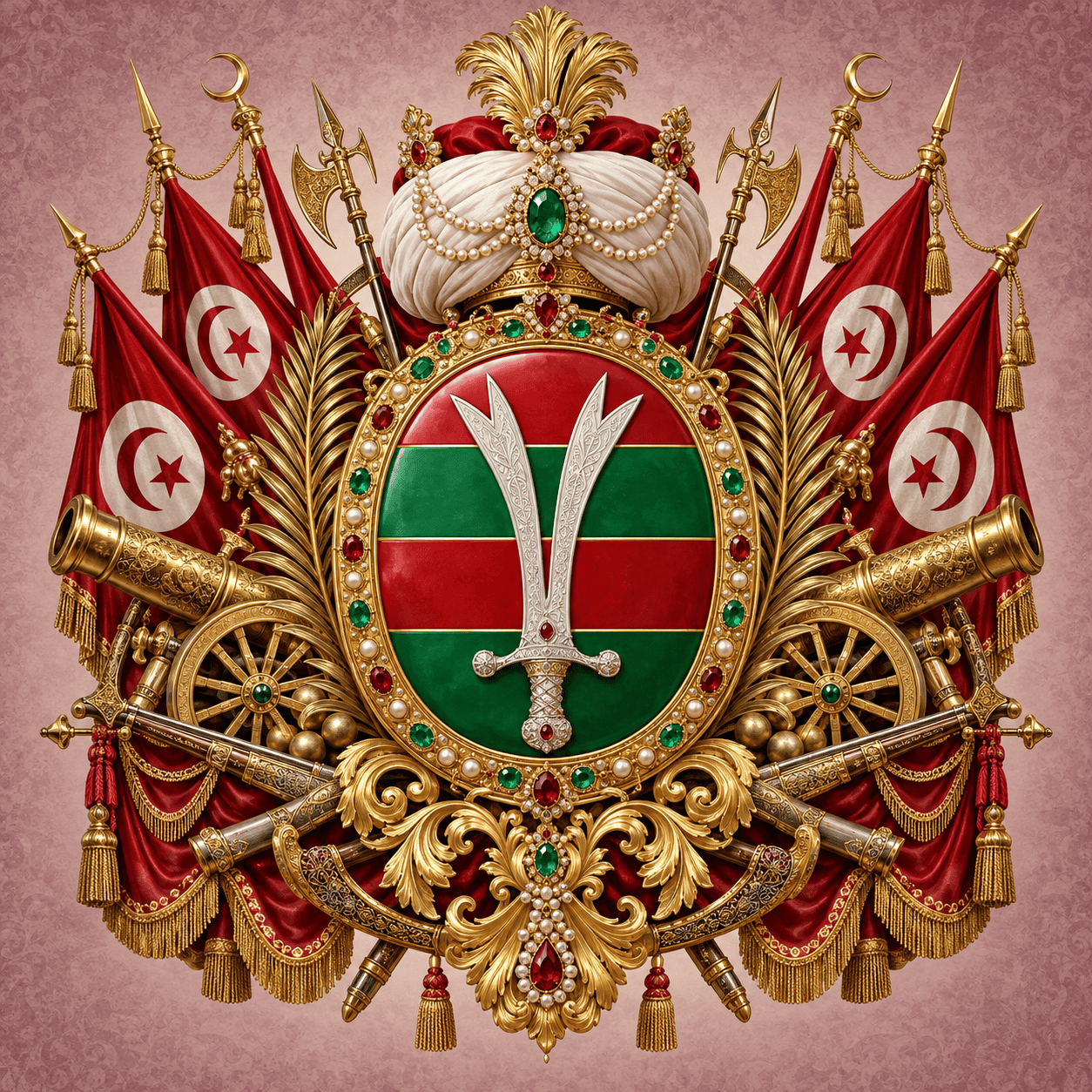
The depiction follows the Husayniid symbolism of the Beys of Tunis. The centerpiece is the red-green striped field with the white Dhu-l-Faqar, the comb-shaped sword that appears on the historical flags of the Tunisian Beys.
An oval shield divided horizontally by red and green, above it a silver, horizontally placed Dhu-l-Faqar with a bifurcated tip. Above the shield is an ornate Ottoman turban; on the sides are flags, spears, crossbows and other military trophies, framed by a golden garland.
The Husseinians ruled Tunis from 1705 to 1957. Their rule was initially formally integrated into the Ottoman Empire, but they developed a wide-ranging political independence.
Sources: Historical standards of the Husayni dynasty in the Bardo National Museum, flags and banners of the Beylik of Tunis, Hubert de Vries, Tunisia, Encyclopaedia of Islam
Overview of your title package
What the title of nobility contains
Discover the fascination of historical noble titles. With each appointment, you receive a first-class package that perfectly combines tradition, personal recognition, and stylish representation:
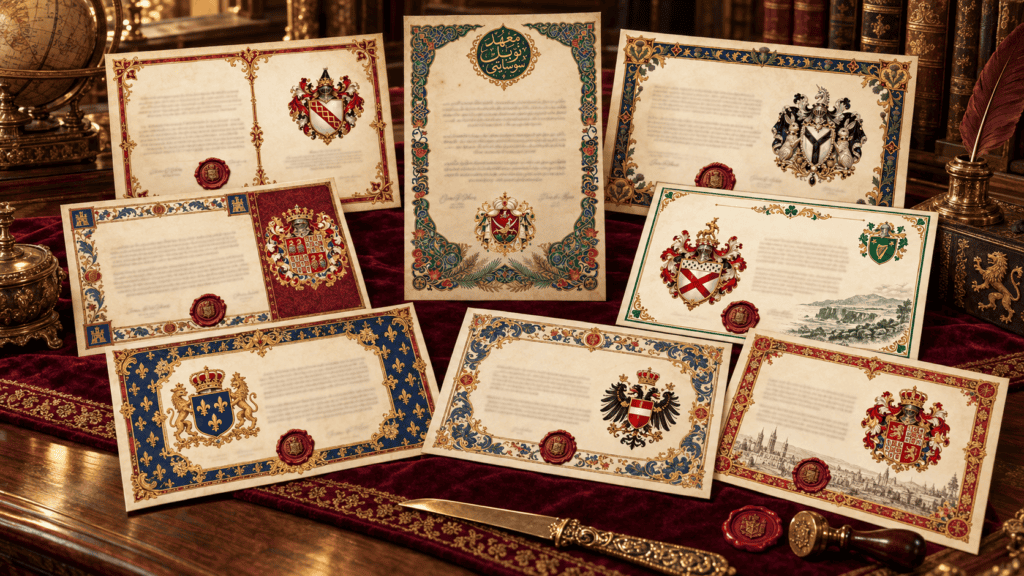
Your certificate
Authentic design with a historic flair: For each region, we create a certificate of appointment in the distinctive, country-specific style – complete with the appropriate coat of arms of your chosen title.
Share this special moment: Upon request, you will receive a free partner certificate and certificates for your children, so that the whole family can participate in the tradition.
Your own coat of arms
Each title comes with the corresponding historical coat of arms, which you receive as a high-resolution file. You can use it completely freely in private and professional contexts – whether on letterhead, business cards, or seals.

The Companion Book
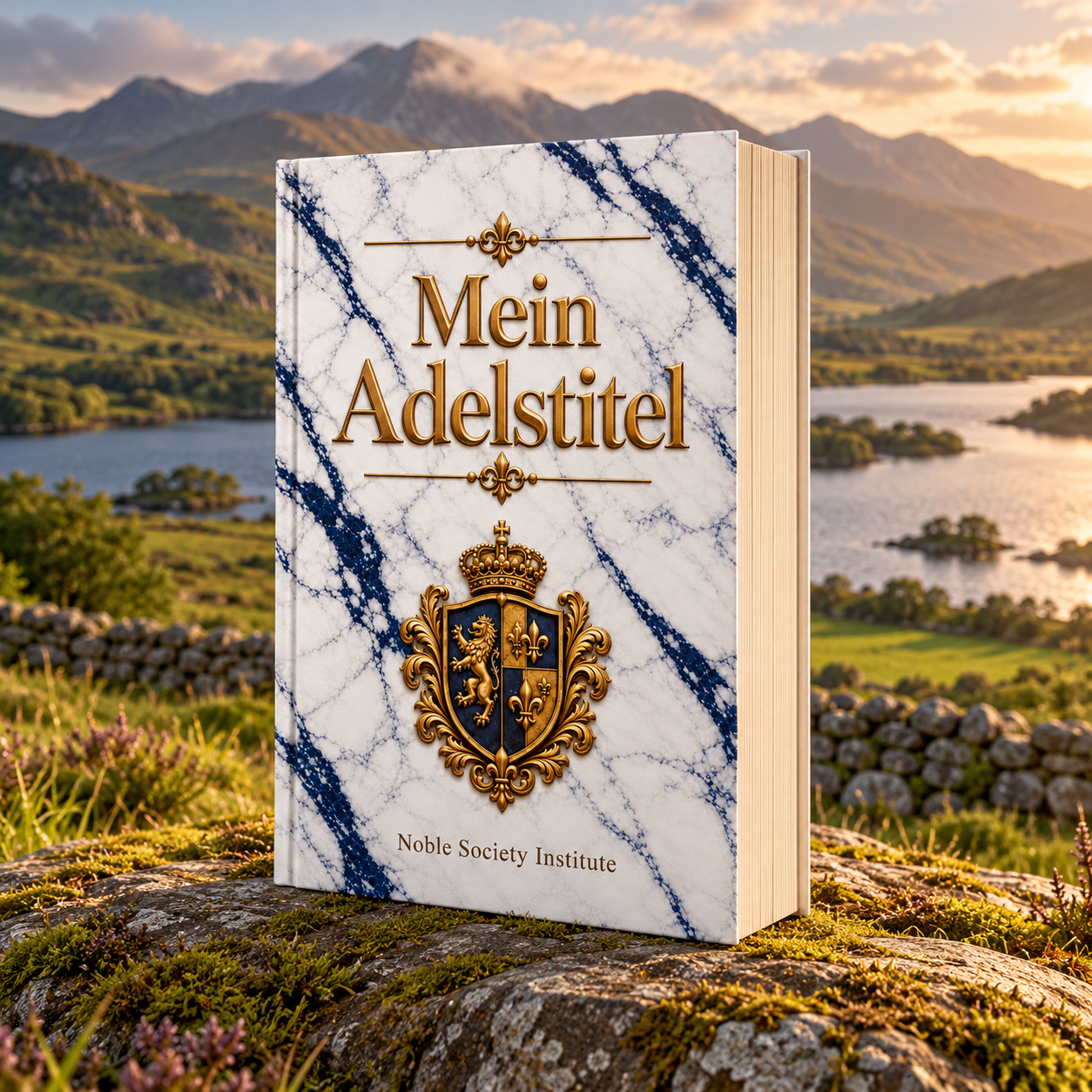
The book „My Title“ takes you in detail into the multifaceted world of your new aristocratic title and offers valuable practical tips for everyday life, stylish guidance, and background information on history.

Our accessories
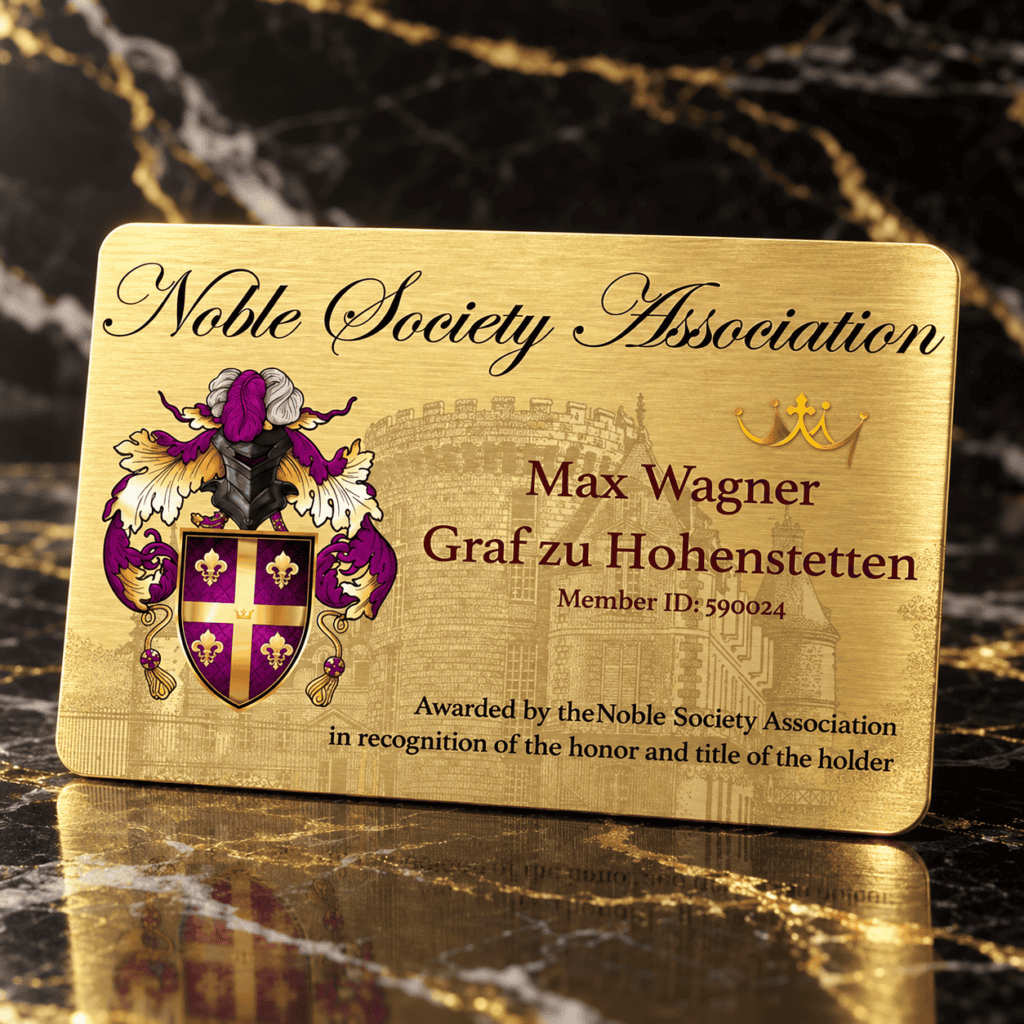
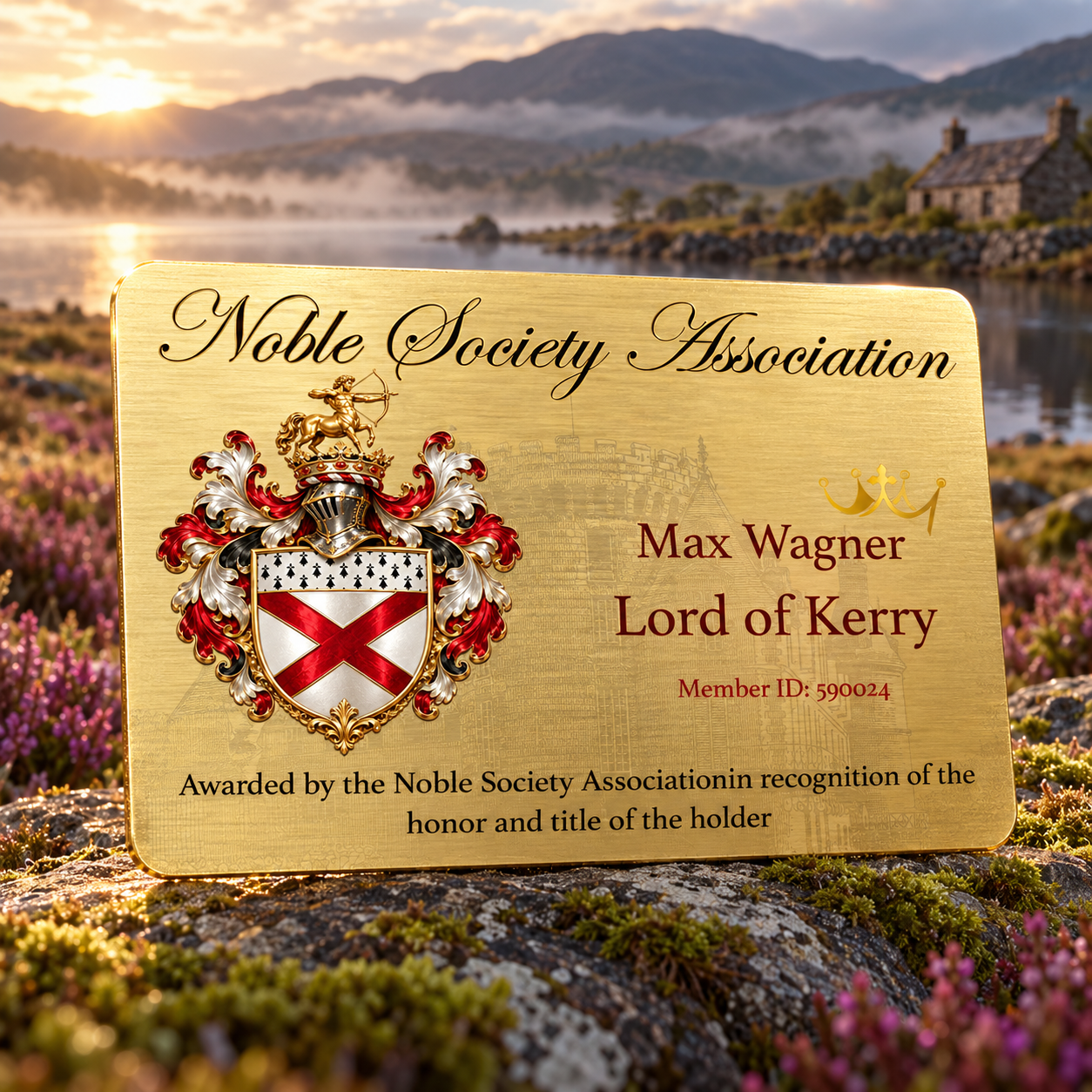
Golden ID Card
Crafted from premium aluminum in business card format, the gold ID Card makes your title look stylish and mobile.
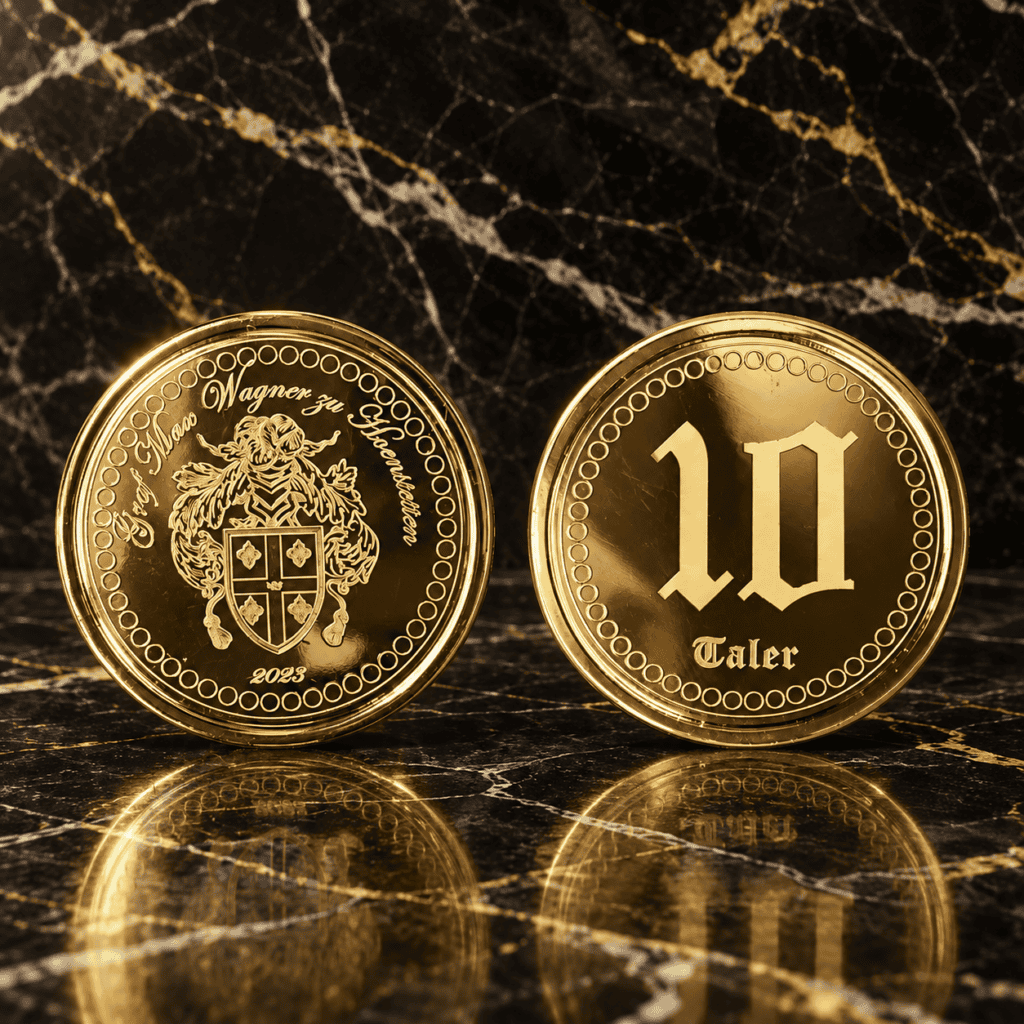
Gold coins
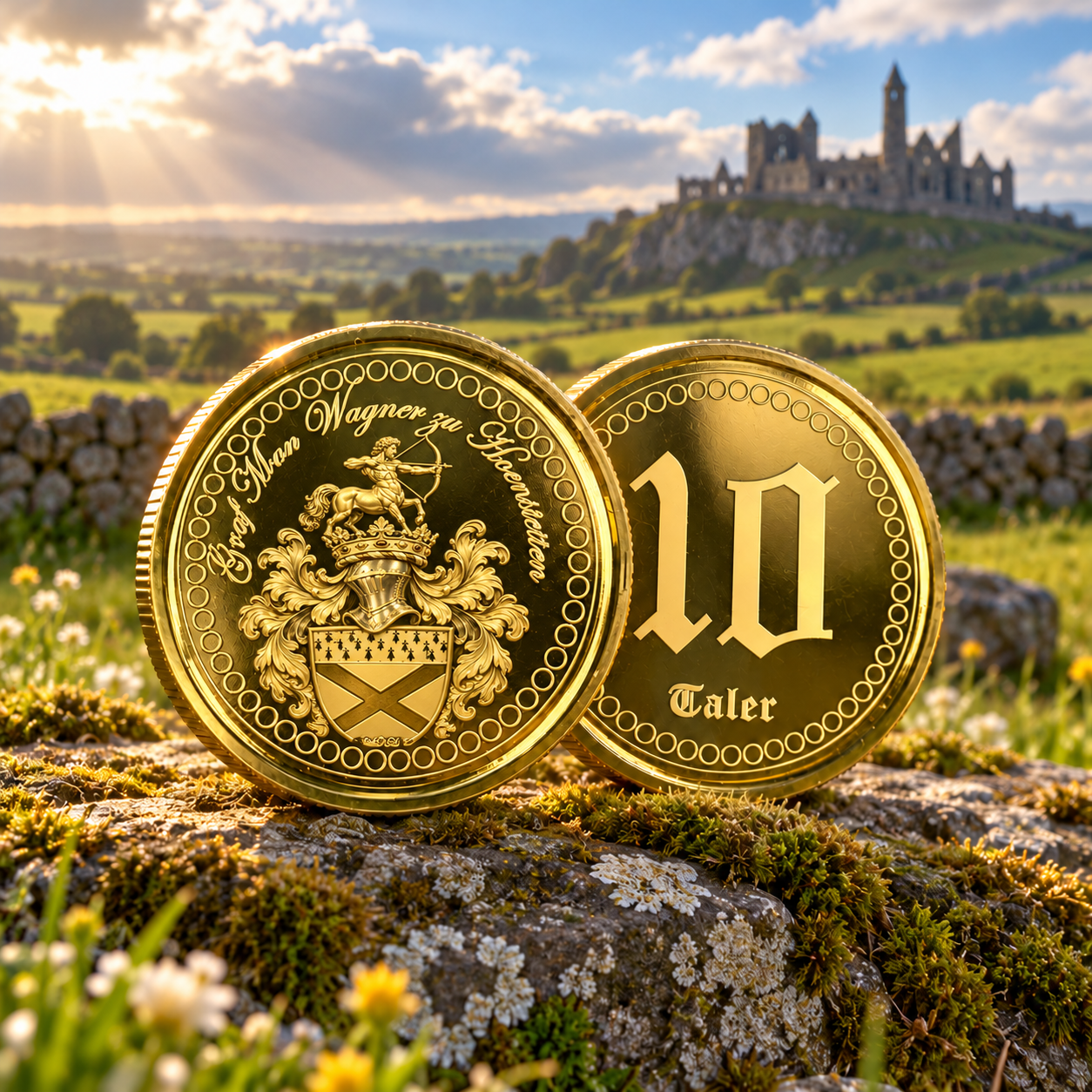
Fine gold and silver-plated medallions combine coats of arms, names and titles in a glossy, unique design.
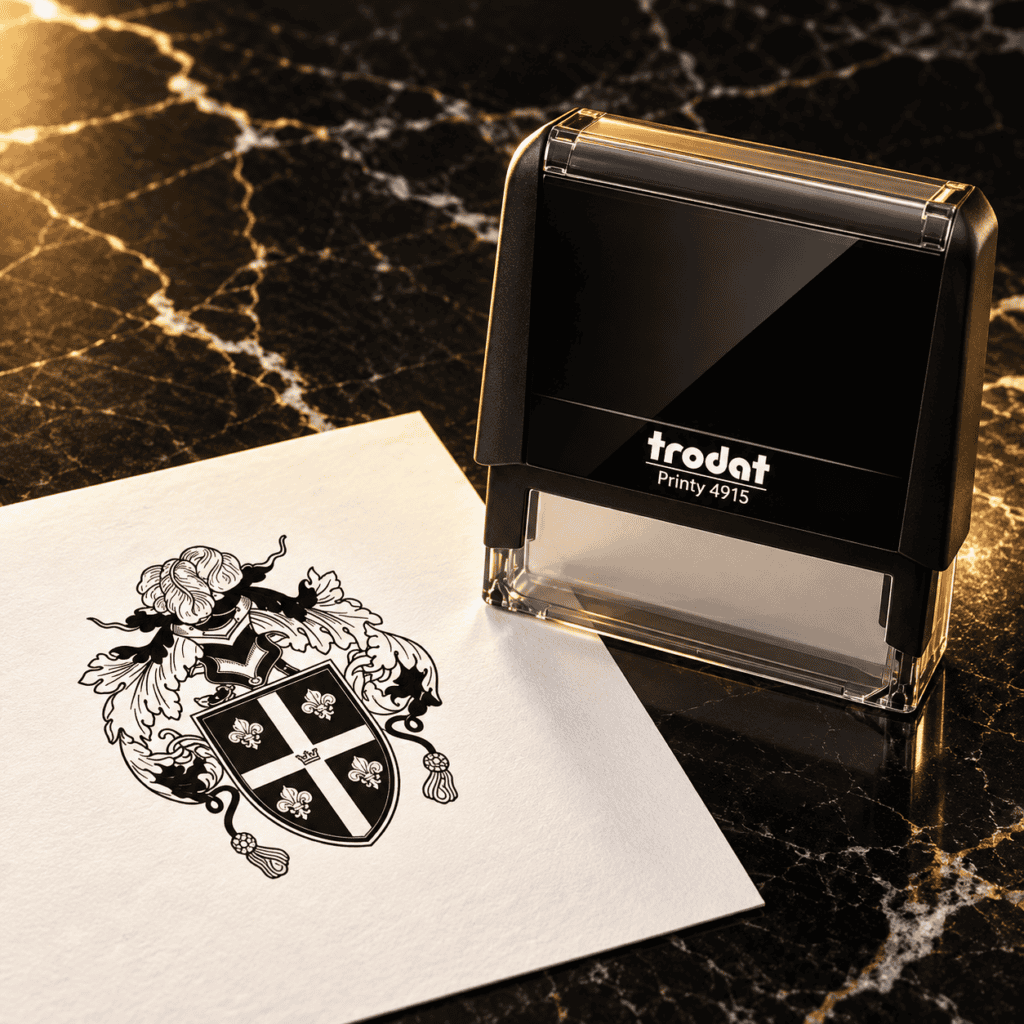
Emblem stamp
The self-inking stamp quickly, cleanly and precisely transfers your personal emblem onto letterhead paper.

My own wine
Choose fine red or white wine with an elegant, personalized label for a stylish look.

Wappen Gläser
The masterfully engraved wine glasses display their coat of arms, name and title in stunning brilliance.
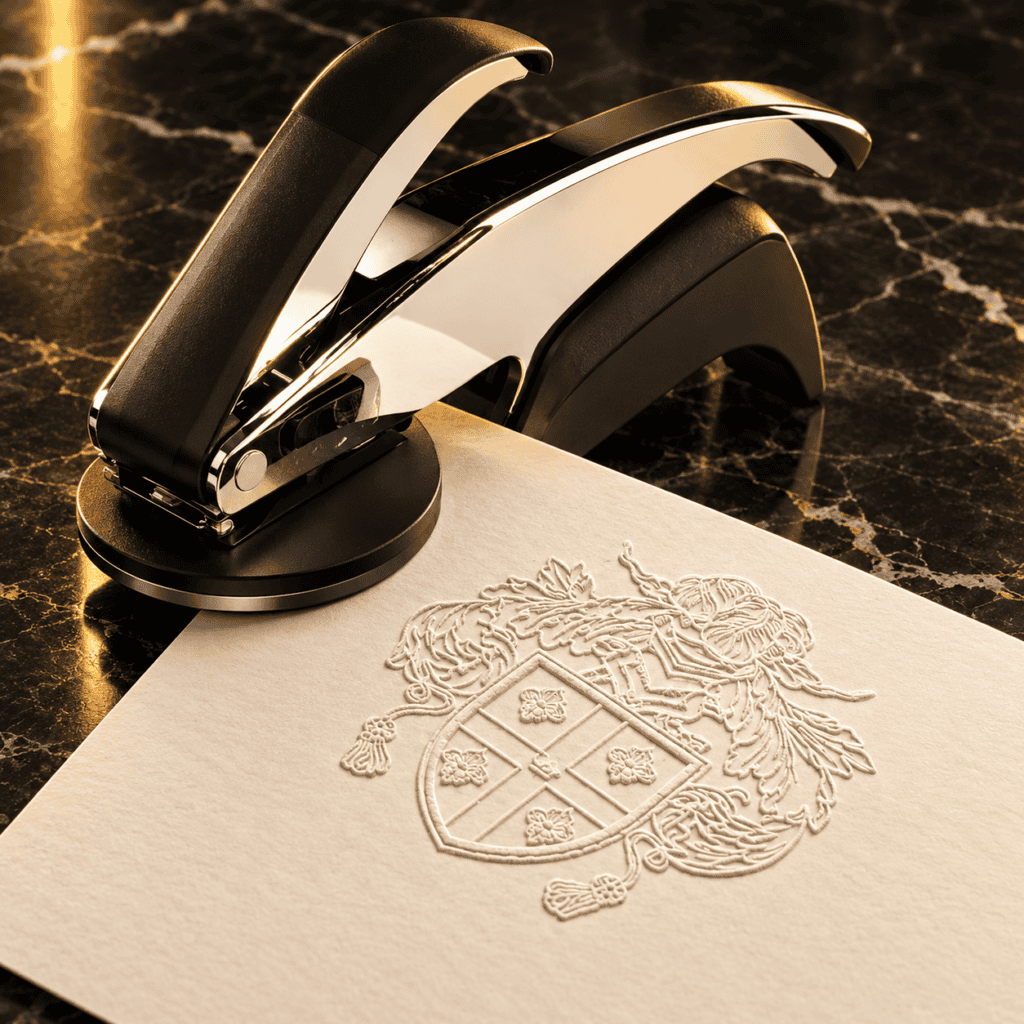
Precision pliers
The elegant embossing pliers embellishes letterheads or documents with a tactile, colourless relief embossing.
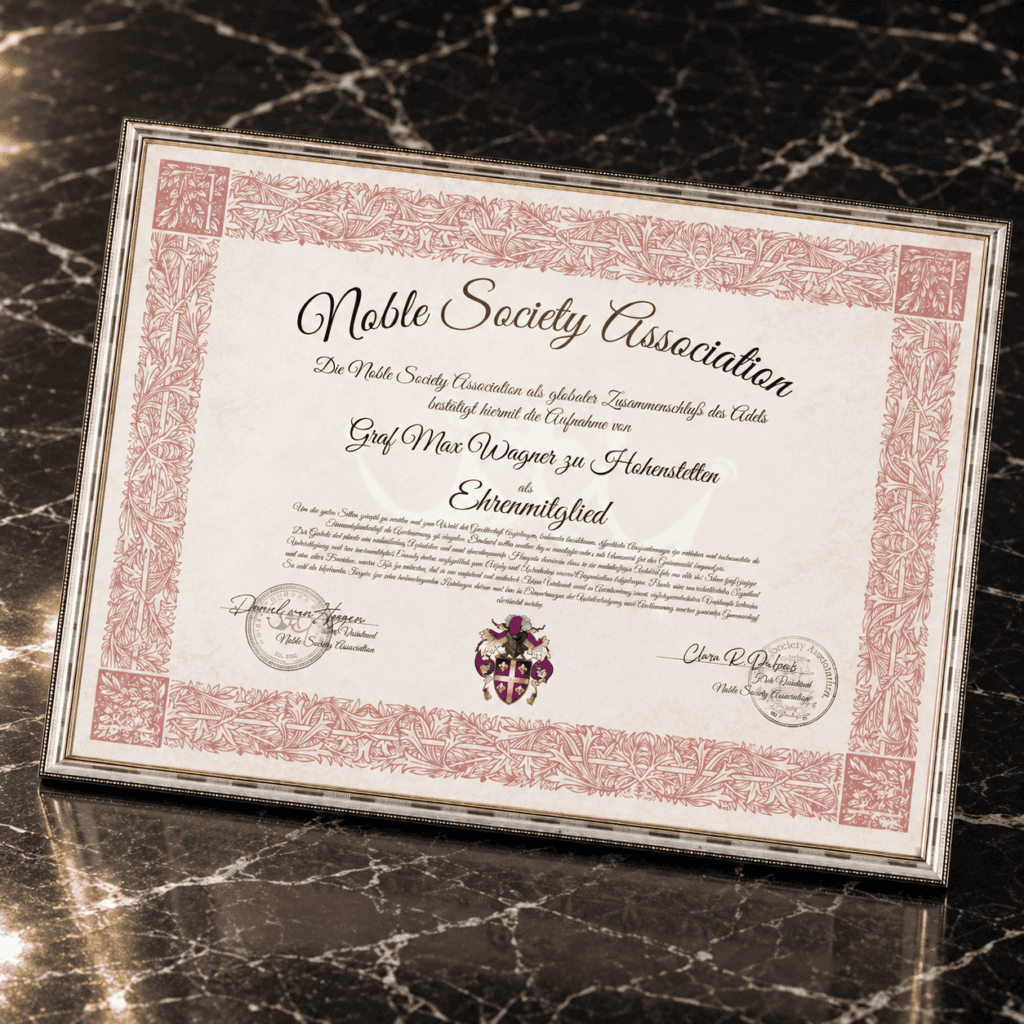
Honorary membership
Membership of the Noble Society Institute enriches your title with another dimension of exclusive representation. Validated by a magnificent certificate in your name, with no ongoing fees or obligations.