Description
Information about the family history and the coat of arms
Family history
▼
Family history Kōshaku of Echizen
Duke of Echizen
The history of the Echizen-Matsudaira family begins with Yūki Hideyasu, the second son of Tokugawa Ieyasu, born in 1574. As a young man, he was immediately drawn into the great political arena: he was initially accepted by Toyotomi Hideyoshi and later took over the prestigious house of Yūki. During the crucial conflicts over the reorganization of Japan, Hideyasu kept important opponents in the East in check. In 1600, in recognition of his achievements, he received the province of Echizen with an exceptionally large income of 680,000 koku.
In Kitanoshō, Hideyasu built a powerful castle and a planned residential city. With this, he created the foundation of present-day Fukui. His descendants again took the name Matsudaira and, as relatives of the Tokugawa, belonged to the most prestigious noble houses in the country. Under Tadamasa, the third lord of the line, the city was named Fukui in 1624.
For over seventeen generations, the Echizen Matsudaira ruled the principality. They promoted administration, crafts, and education while preserving an impressive collection of chronicles and Urkundebooks. Their reformist spirit gained particular momentum in the 19th century under Matsudaira Yoshinaga, better known as Shungaku. He modernized the administration, supported Western knowledge, and gathered wise advisors such as Hashimoto Sanai and Yuri Kōsei around him. Even after his retirement, Shungaku remained a significant voice in Japanese politics.
With the reorganisation of the Meiji period, the role of the family changed from that of a ruling princely house to that of a respected noble lineage. Their legacy extends far beyond the time of the domain: The Fukui Prefectural Archives lists Matsudaira Munehiro as the twentieth family head today. Castle ruins, urban planning, and the Matsudaira collection continue to tell the story of a family that shaped Echizen over the centuries and accompanied Japan’s journey into modernity with attention.
Sources: Fukui City Museum (history-museum.city.fukui.lg.jp), Fukui Prefectural Archives (library-archives.pref.fukui.lg.jp), Fukui City (city.fukui.lg.jp), National Japanese Library (ndl.go.jp)
Coat of arms & Heraldry
▼
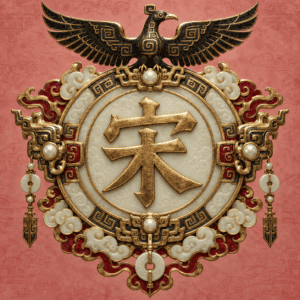
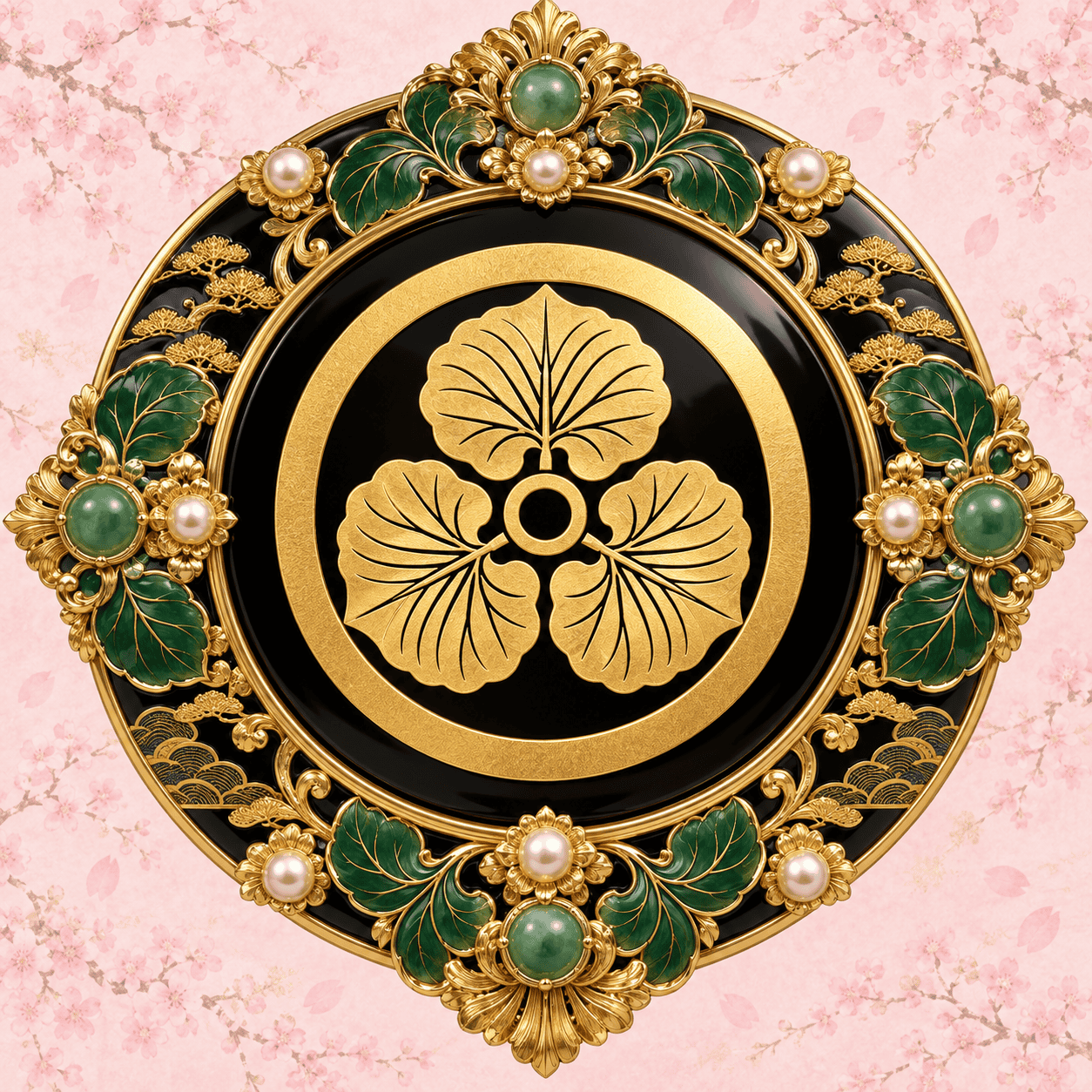
Family coat of arms Kōshaku of Echizen
The Mitsuba-aoi mon of Yūki Matsudaira as an attribution to the Fukui-Han princely house in Echizen.
On a black round lacquer panel are three golden hawthorn leaves, with their stems directed towards a small central ring and enclosed by a golden circle; above this is a black Kabuto with a golden Kuwagata, dark green strings, and pine and wave ornaments.
After Sekigahara, Hideyasu Yūki received Echizen and founded the Matsudaira domain of Fukui-han, which lasted there for about 270 years.
Sources: Official Travel Guide of Fukui Prefecture, Edo-Tokyo Museum, Echizen City
Overview of your title package
What the title of nobility contains
Discover the fascination of historical noble titles. With each appointment, you receive a first-class package that perfectly combines tradition, personal recognition, and stylish representation:
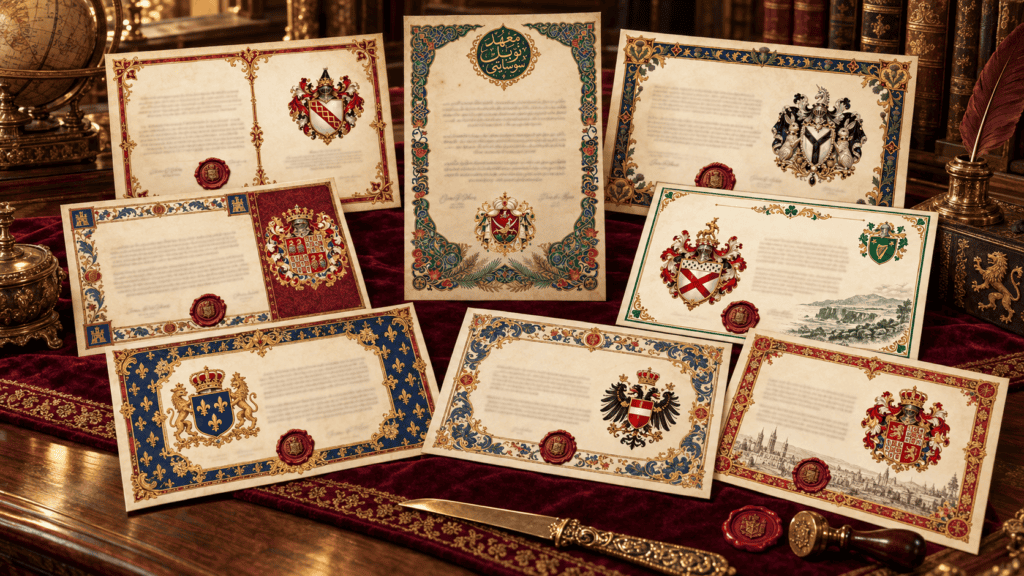
Your certificate
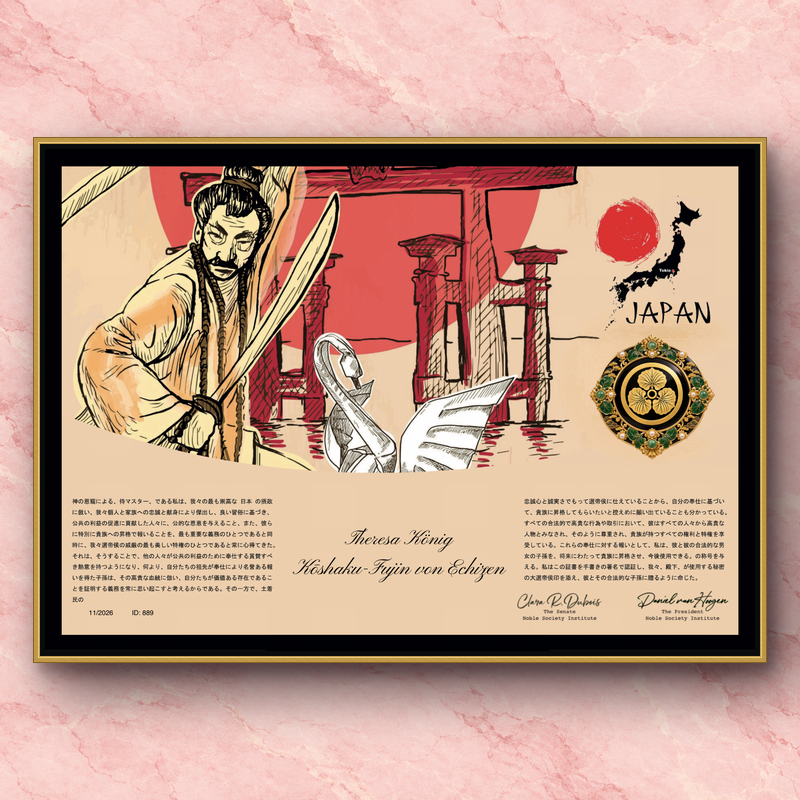
Authentic design with a historic flair: For each region, we create a certificate of appointment in the distinctive, country-specific style – complete with the appropriate coat of arms of your chosen title.
Share this special moment: Upon request, you will receive a free partner certificate and certificates for your children, so that the whole family can participate in the tradition.
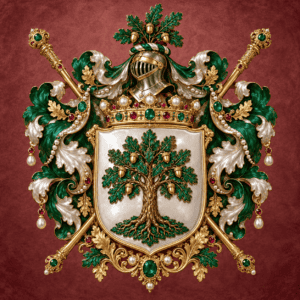
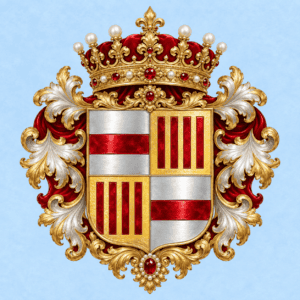
Your own coat of arms
Each title comes with the corresponding historical coat of arms, which you receive as a high-resolution file. You can use it completely freely in private and professional contexts – whether on letterhead, business cards, or seals.

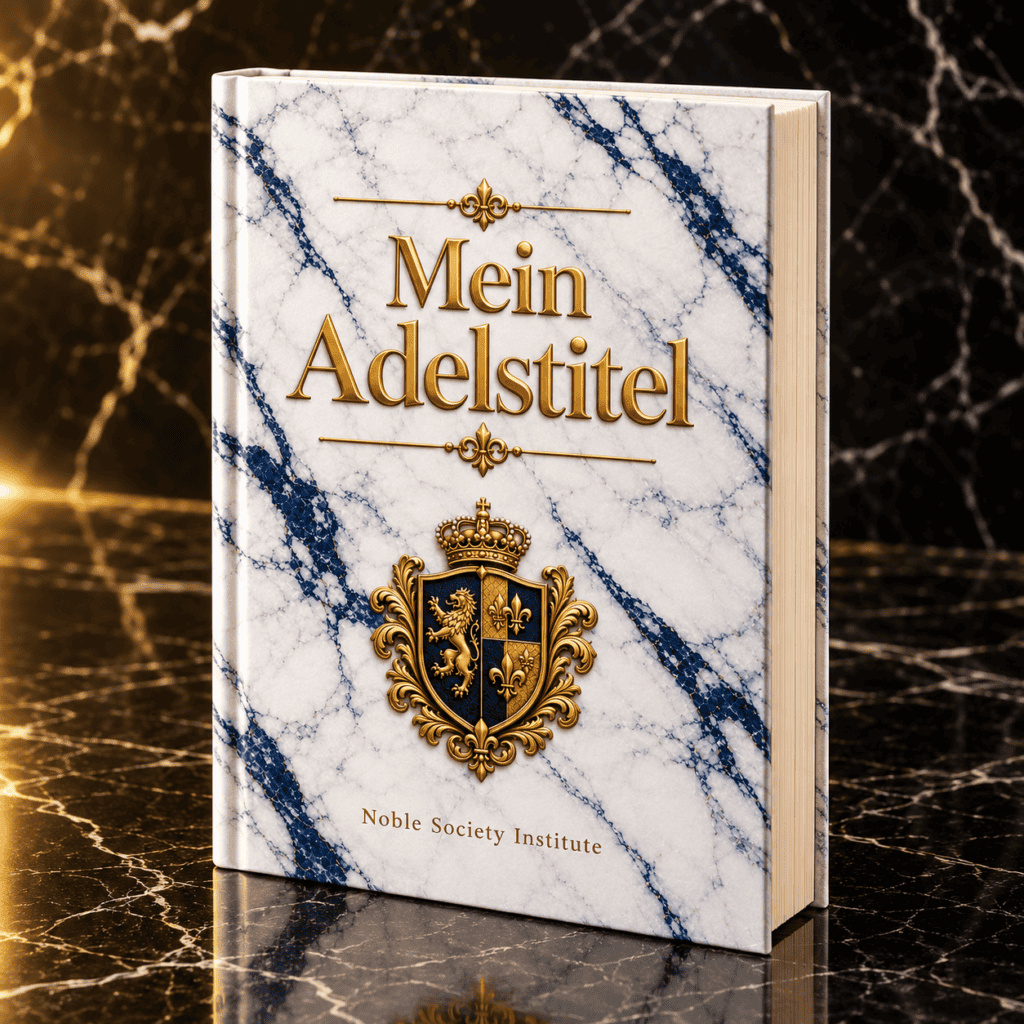
The Companion Book
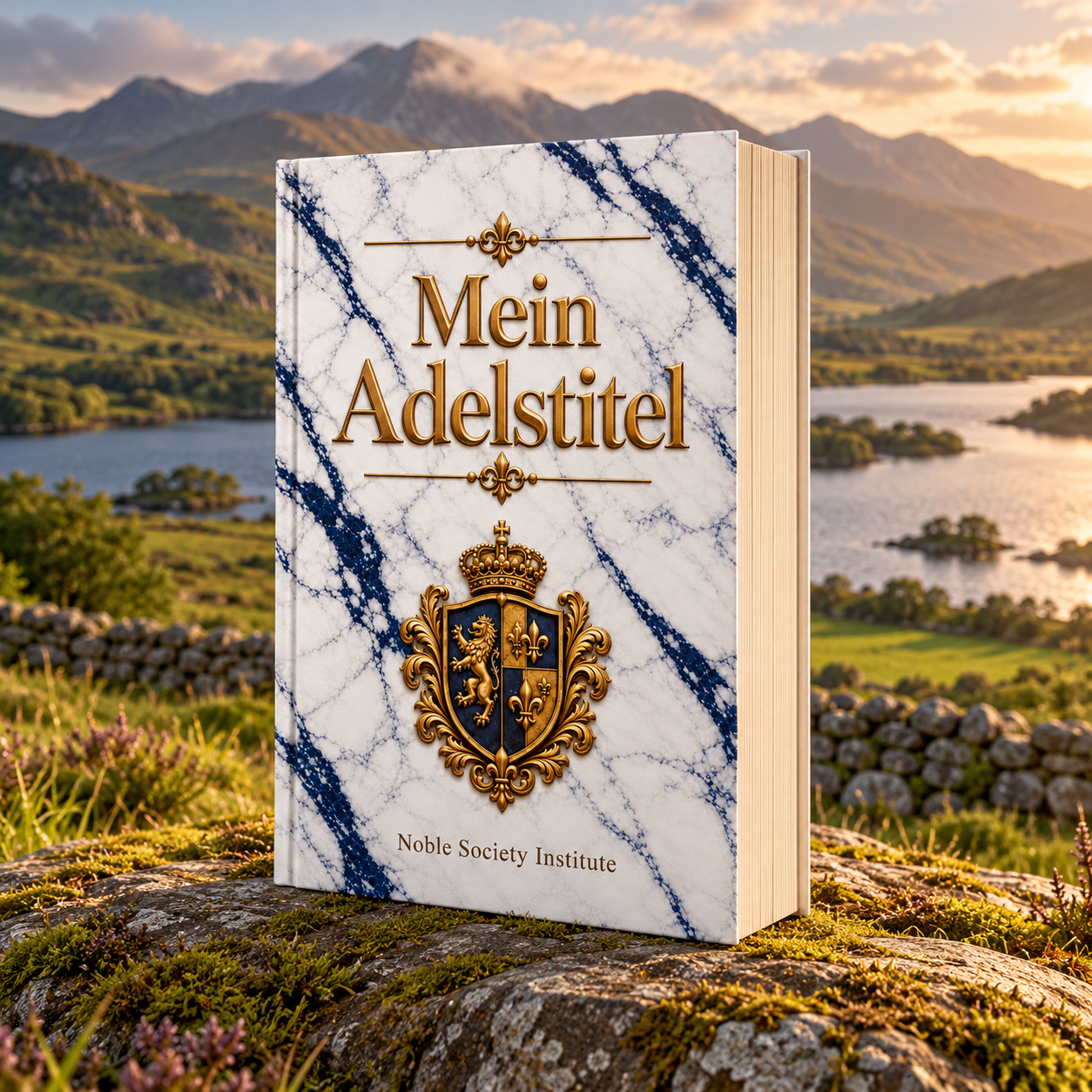
The book „My Title“ takes you in detail into the multifaceted world of your new aristocratic title and offers valuable practical tips for everyday life, stylish guidance, and background information on history.
Our accessories
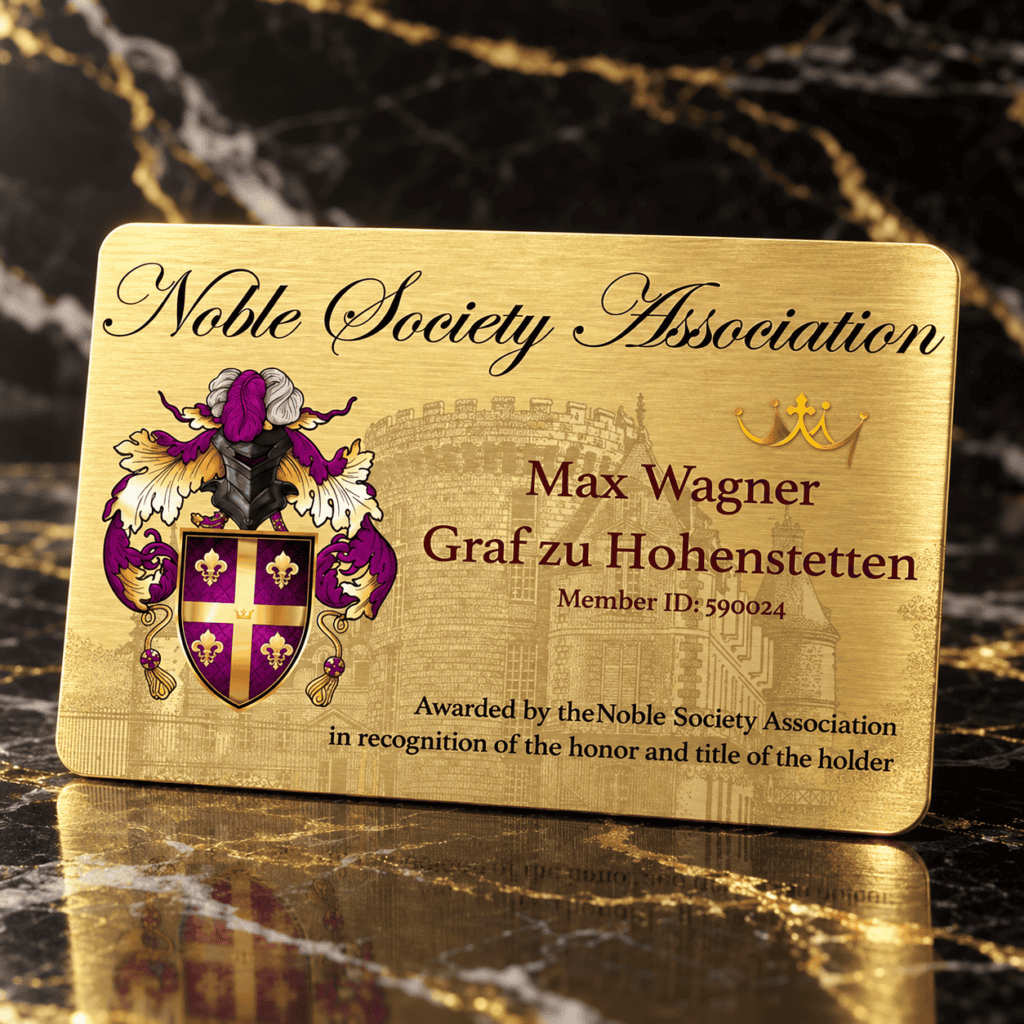
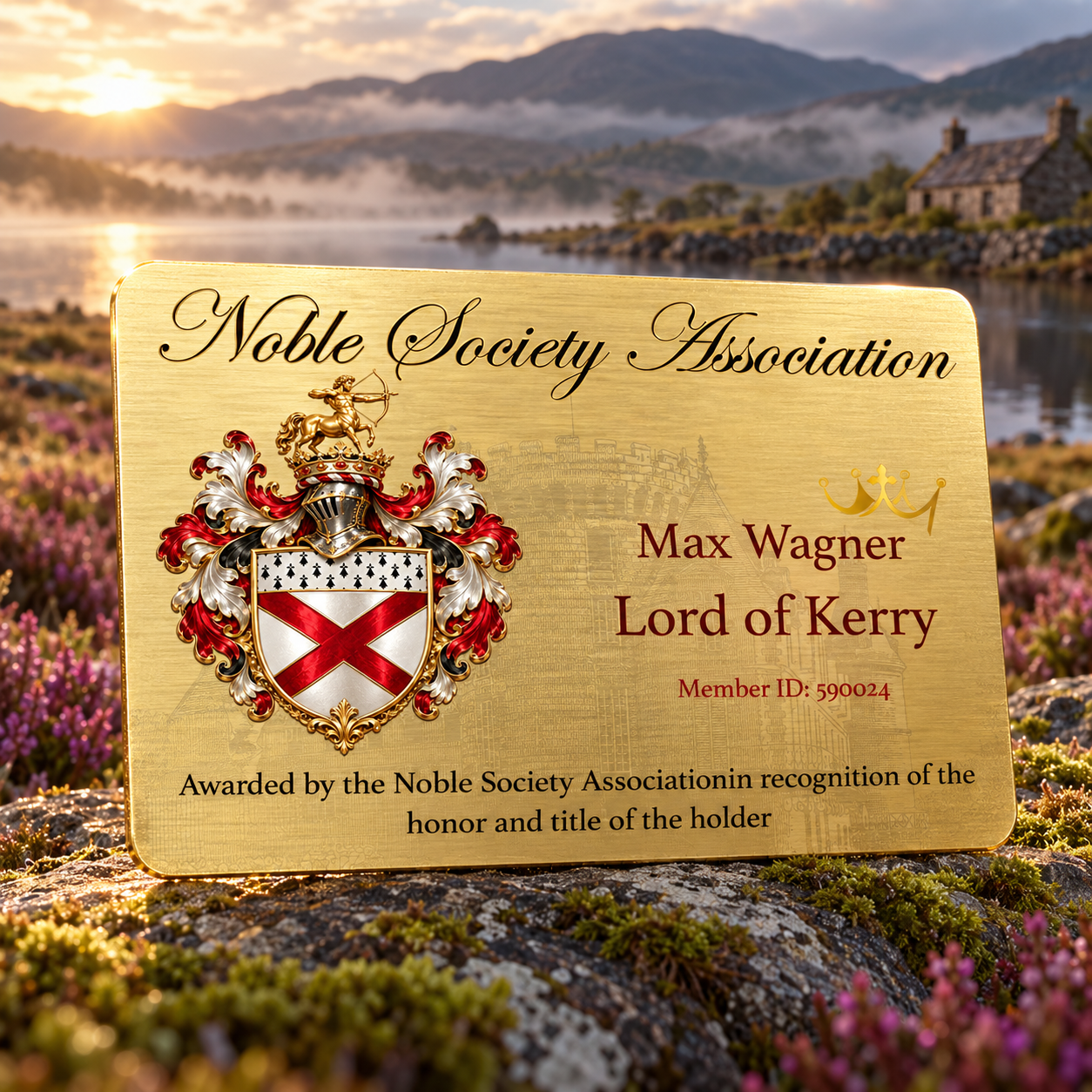
Golden ID Card
Crafted from premium aluminum in business card format, the gold ID Card makes your title look stylish and mobile.
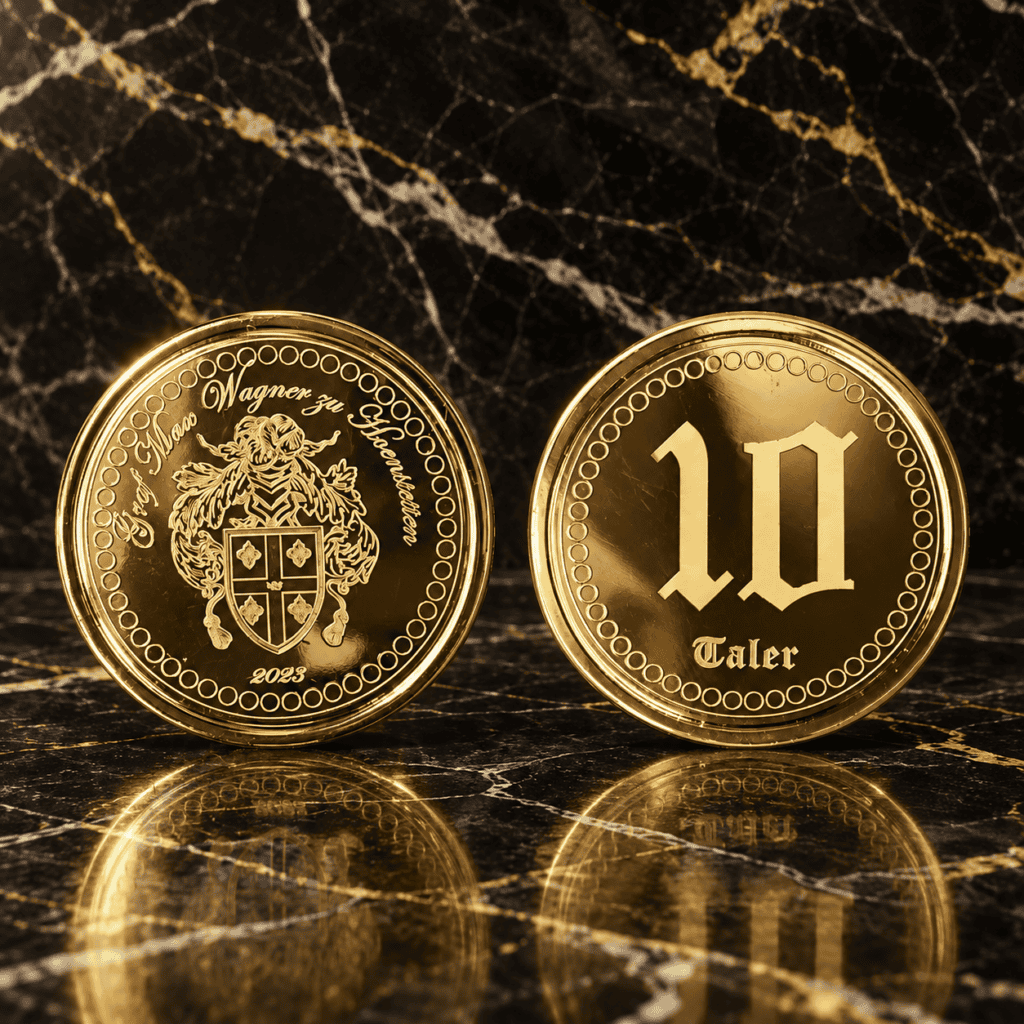
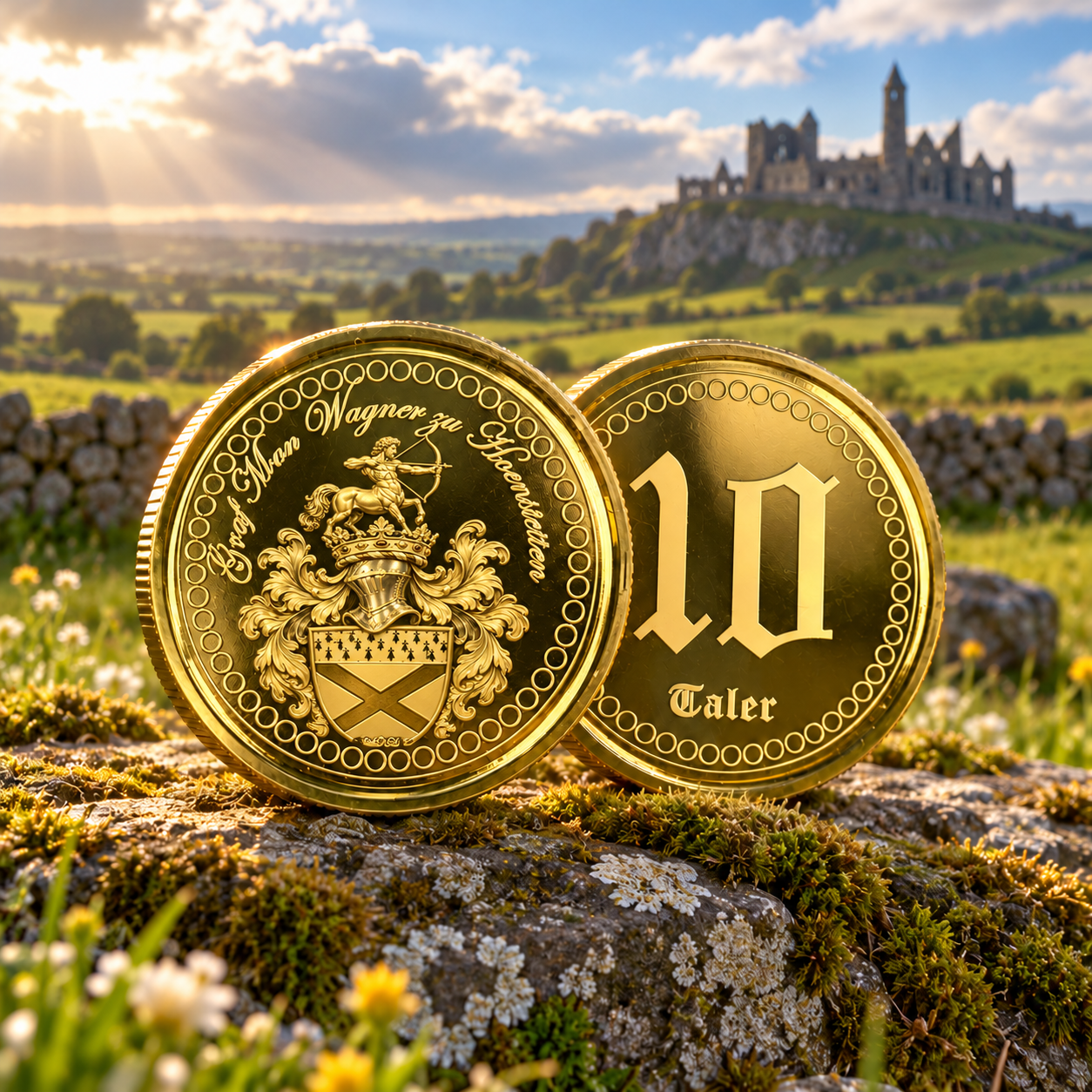
Gold coins
Fine gold and silver-plated medallions combine coats of arms, names and titles in a glossy, unique design.
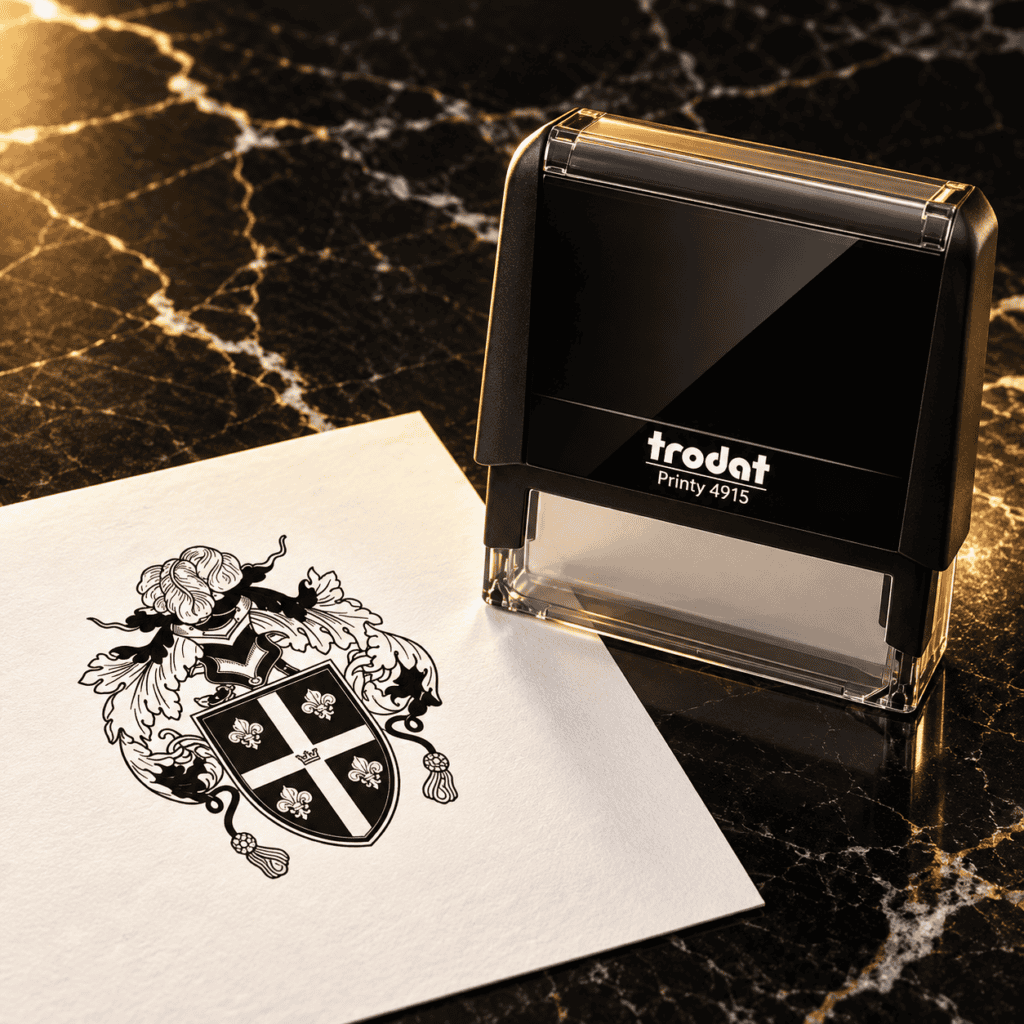
Emblem stamp
The self-inking stamp quickly, cleanly and precisely transfers your personal emblem onto letterhead paper.
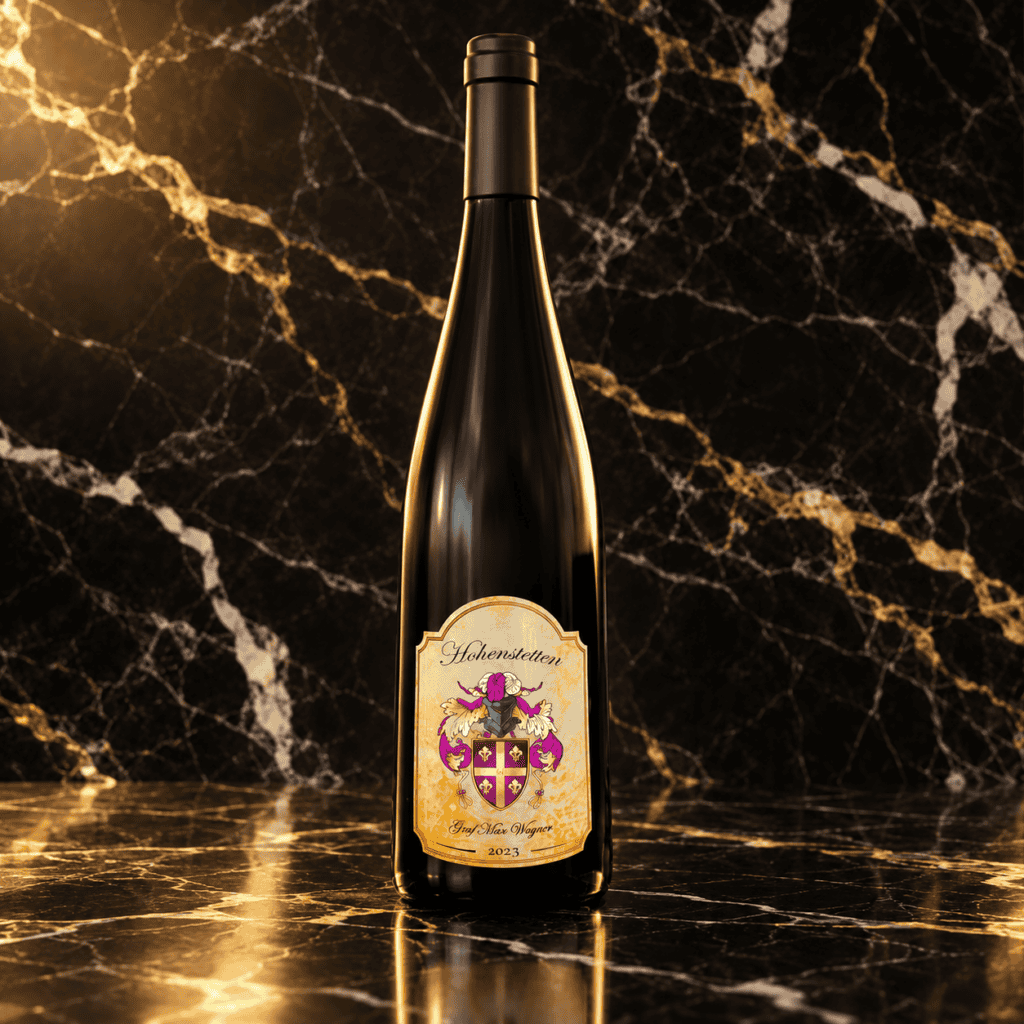
My own wine
Choose fine red or white wine with an elegant, personalized label for a stylish look.
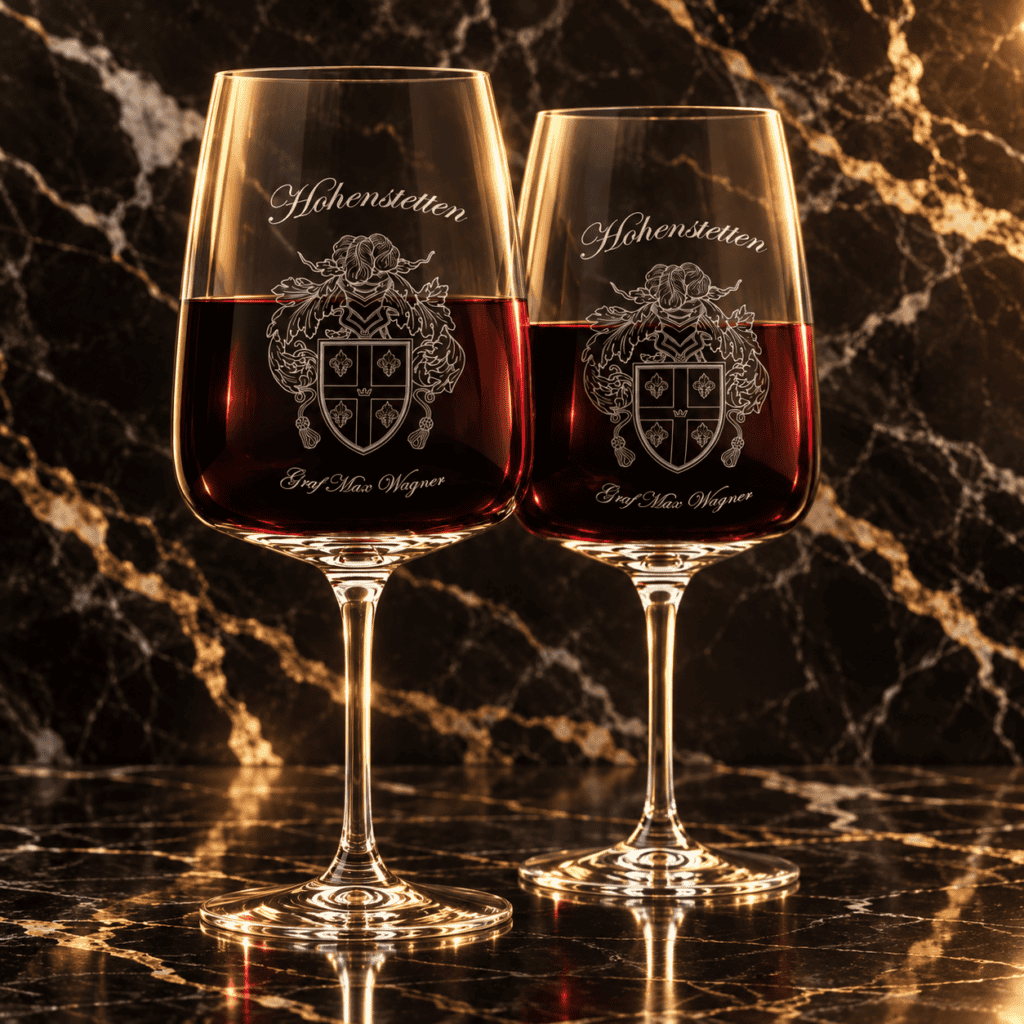
Wappen Gläser
The masterfully engraved wine glasses display their coat of arms, name and title in stunning brilliance.
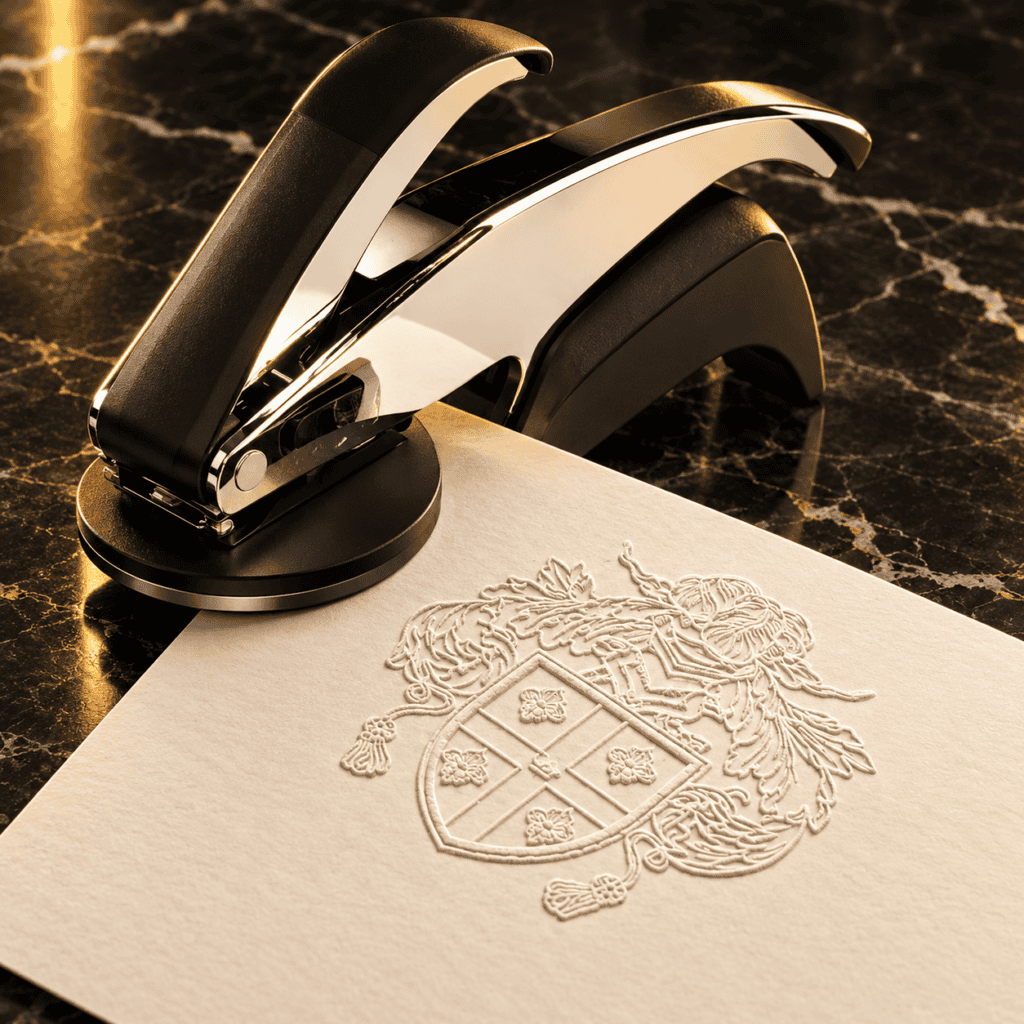
Precision pliers
The elegant embossing pliers embellishes letterheads or documents with a tactile, colourless relief embossing.
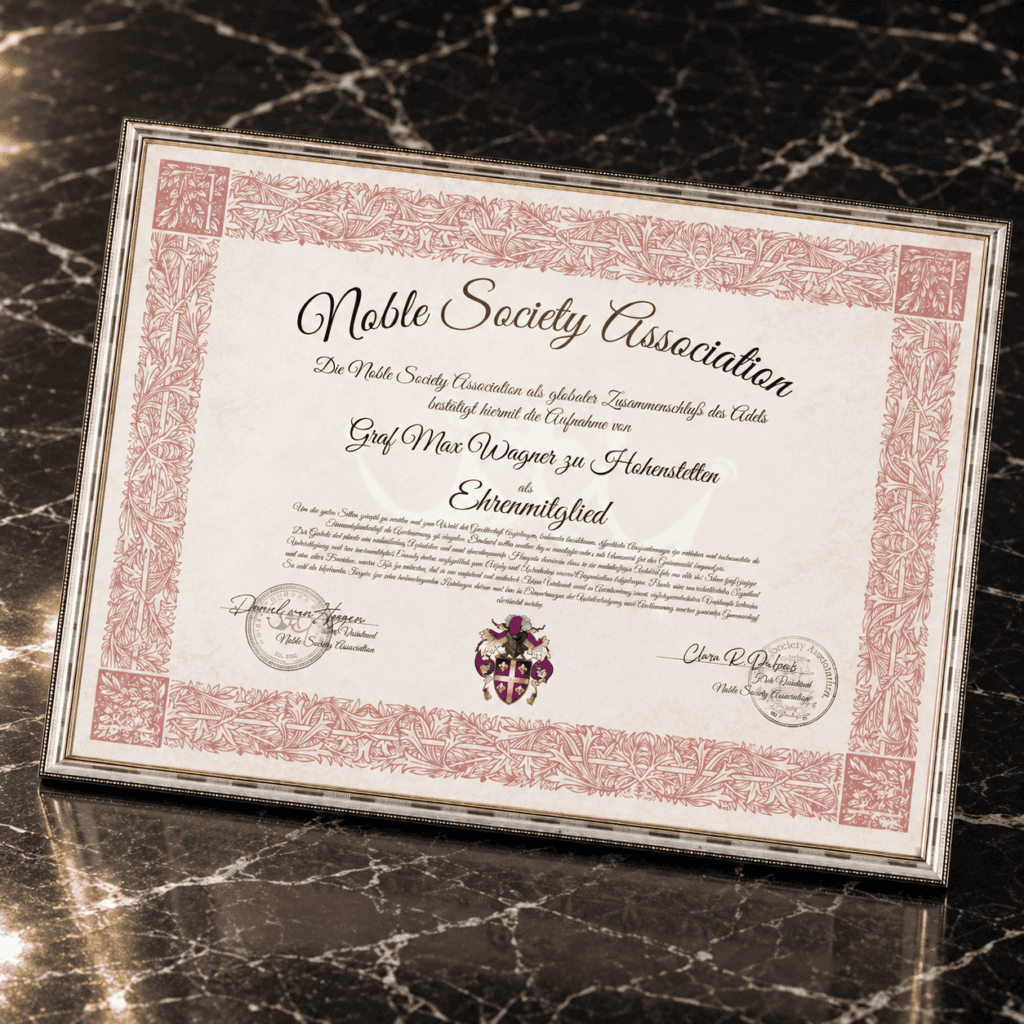
Honorary membership
Membership of the Noble Society Institute enriches your title with another dimension of exclusive representation. Validated by a magnificent certificate in your name, with no ongoing fees or obligations.