
Description
Information about the family history and the coat of arms
Family history
▼
Family history Prince of Sandomir
Prince of Sandomir
The history of the Dukes of Sandomir is part of the great family chronicle of the Piasts. When Duke Bolesław III Schiefmund divided his rule among his sons in 1138, Sandomir became the center of its own sub-princely state. Heinrich von Sandomir, a younger son of Bolesław, built the first court. From the castle located high above the Vistula, he ruled the land, promoted church foundations, and participated in extensive travels and campaigns.
After Heinrich's time, Sandomir initially fell to his brothers. In 1173, Casimir II, called the Righteous, assumed the rule. With him began the particularly influential small-Polish line of the house. Casimir linked Sandomir with Kraków, gained the trust of the nobility and clergy, and promoted Romanesque churches in Sandomir and Wiślica. His wife Helena of Znaim brought connections to the Moravian-Bohemian high nobility.
Her son Leszek the White inherited Sandomir in 1194. Although he was still young, the family asserted its position and led the duchy through a turbulent era. Leszek served as senior prince of Poland on several occasions and sought to reconcile the various Piast lines. His marriage to the Rurikid princess Grzymisława linked Sandomir to the courts of the Rus.
From this union came Bolesław V., the Conqueror. Together with his wife Kinga of Hungary, he promoted cities, monasteries and the reconstruction after the severe invasions of the 13th century. Under their patronage, trade and religious life gained new strength. After Bolesław, further Piasts, including Leszek the Black and Władysław Ellenlang, continued the Sandomierz tradition.
With Władysław's unification of Poland in the early 14th century, the duchy became an enduring part of the renewed kingdom. The castle remained the royal center of the region. Thus, the Sandomir Piast family's legacy transformed into a shared Polish heritage, visible in churches, town plans, and the still impressive royal castle.
Sources: Polish Ministry of Education, State Archive of Poland (gov.pl), Adam Mickiewicz University in Poznań, Academy of Zamość
Coat of arms & Heraldry
▼
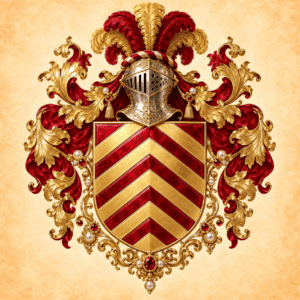
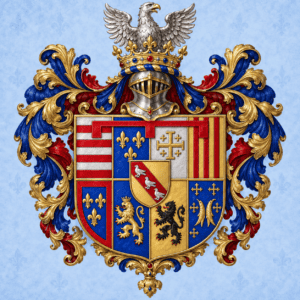
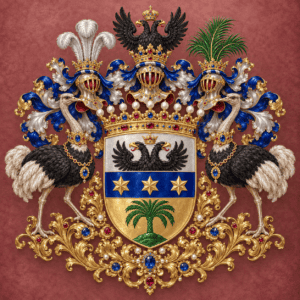
Family coat of arms Prince of Sandomir
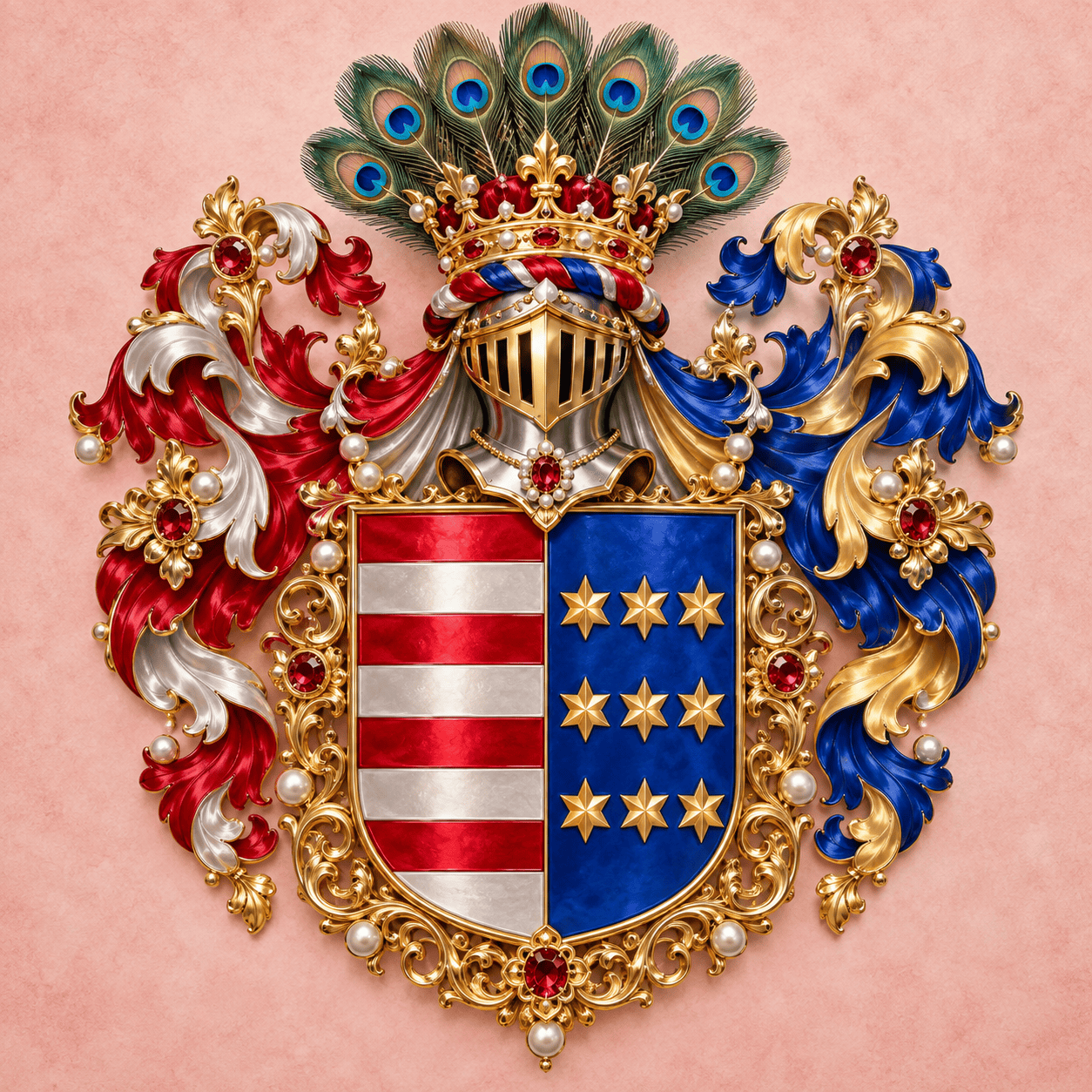
The depiction follows the medieval style Coat of arms of the Sandomir region. The divided shield with red-and-silver stripes and golden stars on blue is a tradition in Polish heraldry dating back to the late Middle Ages.
Split: right six times horizontally divided by red and silver; left nine golden six-pointed stars in blue, arranged three to three. Above the shield is a Polish ducal crown and a steel helmet; as a decorative element, a peacock feather fan. The ceilings are red-silver on the right, blue-golden on the left.
The country Coat of arms referred to this and later the Sandomir Voivodeship. Jan Długosz described the insignia of the Sandomir troops at the Battle of Grunwald in 1410 with strips and golden stars.
Sources: Jan Długosz, Banderia Prutenorum, Stefan Krzysztof Kuczyński, Polish territorial coats of arms, Sandomierz district, historical representation of the coat of arms, Polish medieval Wappenbooks
Overview of your title package
What the title of nobility contains
Discover the fascination of historical noble titles. With each appointment, you receive a first-class package that perfectly combines tradition, personal recognition, and stylish representation:
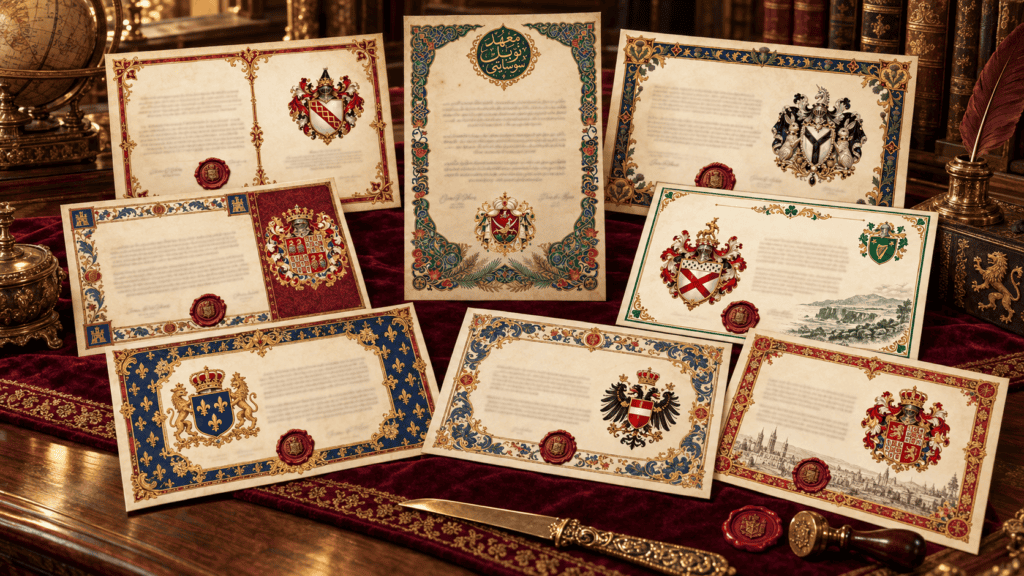
Your certificate
Authentic design with a historic flair: For each region, we create a certificate of appointment in the distinctive, country-specific style – complete with the appropriate coat of arms of your chosen title.
Share this special moment: Upon request, you will receive a free partner certificate and certificates for your children, so that the whole family can participate in the tradition.
Your own coat of arms
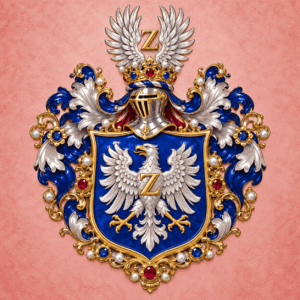
Each title comes with the corresponding historical coat of arms, which you receive as a high-resolution file. You can use it completely freely in private and professional contexts – whether on letterhead, business cards, or seals.

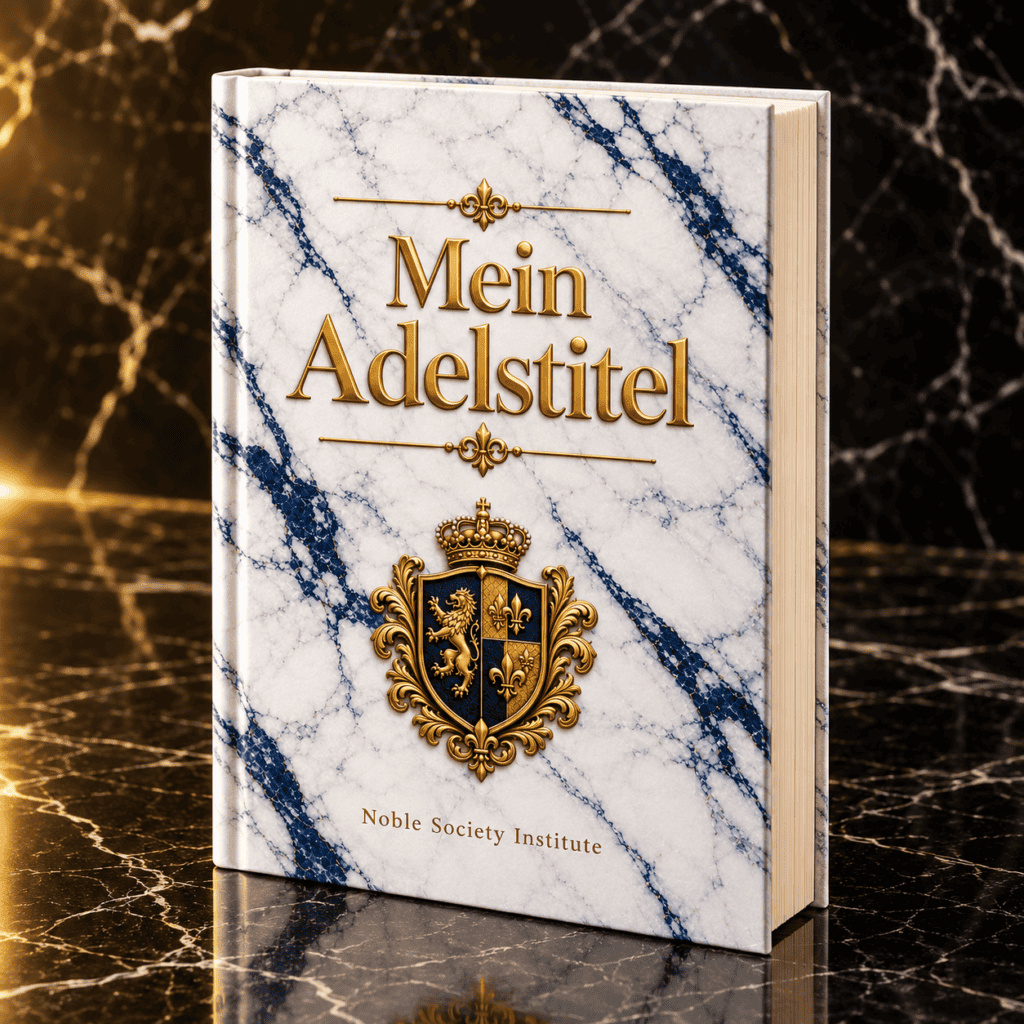
The Companion Book
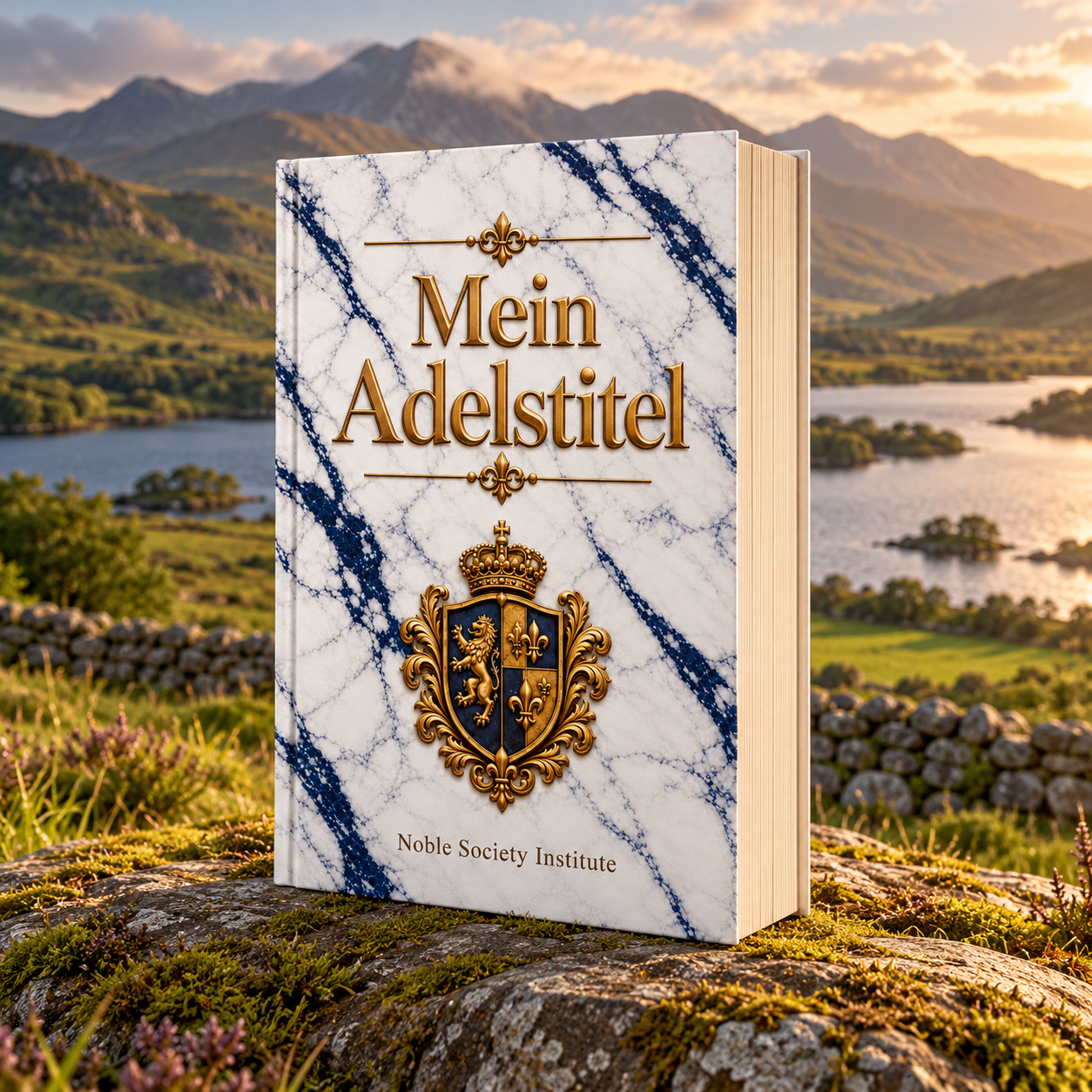
The book „My Title“ takes you in detail into the multifaceted world of your new aristocratic title and offers valuable practical tips for everyday life, stylish guidance, and background information on history.
Our accessories
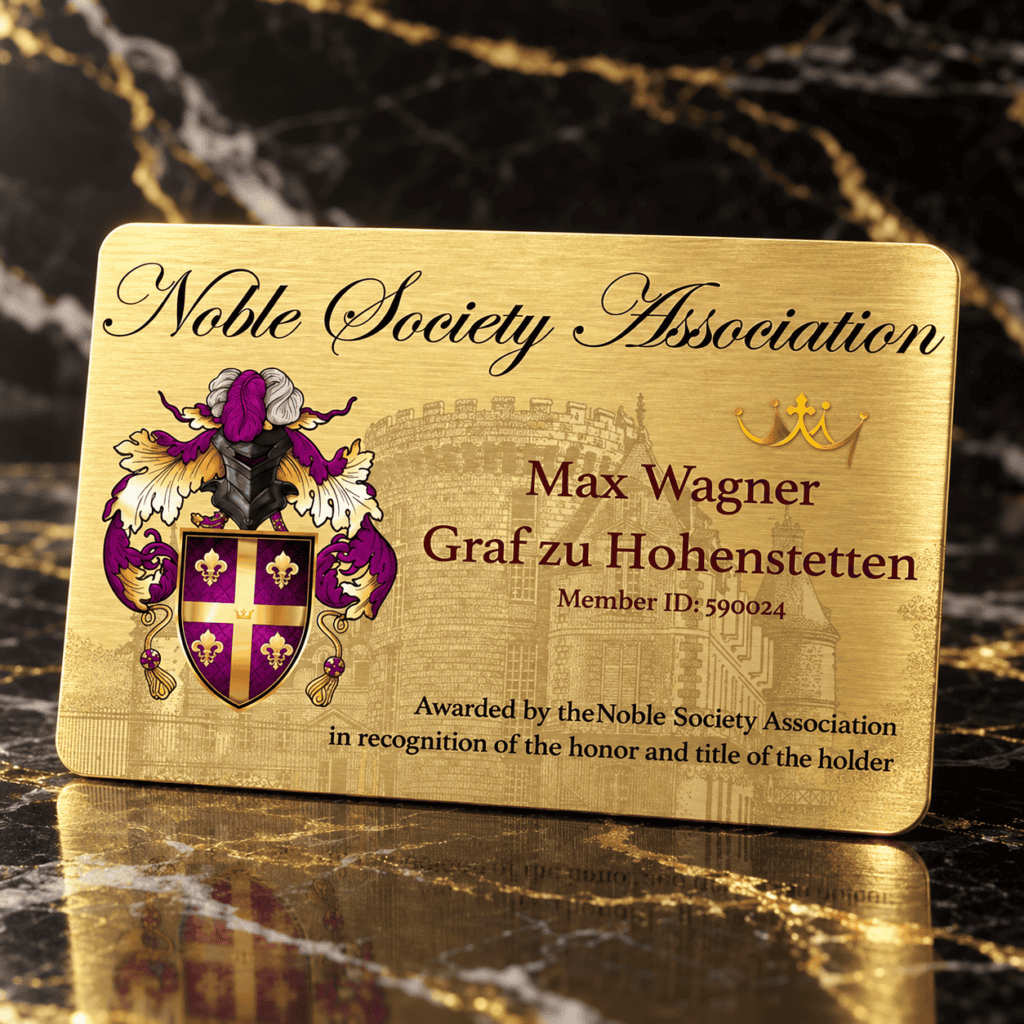
Golden ID Card
Crafted from premium aluminum in business card format, the gold ID Card makes your title look stylish and mobile.
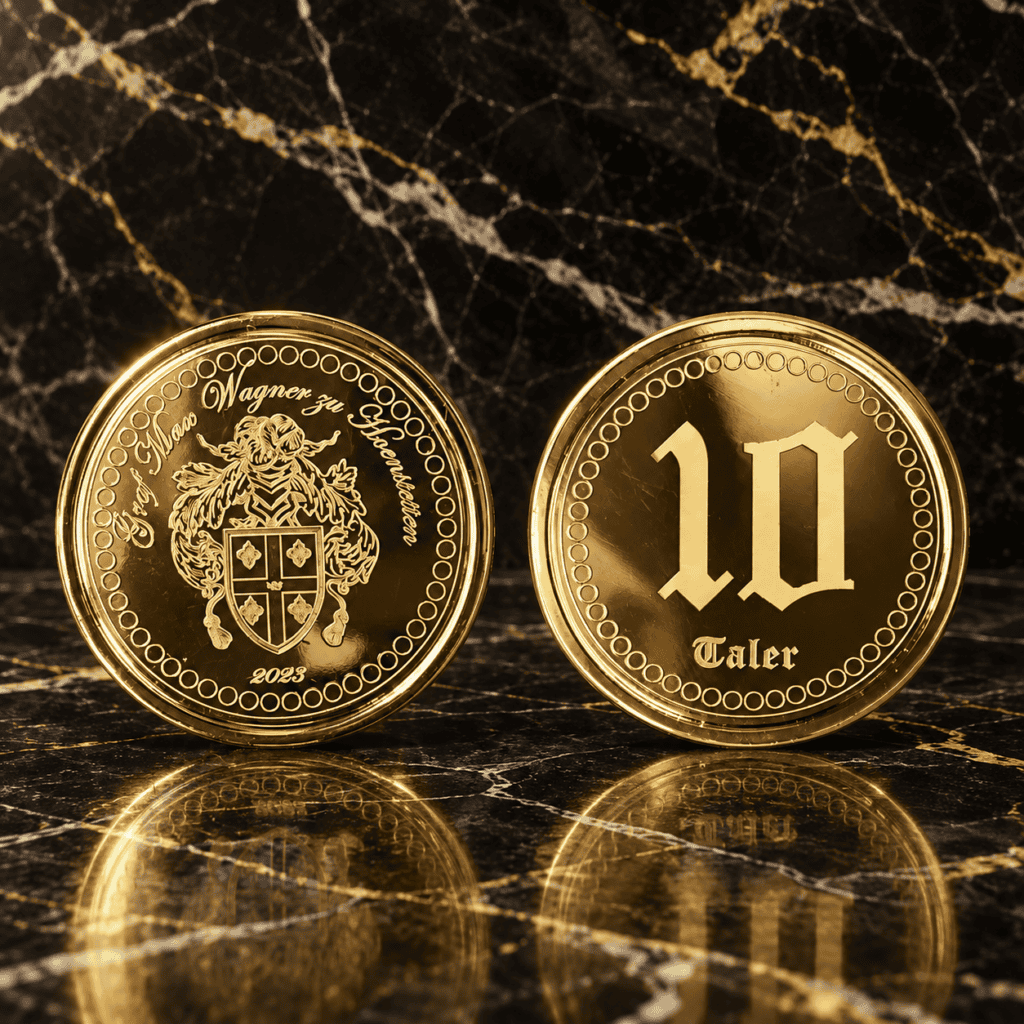
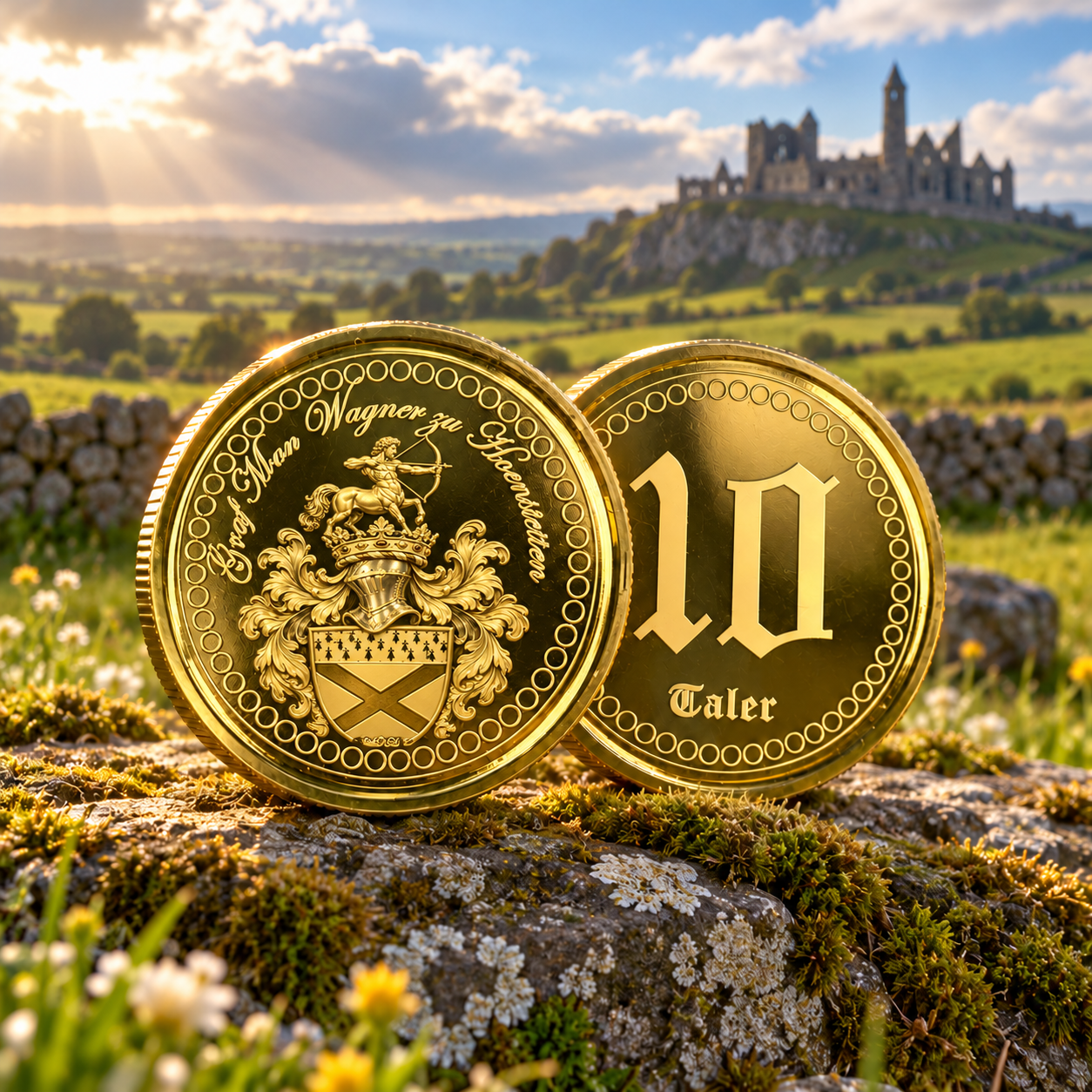
Gold coins
Fine gold and silver-plated medallions combine coats of arms, names and titles in a glossy, unique design.
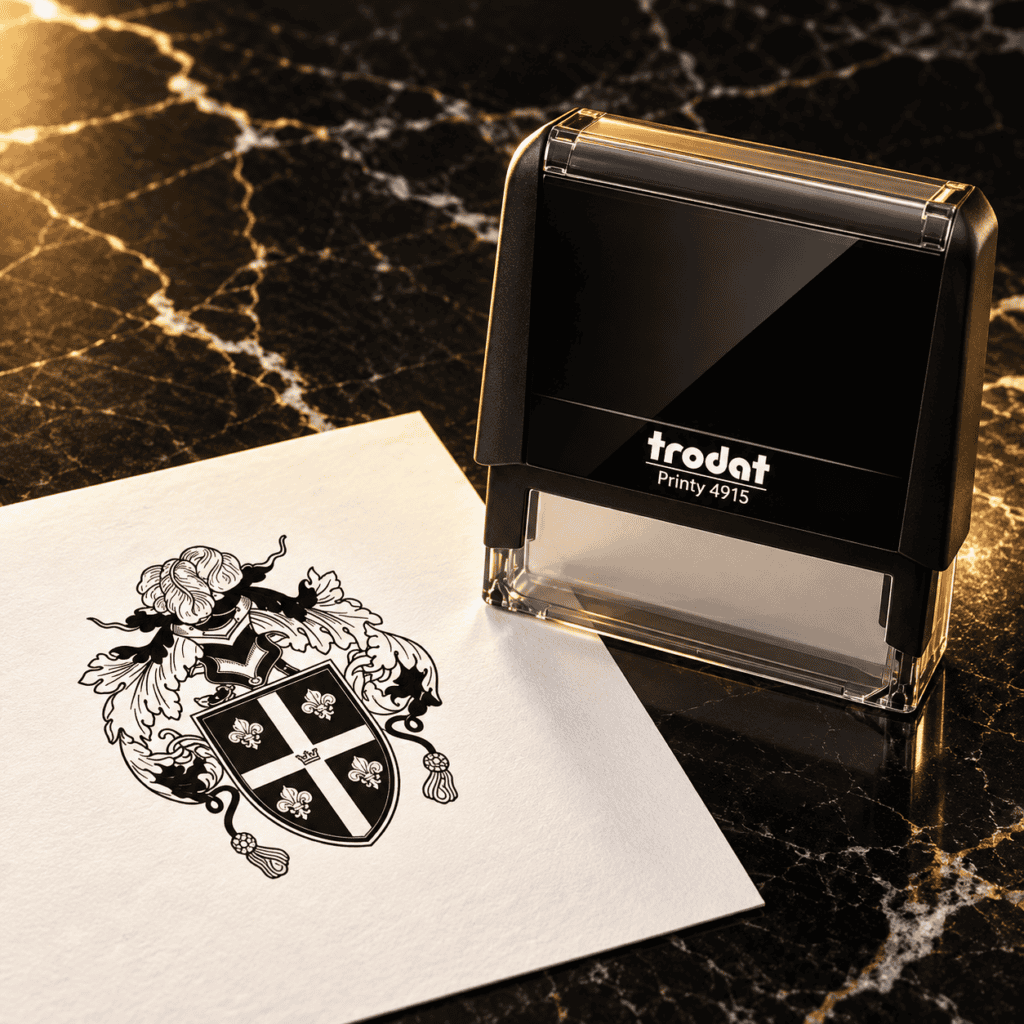
Emblem stamp
The self-inking stamp quickly, cleanly and precisely transfers your personal emblem onto letterhead paper.
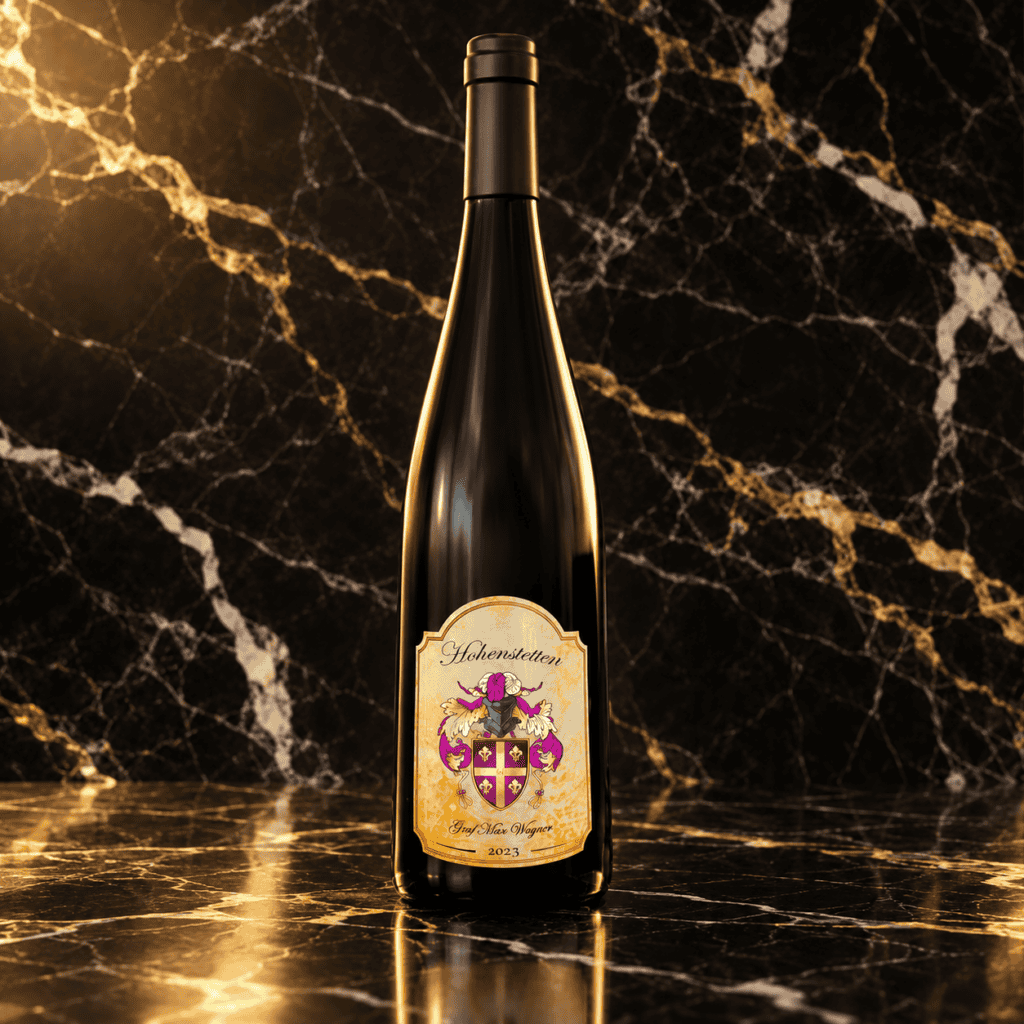
My own wine
Choose fine red or white wine with an elegant, personalized label for a stylish look.
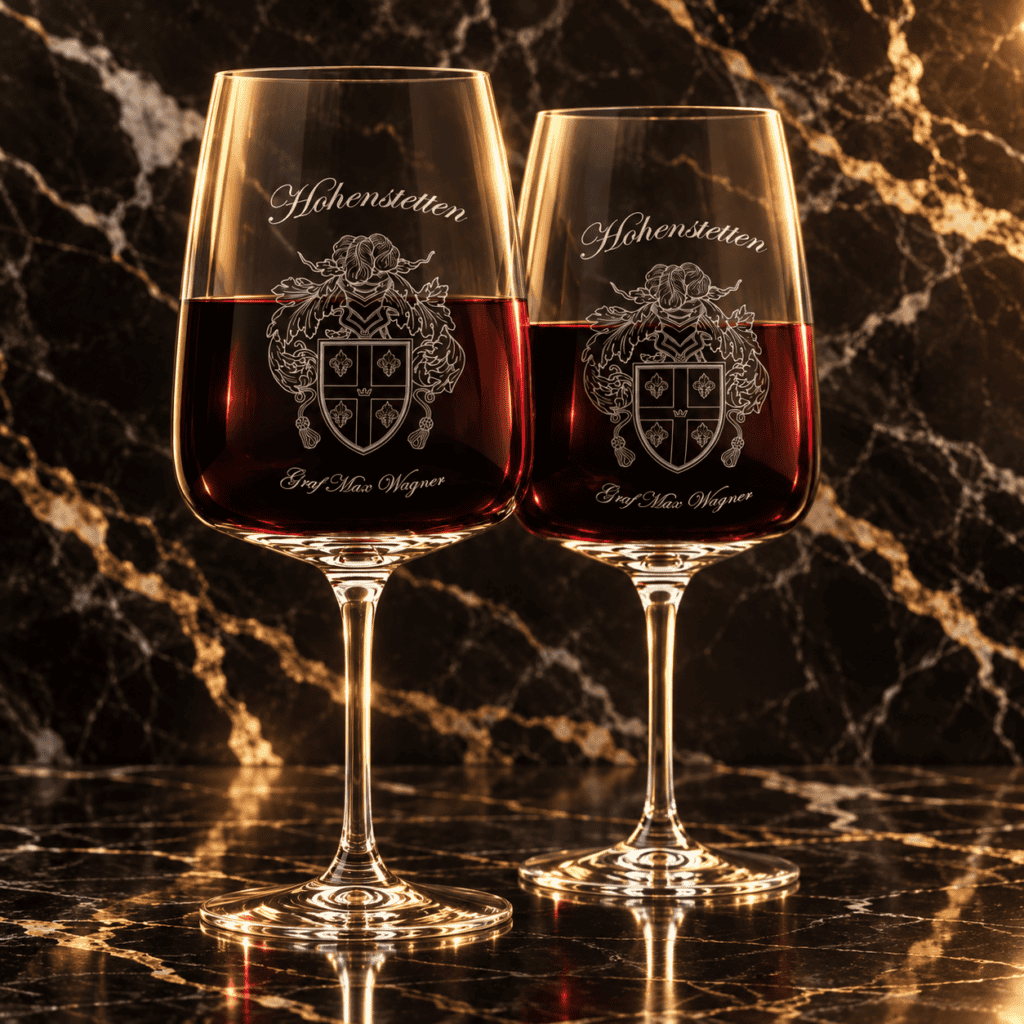
Wappen Gläser
The masterfully engraved wine glasses display their coat of arms, name and title in stunning brilliance.
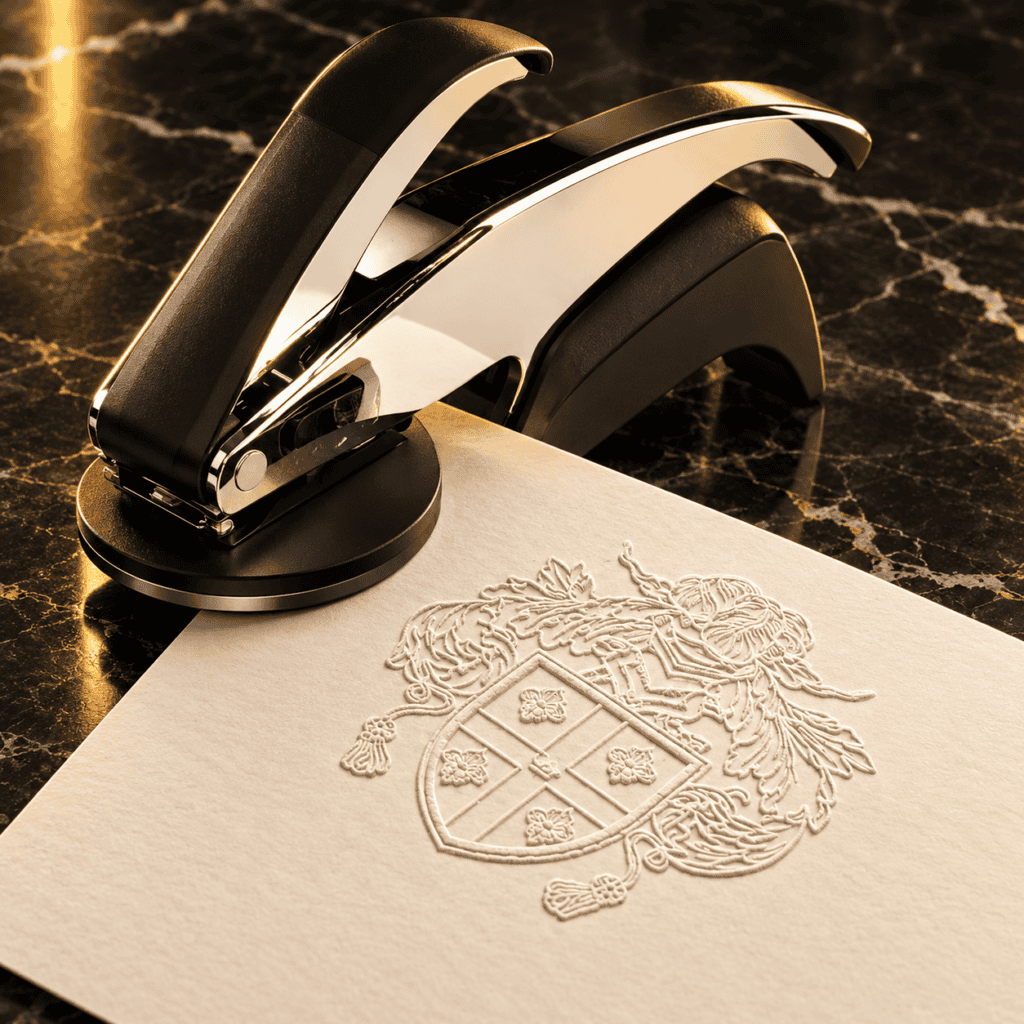
Precision pliers
The elegant embossing pliers embellishes letterheads or documents with a tactile, colourless relief embossing.
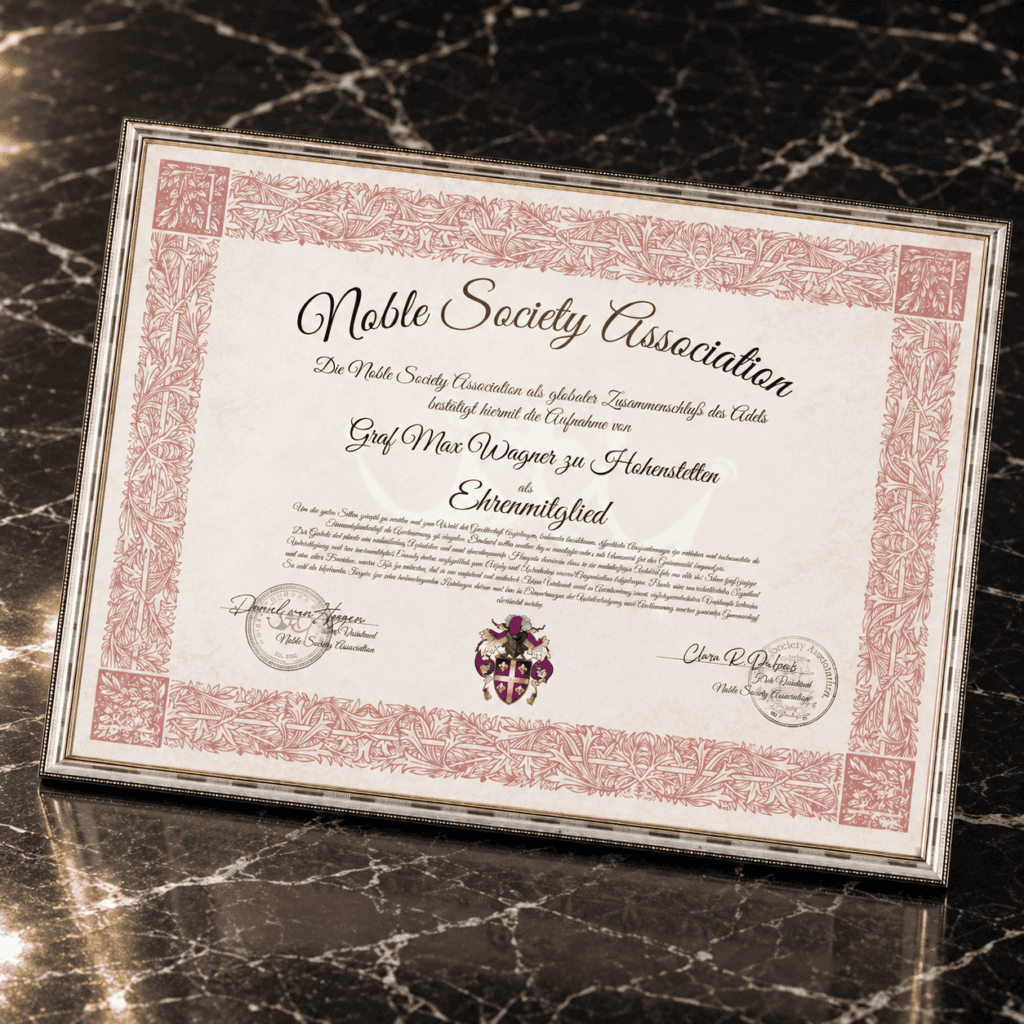
Honorary membership
Membership of the Noble Society Institute enriches your title with another dimension of exclusive representation. Validated by a magnificent certificate in your name, with no ongoing fees or obligations.