Description
Information about the family history and the coat of arms
Family history
▼
Family history Shogun kara Taishi
Fictional family history
Shogun to Taishi
The fictional history of the House of Taishi begins in the late 12th century, when the young warrior Masanori built a small mountain fortress in a wooded valley. Travelers called him „Shogun kara Taishi,“ the lord of Taishi, although this term Title of nobility is not a historically attested Japanese one. Masanori gained reputation not through great conquests, but because he secured a dangerous pass and mediated peace between two hostile villages.
His daughter Aiko managed rice fields, storage facilities, and workshops with remarkable care. After heavy rains, she fortified terraces and planted cherry trees along the path to the shrine. His brother Ren served for several years on a powerful warlord’s court, but returned with calligraphy, books, and a penchant for an organized tea house. Thus, the family combined martial arts with quiet scholarship.
During the turbulent times of rival provincial lords in the 15th and 16th centuries, the House of Taishi protected its neighbors through clever alliances. Lady Hana opened the castle to families from the valley and had the blacksmiths make agricultural tools instead of spear tips as soon as peace returned. Her son Jirō became known as an excellent archer, but he was even more proud of the garden he planted around a clear pond.
With the annexation of Japan, the mountain festivals lost their military function. The Taishi became administrators, teachers, and keepers of local festivals. In the 19th century, a branch of the family moved to the city, while the older seat continued to serve as a school and assembly hall.
The invented family thus recalls a cheerful form of heroism: vigilant, cultivated, and always ready to plant a tree after laying down the sword. Their legacy lies in a peaceful valley whose paths still lead together to the shared tea hour.
Sources: fictional narrative about the project title and project emblem
Coat of arms & Heraldry
▼
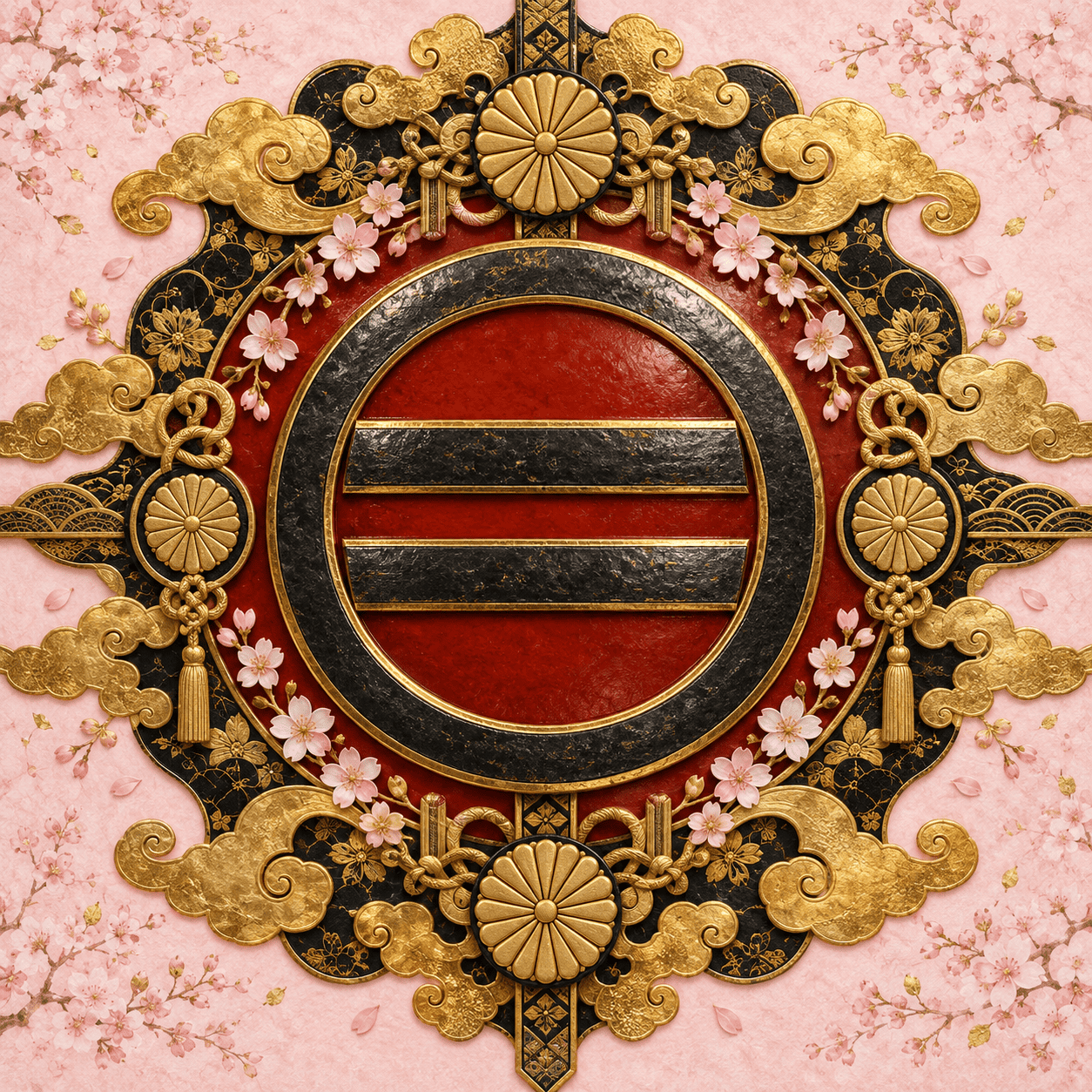
Family coat of arms Shogun kara Taishi
Futatsu-hikiryō (二つ引両), the two-pronged round motif of the Ashikaga house.
In a black ring, two equally strong, horizontal black bars overlap; the sign is on a muted zinnoberred round field with a narrow golden border.
„According to the existing project history, “Shogun kara Taishi” is a fictional title; a historically documented house Taishi with its own mon is therefore not supported by the evidence. Therefore, the Futatsu-hikiryō of the Ashikaga family is used as a factually plausible reference.
Sources: Project file „taishi_story.txt“, National Museum Kyoto, National Museum of Japanese History, excerpts, history, print, presentation optimized for printing on a pure white background, splendid
Overview of your title package
What the title of nobility contains
Discover the fascination of historical noble titles. With each appointment, you receive a first-class package that perfectly combines tradition, personal recognition, and stylish representation:
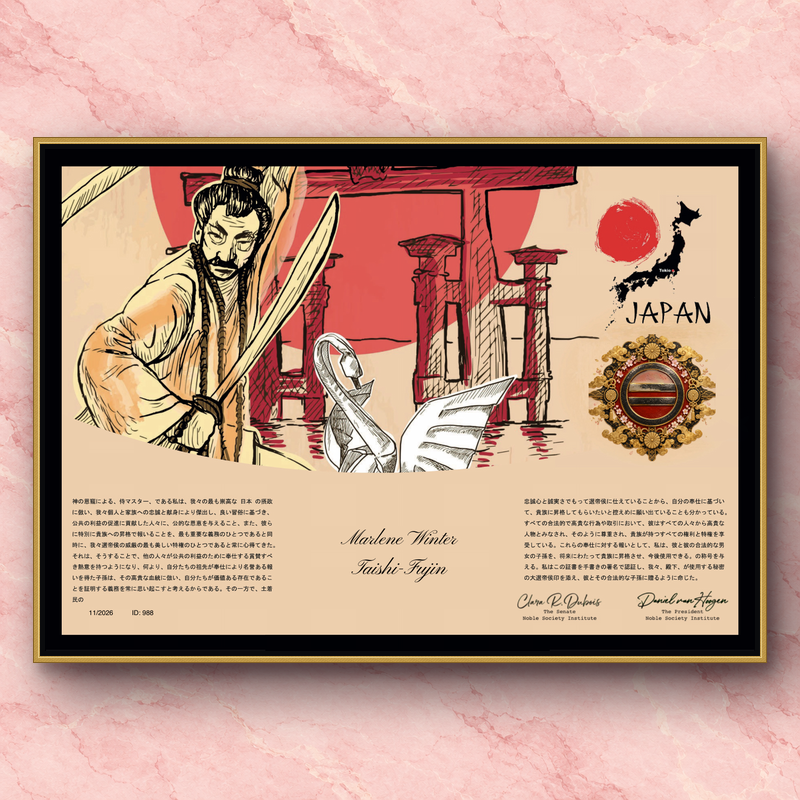
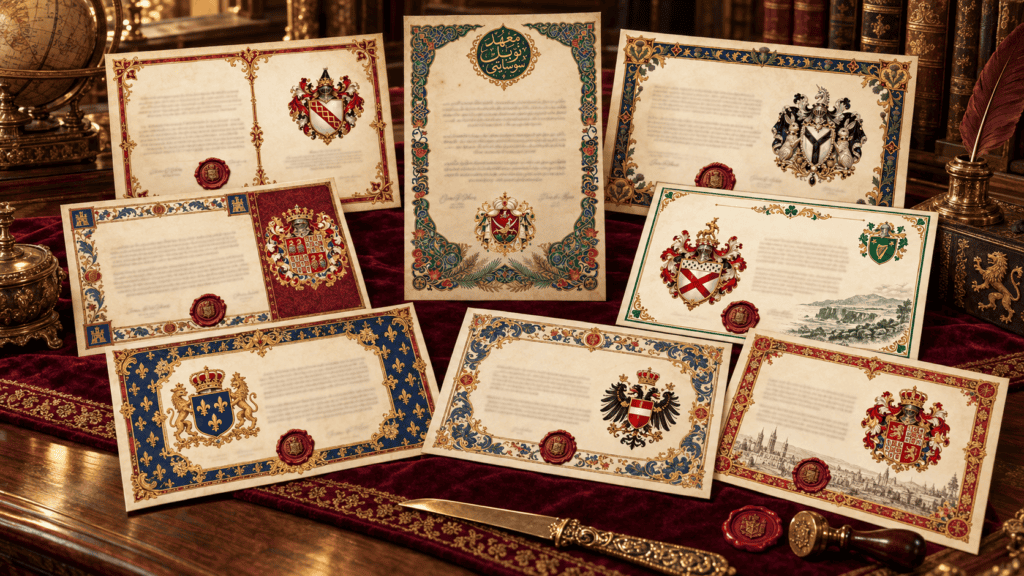
Your certificate
Authentic design with a historic flair: For each region, we create a certificate of appointment in the distinctive, country-specific style – complete with the appropriate coat of arms of your chosen title.
Share this special moment: Upon request, you will receive a free partner certificate and certificates for your children, so that the whole family can participate in the tradition.
Your own coat of arms
Each title comes with the corresponding historical coat of arms, which you receive as a high-resolution file. You can use it completely freely in private and professional contexts – whether on letterhead, business cards, or seals.

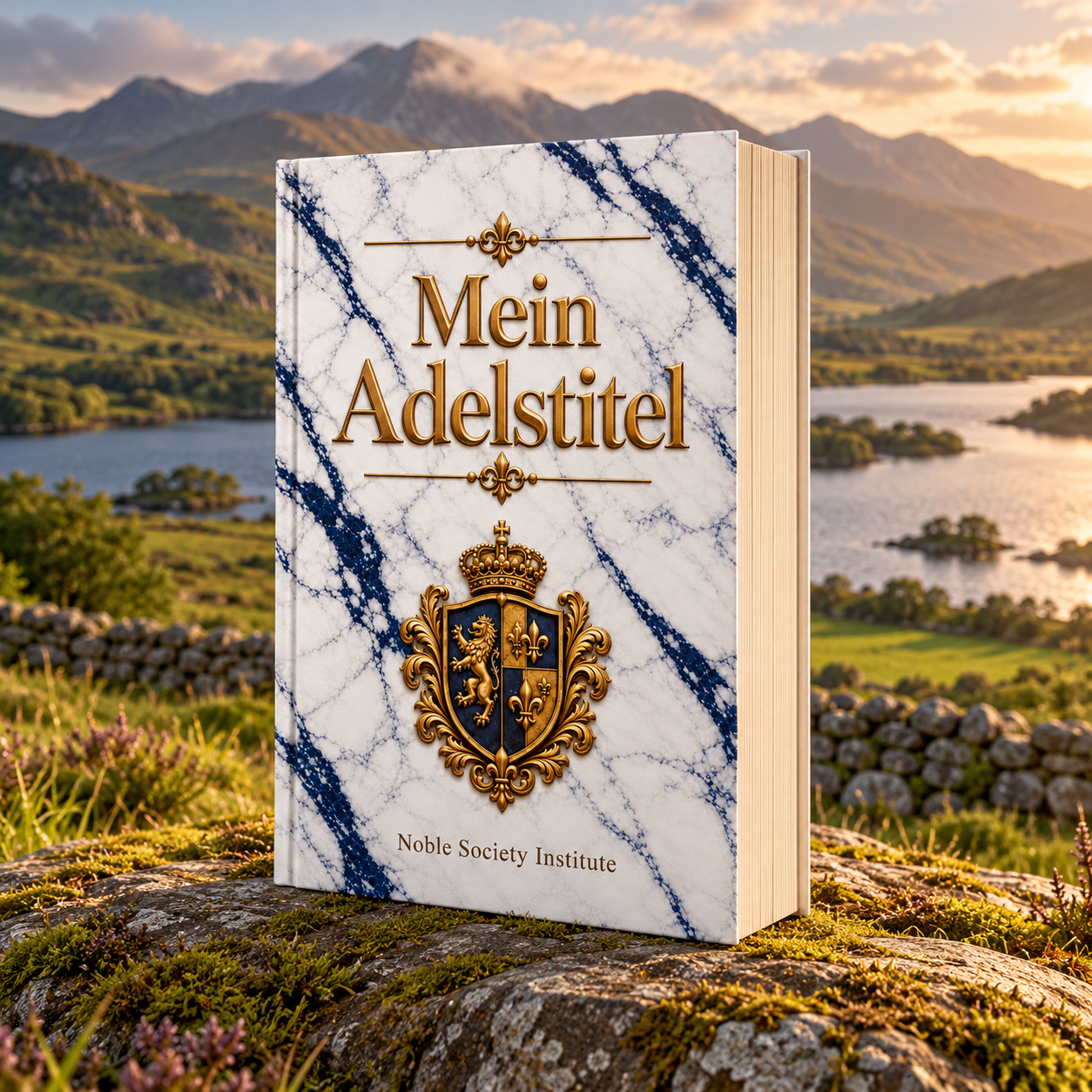
The Companion Book
The book „My Title“ takes you in detail into the multifaceted world of your new aristocratic title and offers valuable practical tips for everyday life, stylish guidance, and background information on history.

Our accessories
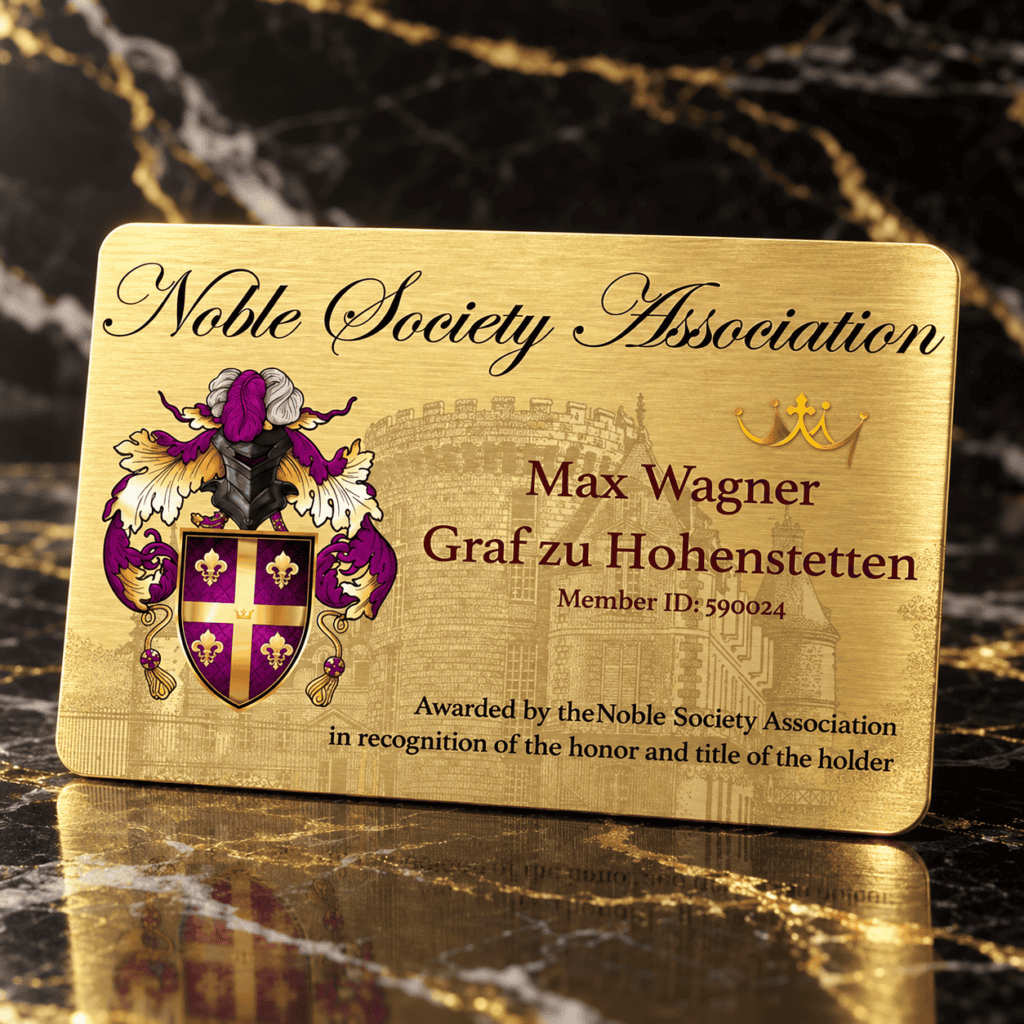
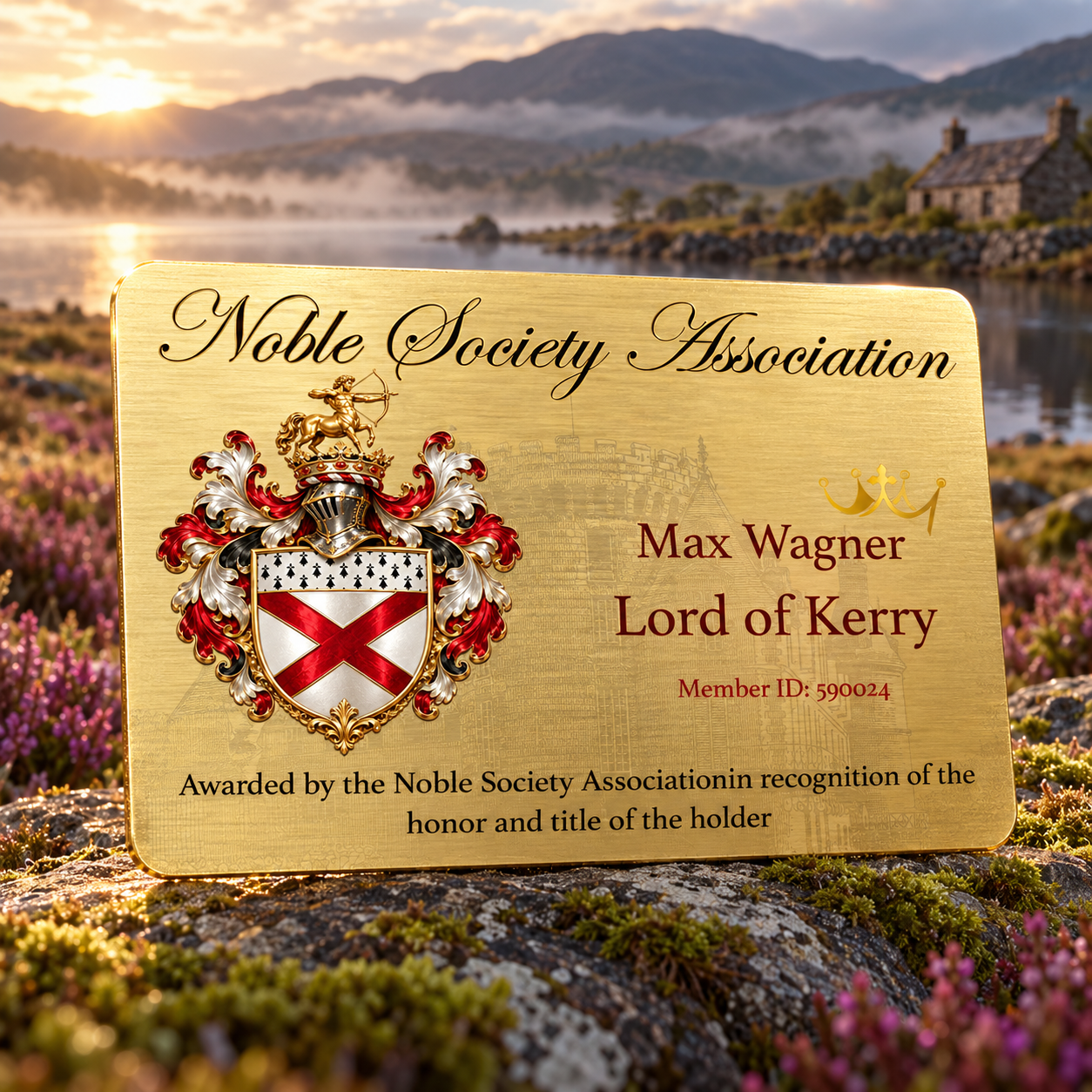
Golden ID Card
Crafted from premium aluminum in business card format, the gold ID Card makes your title look stylish and mobile.
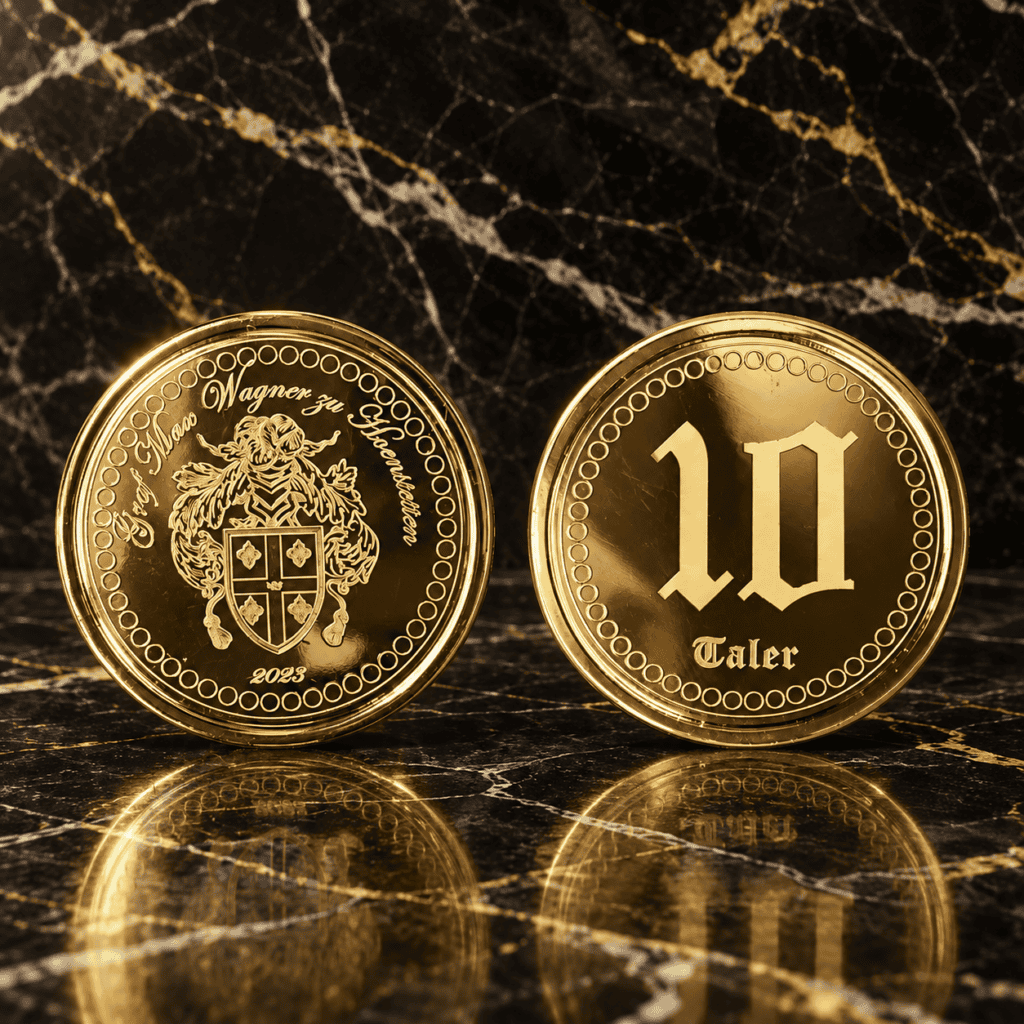
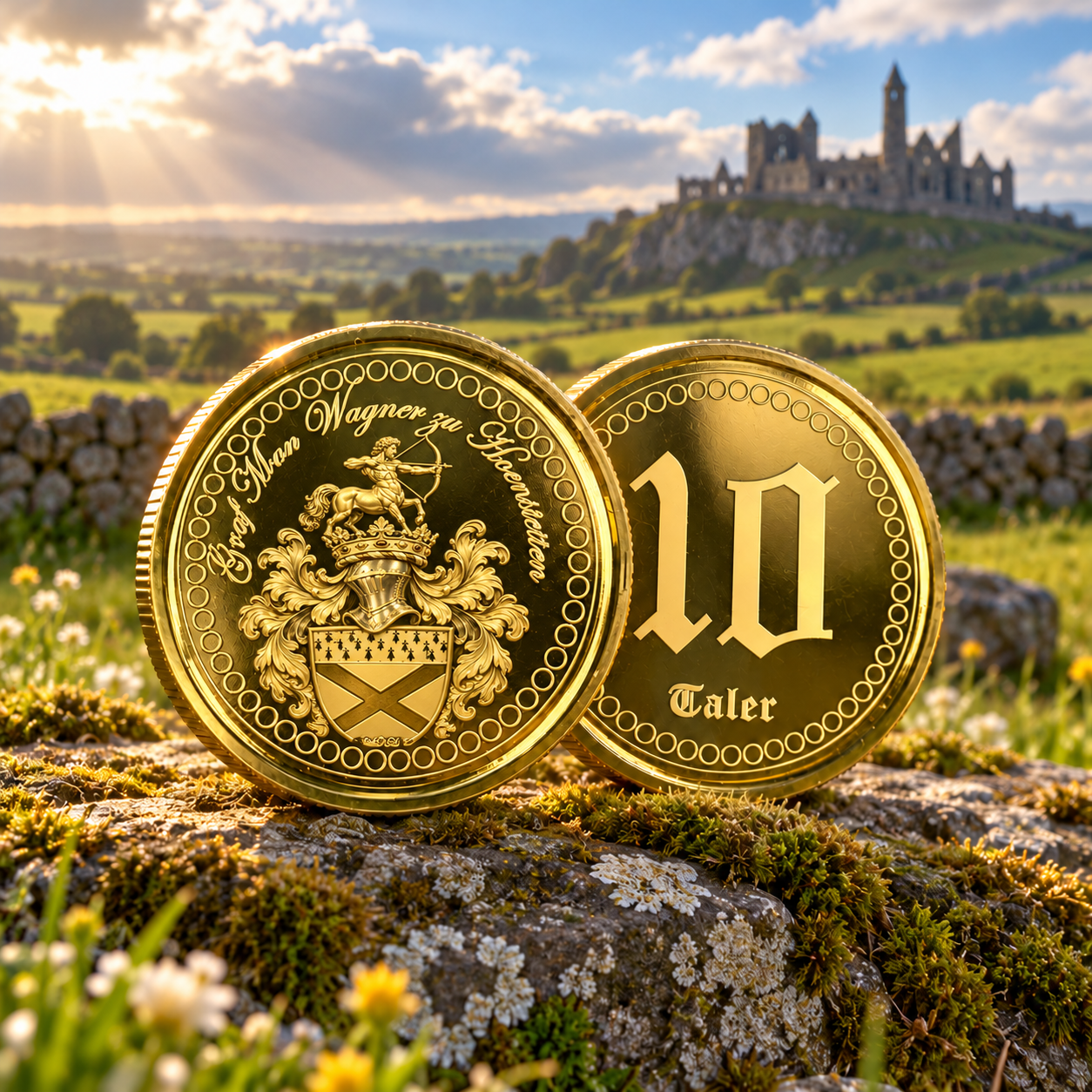
Gold coins
Fine gold and silver-plated medallions combine coats of arms, names and titles in a glossy, unique design.
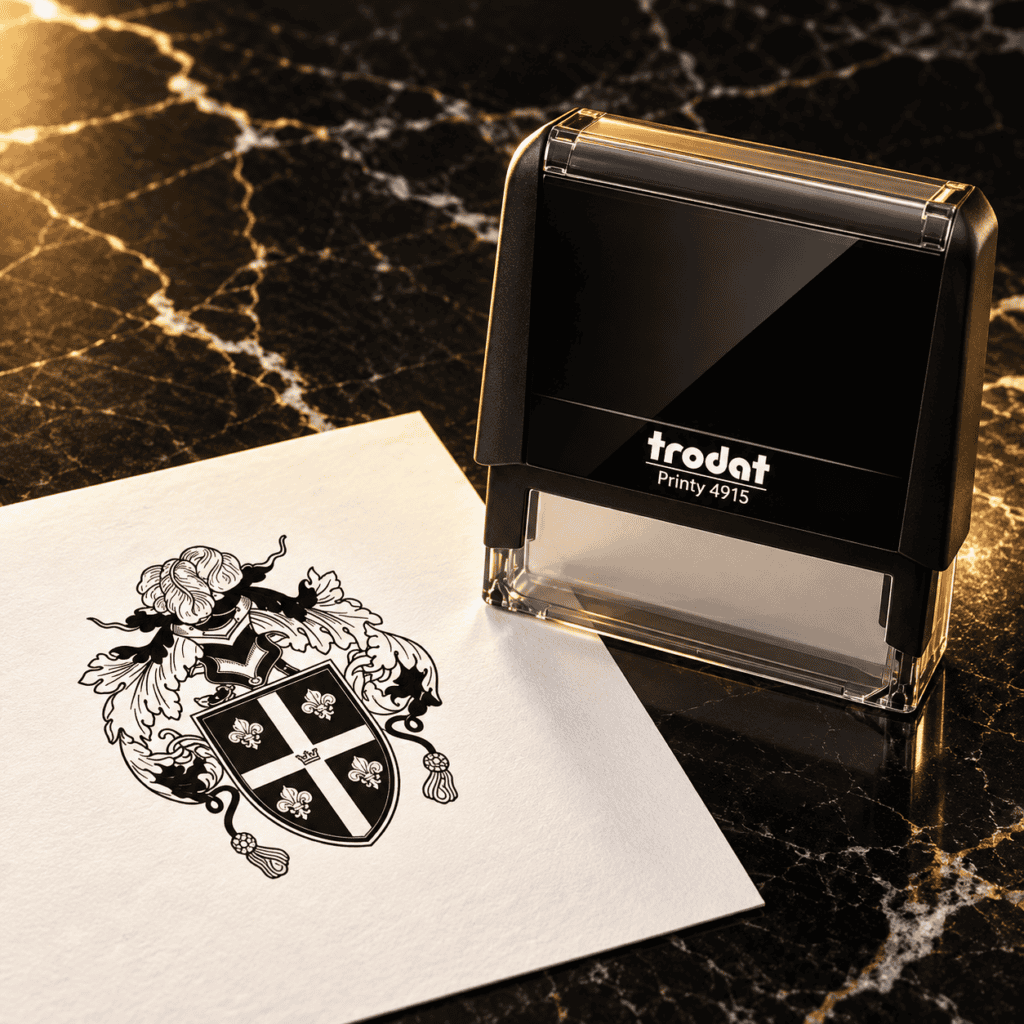
Emblem stamp
The self-inking stamp quickly, cleanly and precisely transfers your personal emblem onto letterhead paper.
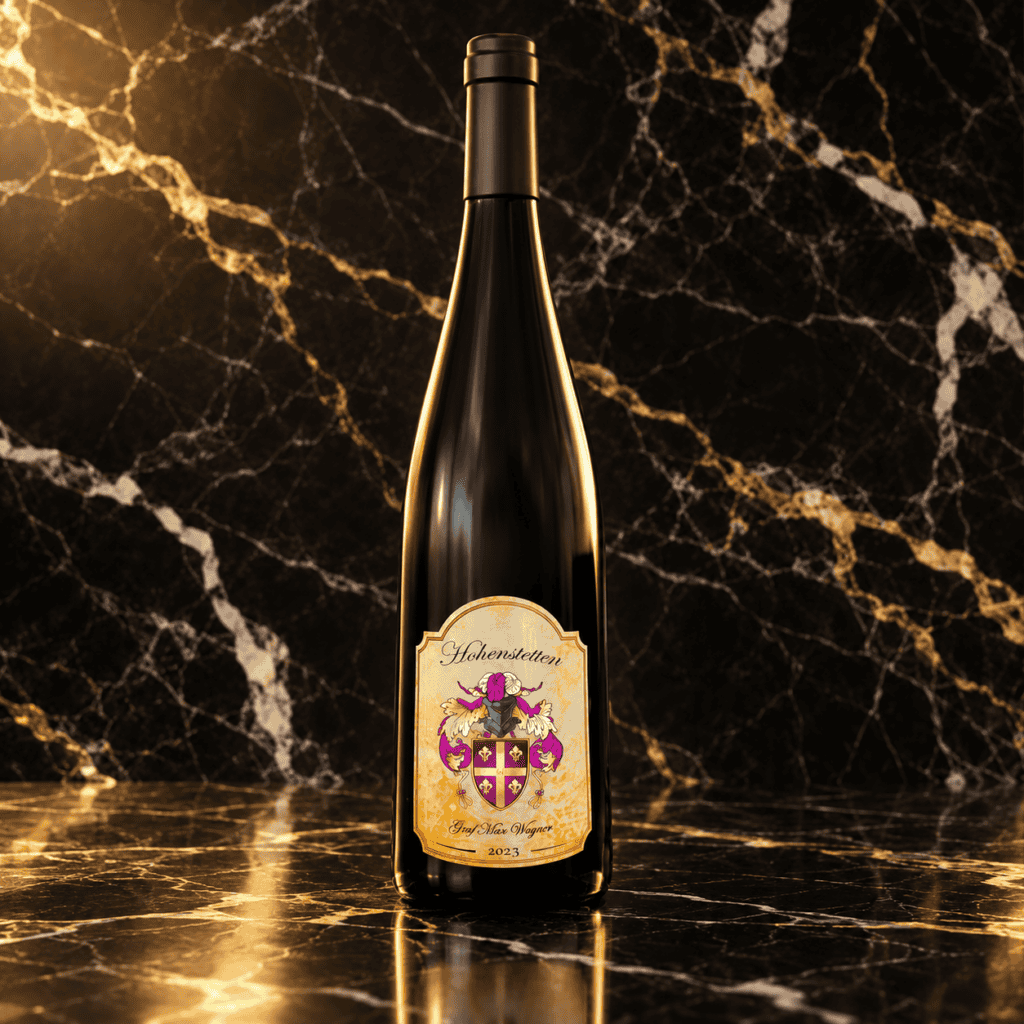
My own wine
Choose fine red or white wine with an elegant, personalized label for a stylish look.
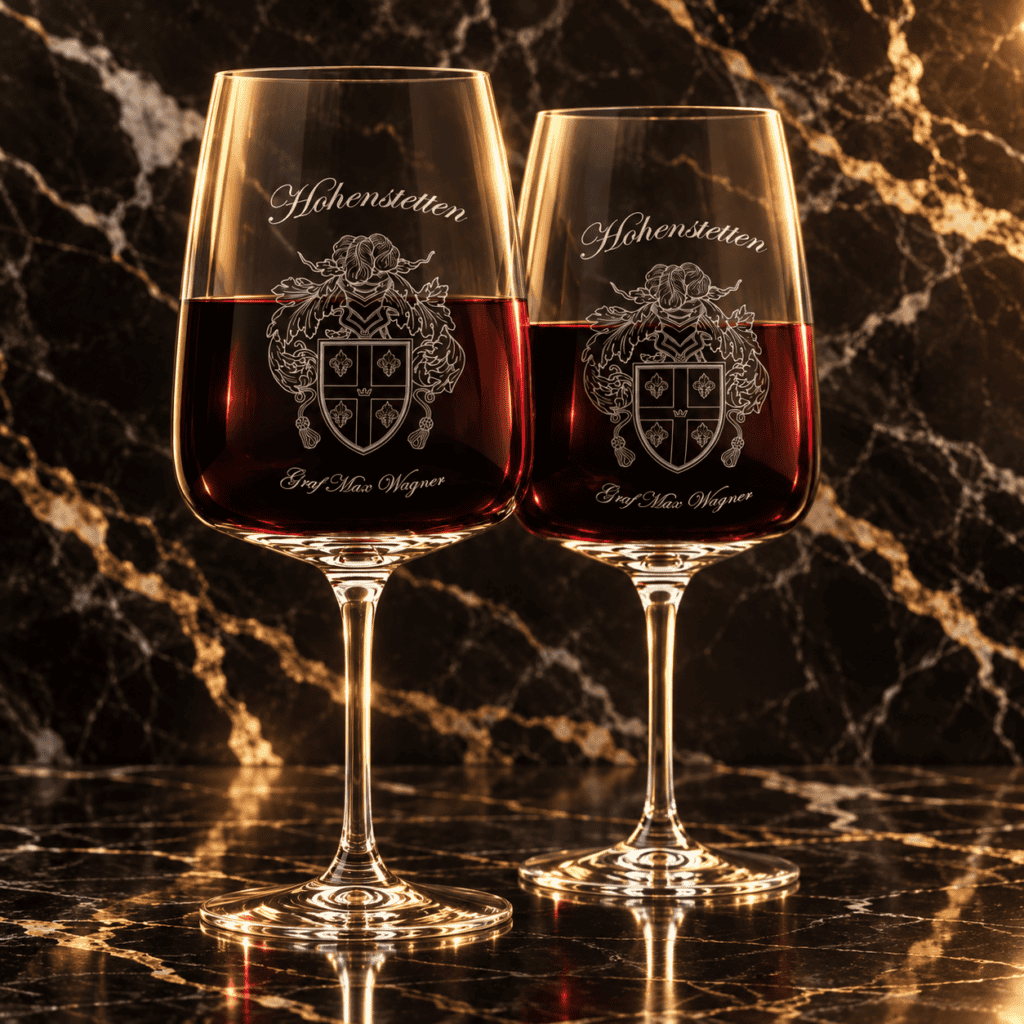
Wappen Gläser
The masterfully engraved wine glasses display their coat of arms, name and title in stunning brilliance.
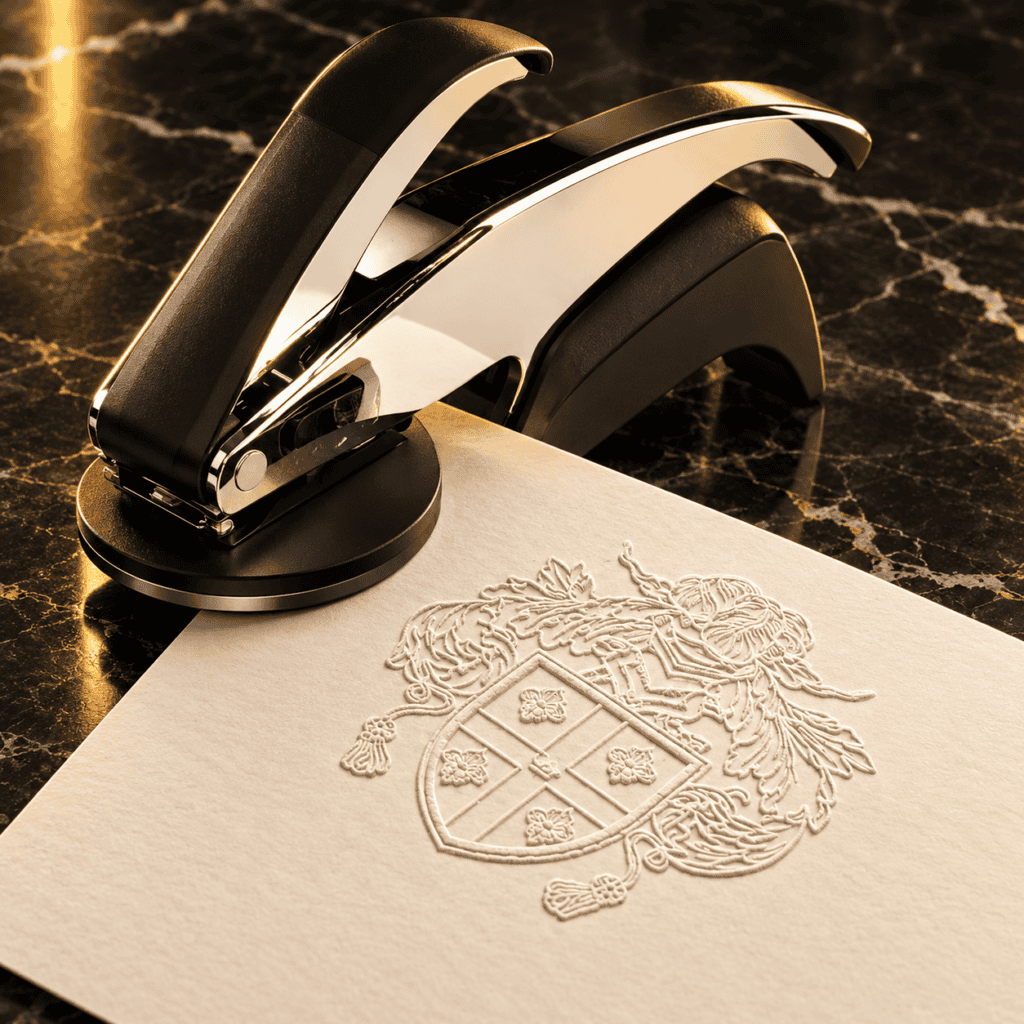
Precision pliers
The elegant embossing pliers embellishes letterheads or documents with a tactile, colourless relief embossing.
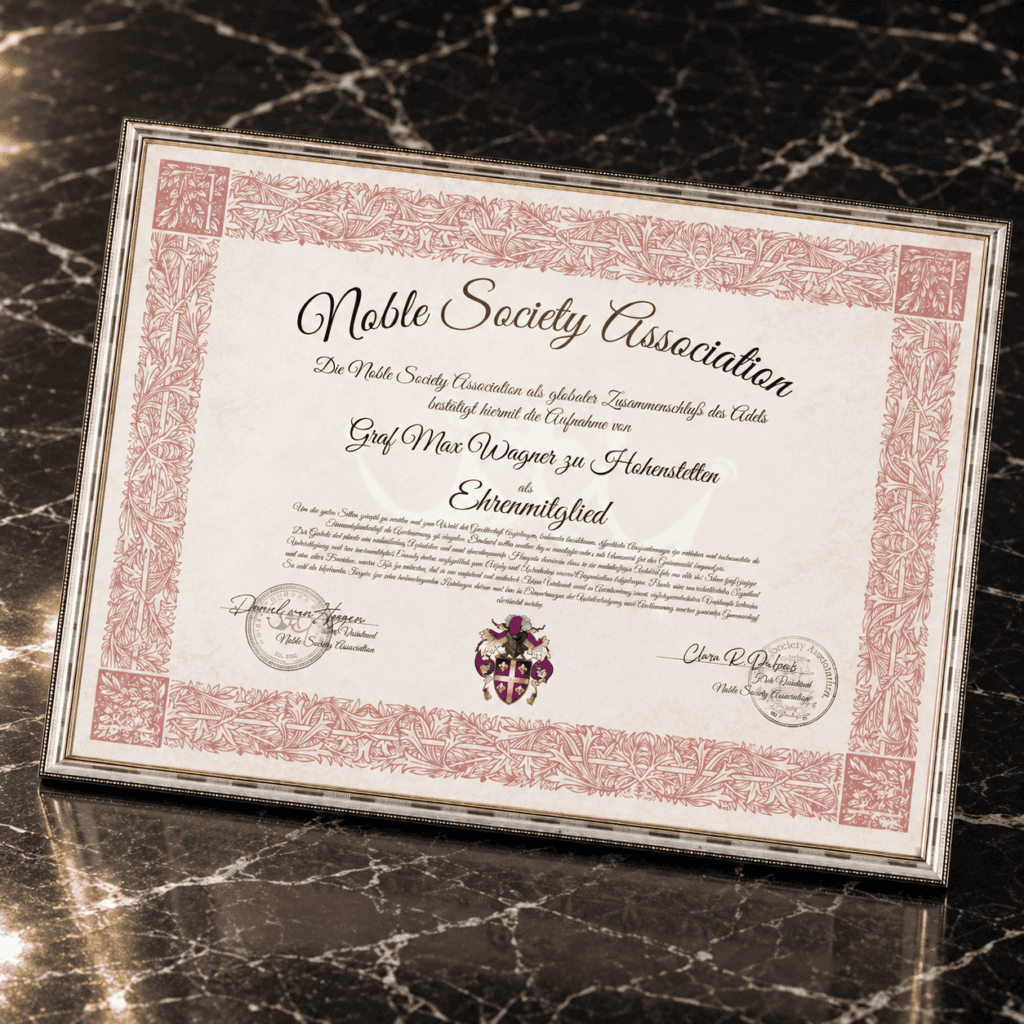
Honorary membership
Membership of the Noble Society Institute enriches your title with another dimension of exclusive representation. Validated by a magnificent certificate in your name, with no ongoing fees or obligations.