
Description
Information about the family history and the coat of arms
Family history
▼
Family history Baron de Burgund
Baron of Burgund
The project title „Baron de Burgund“ does not refer to a proven Burgundian baronage, but to one of the most glorious ducal dynasties of the late Middle Ages: the House of Valois-Burgundy. Its history began in 1363, when the French King John II transferred the Duchy of Burgundy to his youngest son Philip the Handsome. Through Philip’s marriage to Margaret of Flanders, Flanders, Artois and the Free County of Burgundy were added in 1384. This transformed the ducal court in Dijon into a far-reaching dominion between France and the Netherlands.
Philipp's son Johann Ohnefurcht took over in 1404. He became actively involved in French politics and was drawn into conflict between the Burgundians and the Armagnacs during the Hundred Years' War. His assassination in 1419 at the bridge of Montereau made his son Philip the Good the new duke. This combination of diplomatic skill and a sense of splendor made him a successful leader: he gained Brabant, Holland, Zeeland, Hennegau and Luxembourg, founded the Order of the Golden Fleece in 1430 and made his court a European center for painting, music and ceremonial ceremonies.
In 1467, Charles the Bald succeeded him. His ambitious plan was a closed kingdom between France and the Holy Roman Empire. After turbulent campaigns, he fell at Nancy in 1477. His daughter Maria of Burgundy preserved the important Dutch possessions and married Maximilian of Habsburg. While the actual Duchy of Burgundy returned to the French crown, large parts of the Burgundian inheritance passed to the Habsburgs.
Thus the political line of the Valois Dukes did not end quietly; it transformed into a European legacy. The magnificent tombstones in Dijon, the Order of the Golden Fleece, and the art of their court cities still tell the story of a family that impressively combined power, style, and cultural curiosity.
Sources: Metropolitan Museum of Art, Musée des Beaux-Arts de Dijon, Rijksmuseum, Encyclopaedia Britannica
Coat of arms & Heraldry
▼
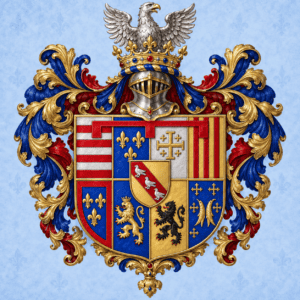
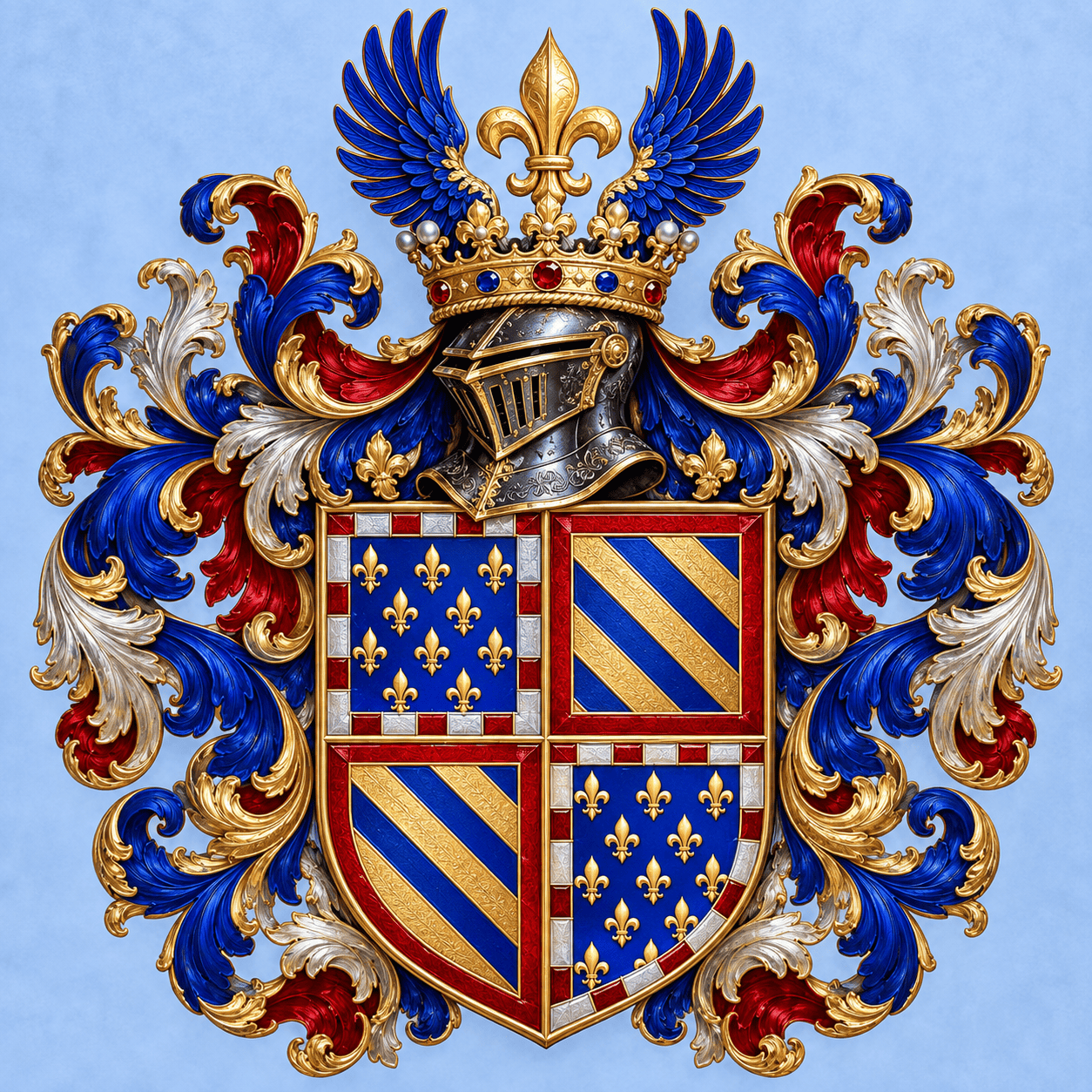
Family coat of arms Baron de Burgund
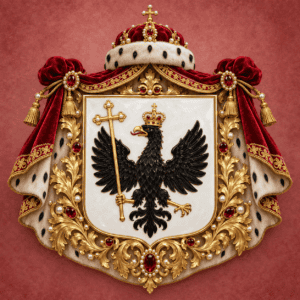
Historical emblem Coat of arms of the Duchy of Burgundy. Shield: Fields 1 and 4 are blue, with golden lilies set in them and surrounded by a red-silver border; fields 2 and 3 are six-sided, divided by gold and blue with a red border.
The shield unites Burgund-new and Burgund-old. Above the helmet appears a golden lily between two blue wings; the representative versions bear a baron's crown.
The quartering Coat of arms links the Capetian-Valois lineage with the older Coat of arms of the Duchy of Burgundy.
Sources: Coat of arms of the French pairs, coat of arms of the Capetian dynasty, historical coat of arms Coat of arms of the Dukes of Burgundy. Details History
Overview of your title package
What the title of nobility contains
Discover the fascination of historical noble titles. With each appointment, you receive a first-class package that perfectly combines tradition, personal recognition, and stylish representation:
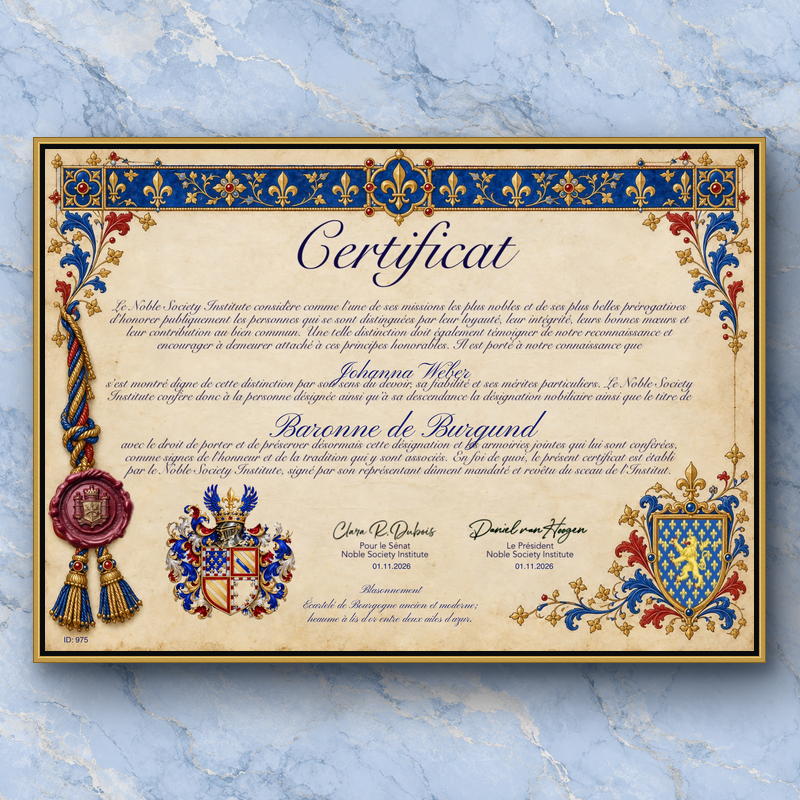
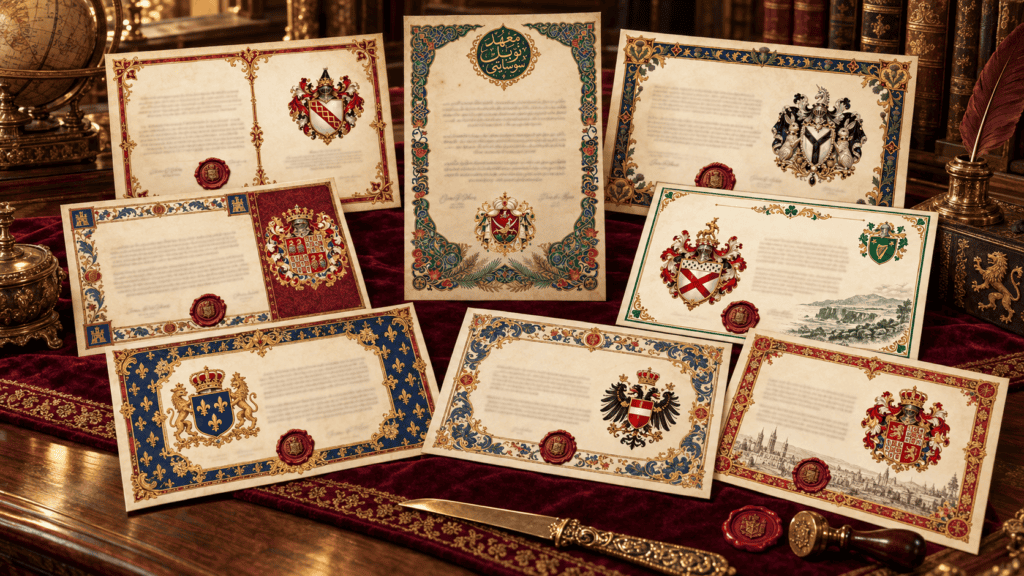
Your certificate
Authentic design with a historic flair: For each region, we create a certificate of appointment in the distinctive, country-specific style – complete with the appropriate coat of arms of your chosen title.
Share this special moment: Upon request, you will receive a free partner certificate and certificates for your children, so that the whole family can participate in the tradition.
Your own coat of arms
Each title comes with the corresponding historical coat of arms, which you receive as a high-resolution file. You can use it completely freely in private and professional contexts – whether on letterhead, business cards, or seals.

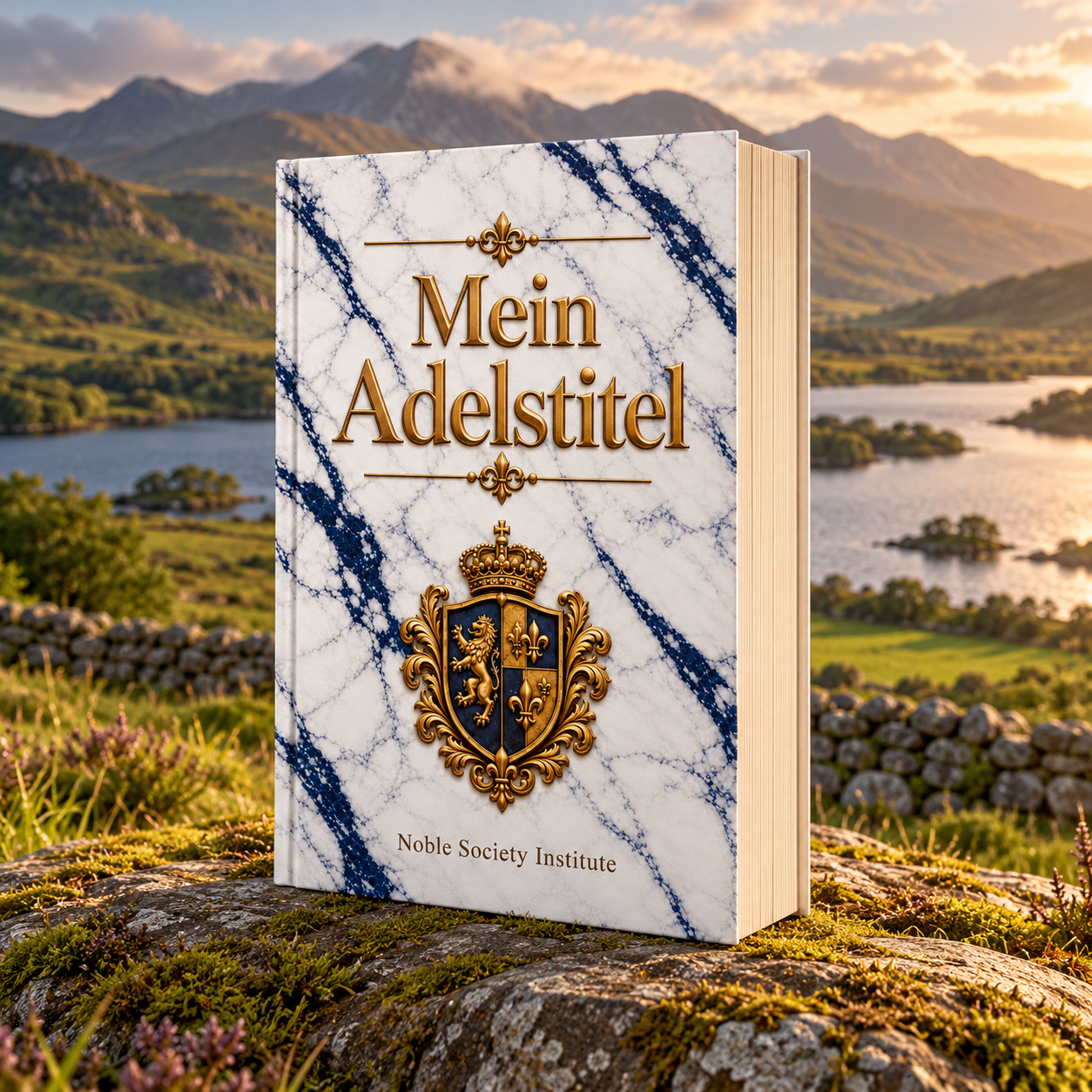
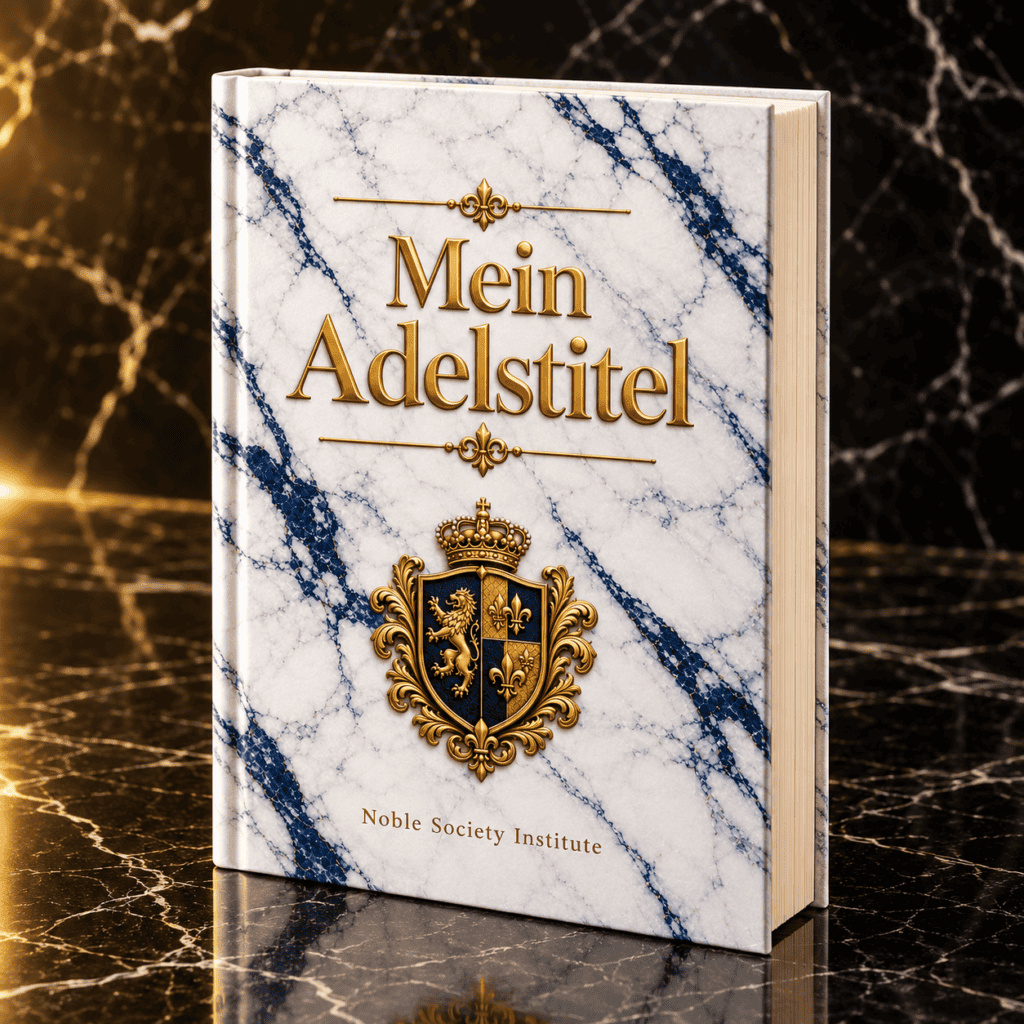
The Companion Book
The book „My Title“ takes you in detail into the multifaceted world of your new aristocratic title and offers valuable practical tips for everyday life, stylish guidance, and background information on history.
Our accessories
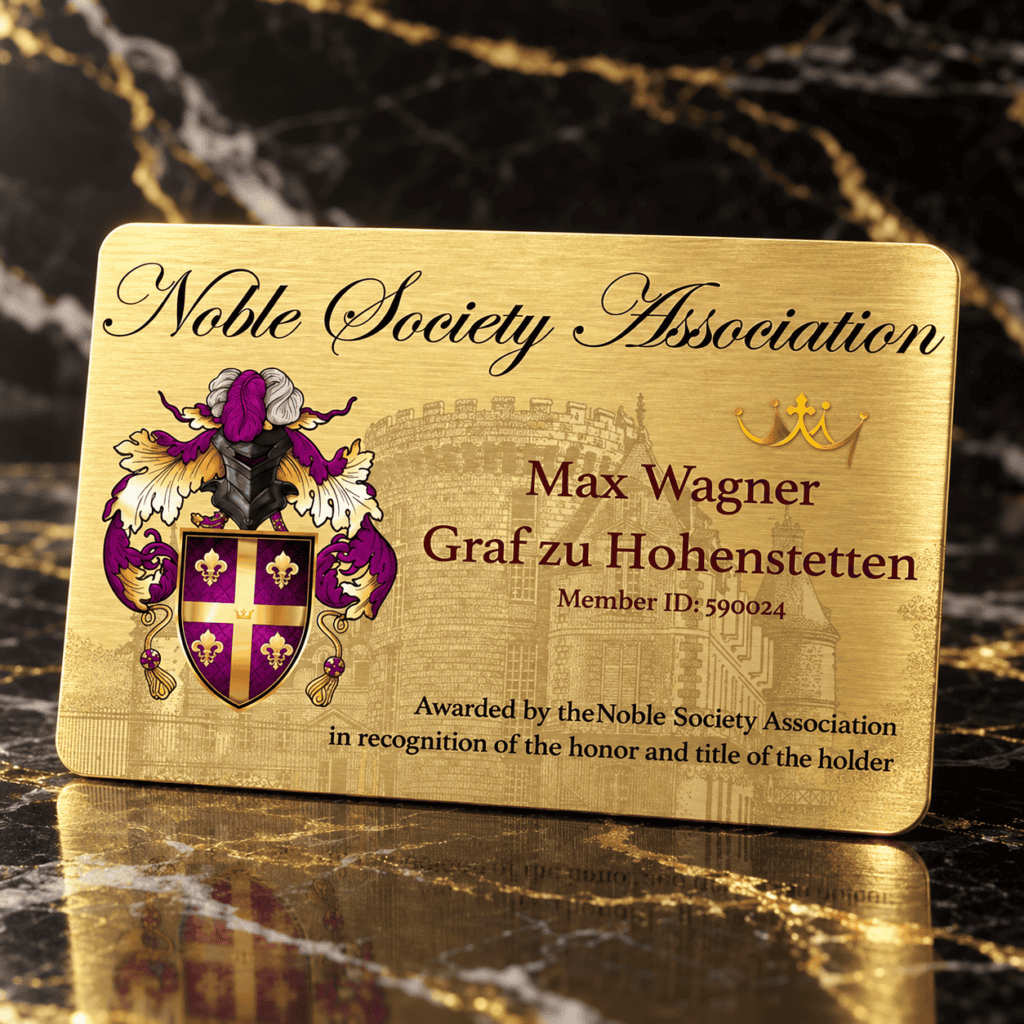
Golden ID Card
Crafted from premium aluminum in business card format, the gold ID Card makes your title look stylish and mobile.
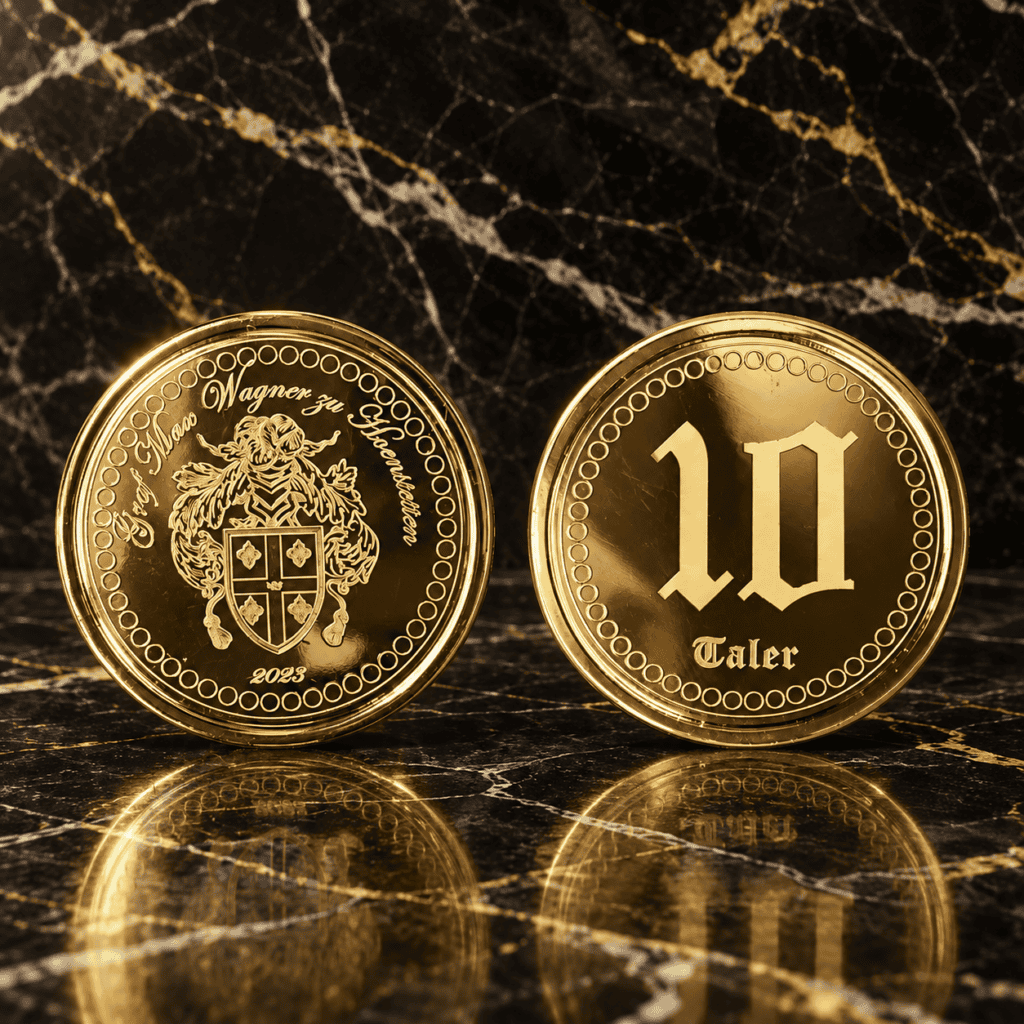
Gold coins
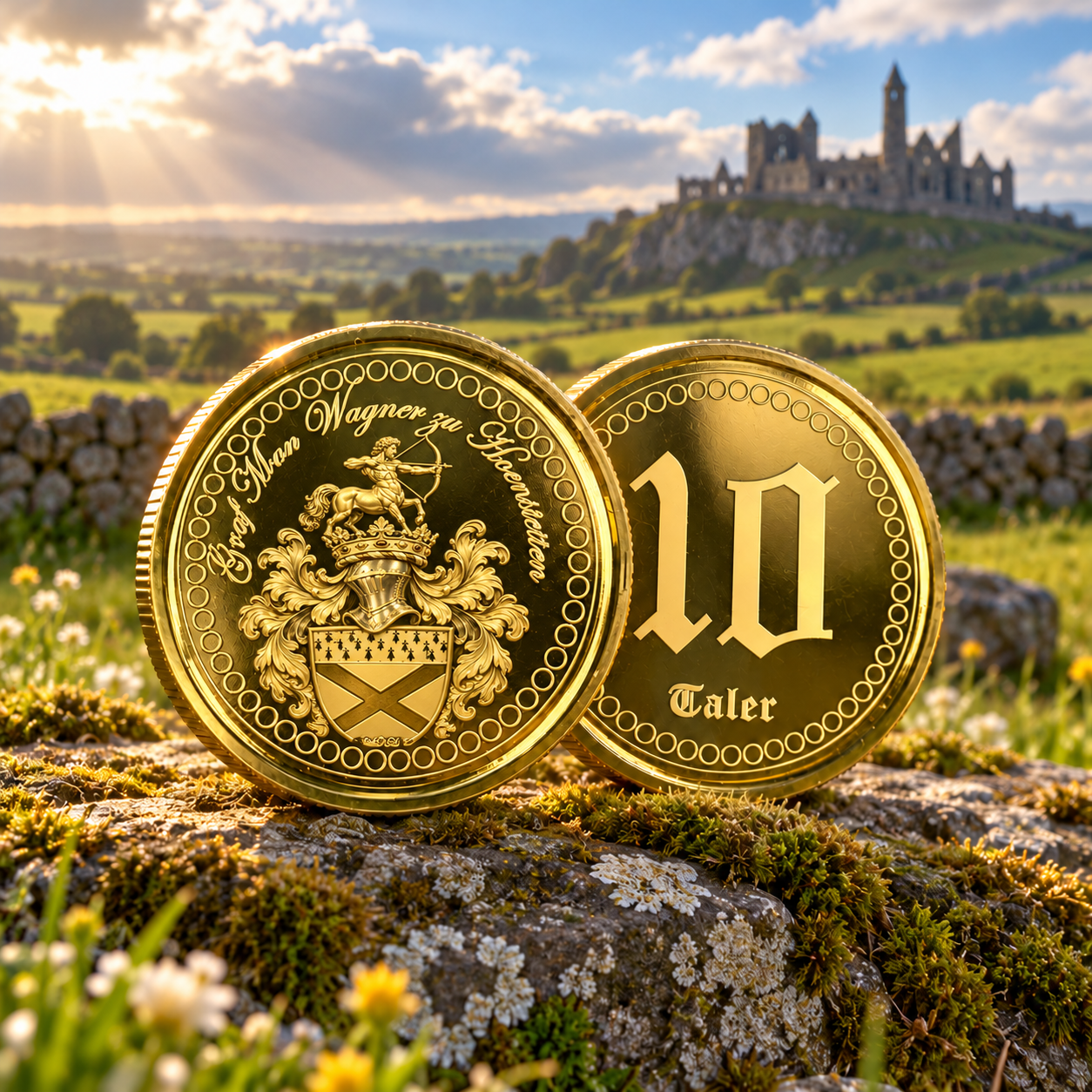
Fine gold and silver-plated medallions combine coats of arms, names and titles in a glossy, unique design.
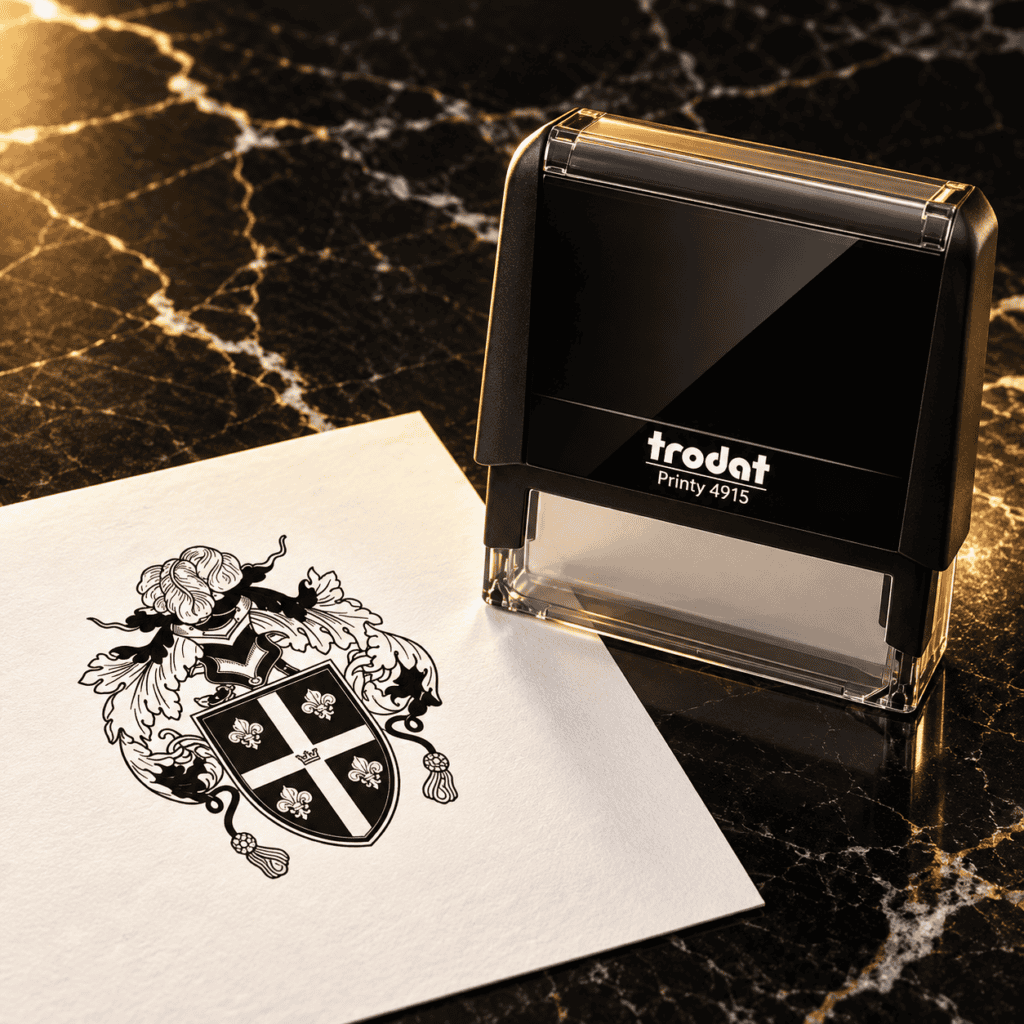
Emblem stamp
The self-inking stamp quickly, cleanly and precisely transfers your personal emblem onto letterhead paper.

My own wine
Choose fine red or white wine with an elegant, personalized label for a stylish look.
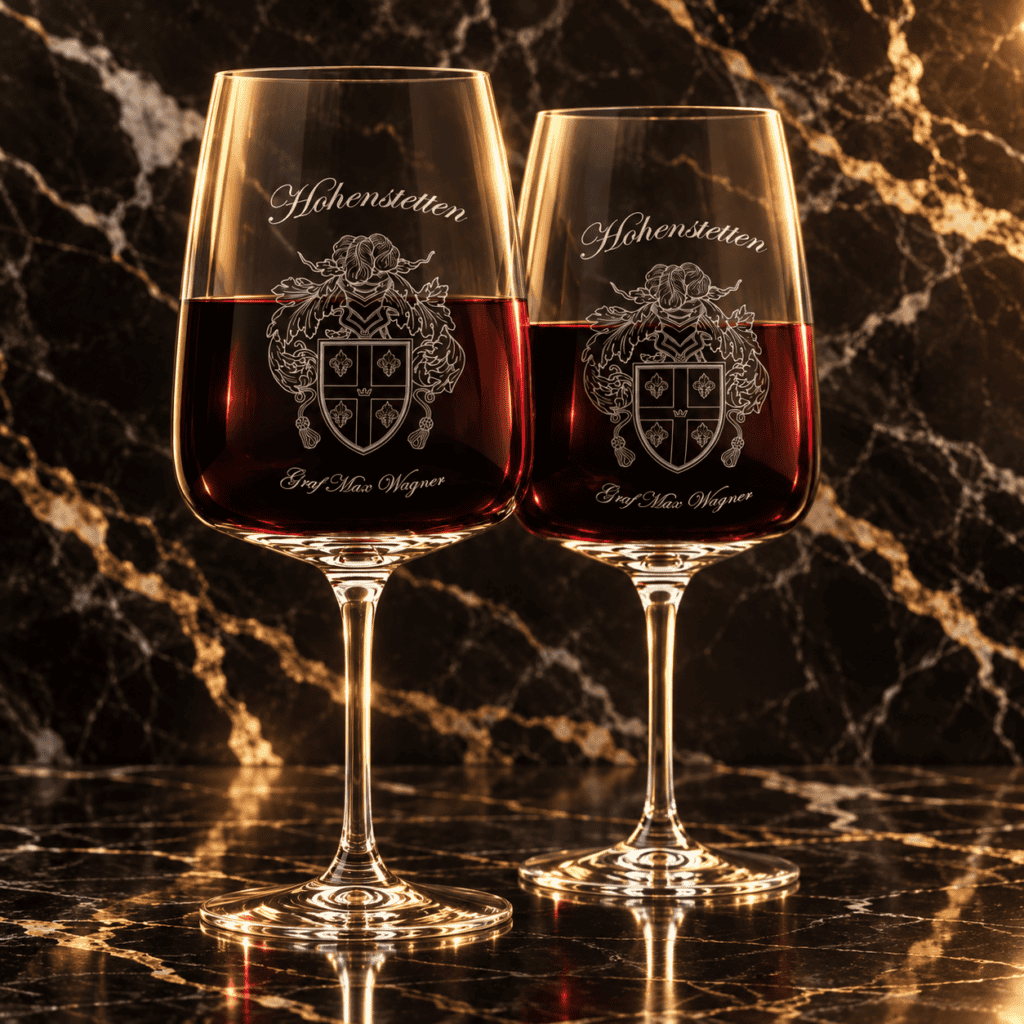
Wappen Gläser
The masterfully engraved wine glasses display their coat of arms, name and title in stunning brilliance.
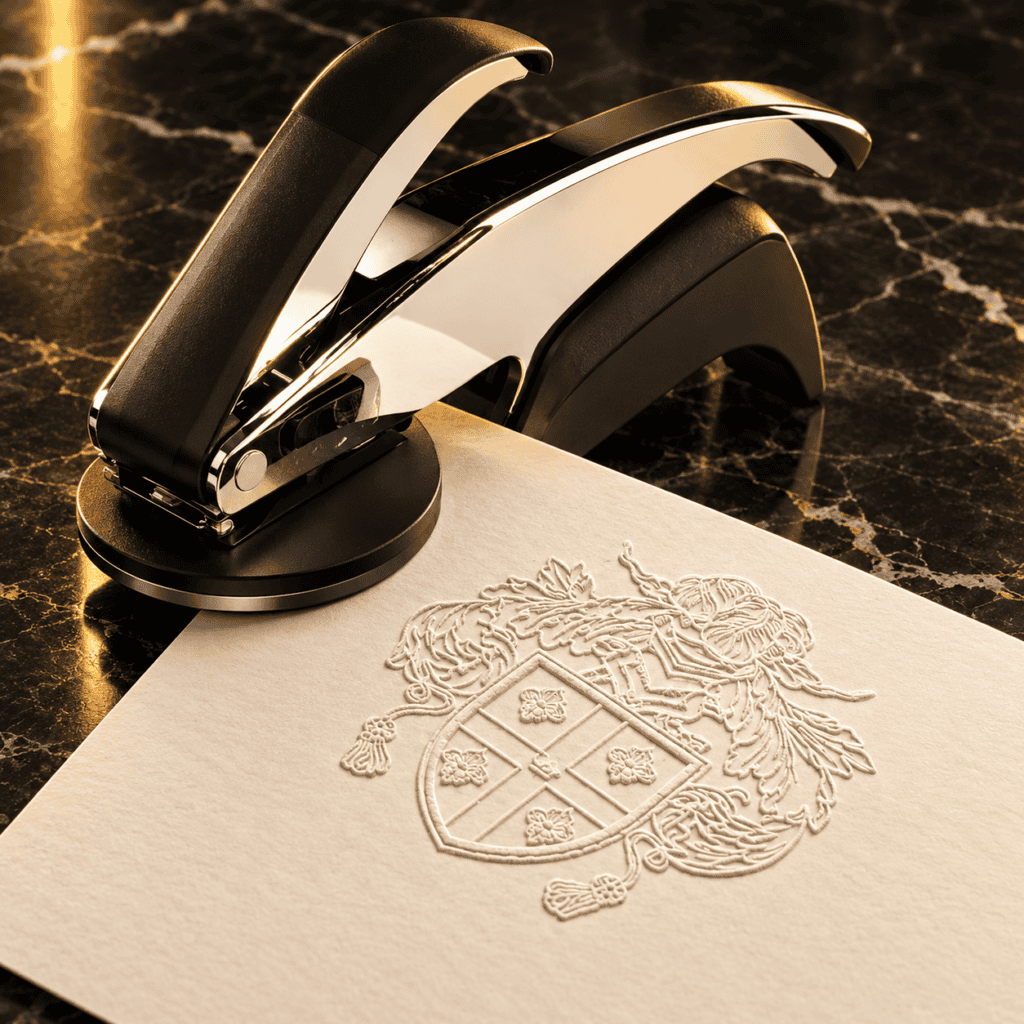
Precision pliers
The elegant embossing pliers embellishes letterheads or documents with a tactile, colourless relief embossing.
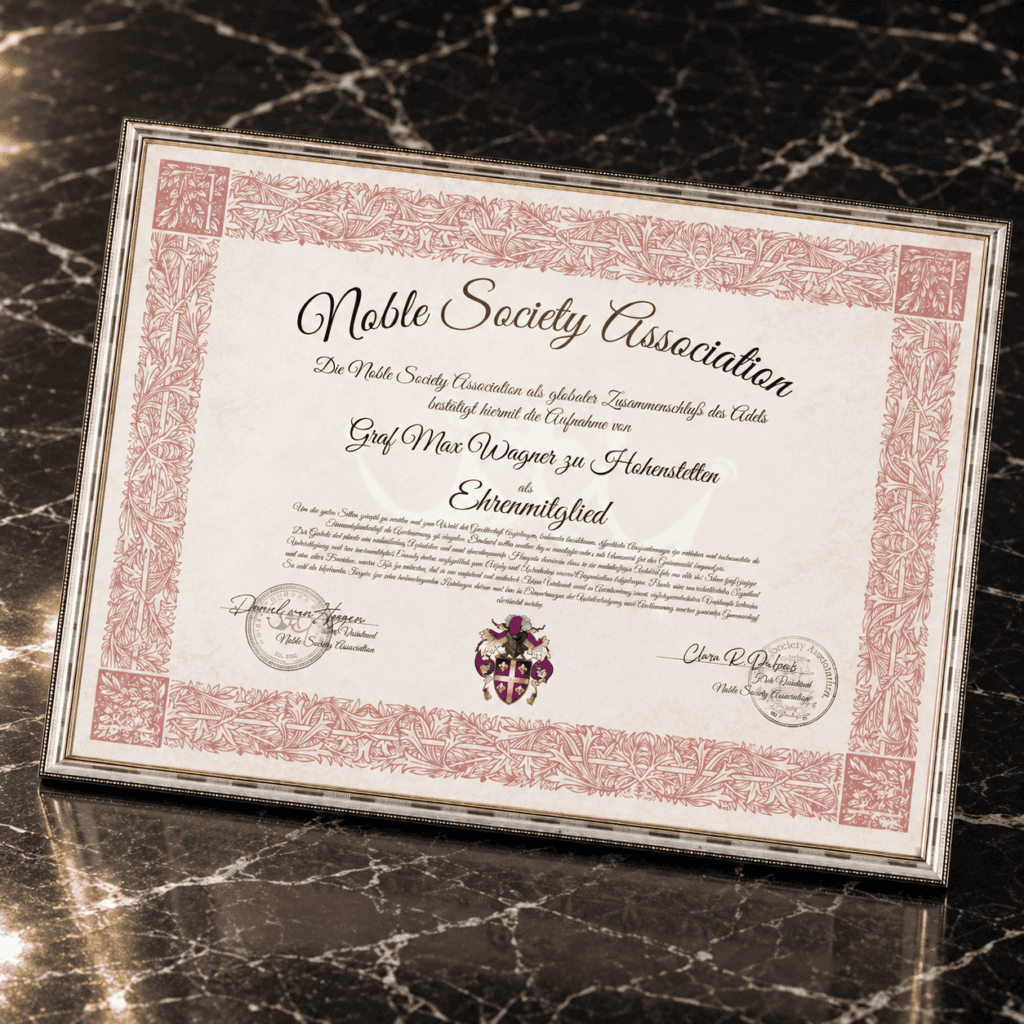
Honorary membership
Membership of the Noble Society Institute enriches your title with another dimension of exclusive representation. Validated by a magnificent certificate in your name, with no ongoing fees or obligations.