A Noble Title? Not Without Your Own Coat of Arms
When people think of nobility, they rarely picture a title on its own. What comes to mind almost instantly is the image of a coat of arms, a symbol that represents identity, heritage, and distinction. It is the visual expression of everything a noble title stands for. That is why, when you acquire a title through us, it is naturally accompanied by a unique coat of arms designed specifically for that title. It completes the picture and transforms your title into something far more tangible.
For many, this is the first time they not only carry a noble title, but also have a personal emblem that reflects their identity in a symbolic way. A coat of arms is not just decoration, it is a statement. It gives your title a visual presence that can be displayed, shared, and remembered. Whether framed as a certificate, used in personal materials, or simply appreciated as part of your identity, it adds depth and character that a name alone cannot achieve.
Traditionally, coats of arms have been used to represent families and to express a sense of belonging and continuity. They served as visual markers of identity, passed down through generations and closely tied to a family name. While those historical traditions still exist, today the idea of a coat of arms can be understood in a more personal and modern way. It becomes a symbol that connects you to the concept of nobility while allowing you to define its meaning on your own terms.
What matters most is not strict adherence to historical rules, but the coherence between your title and how you present it. A coat of arms gives your noble identity a recognizable form, something people can associate with you instantly. It creates a stronger impression, reinforces your presence, and turns your title into a complete, refined expression of who you are.
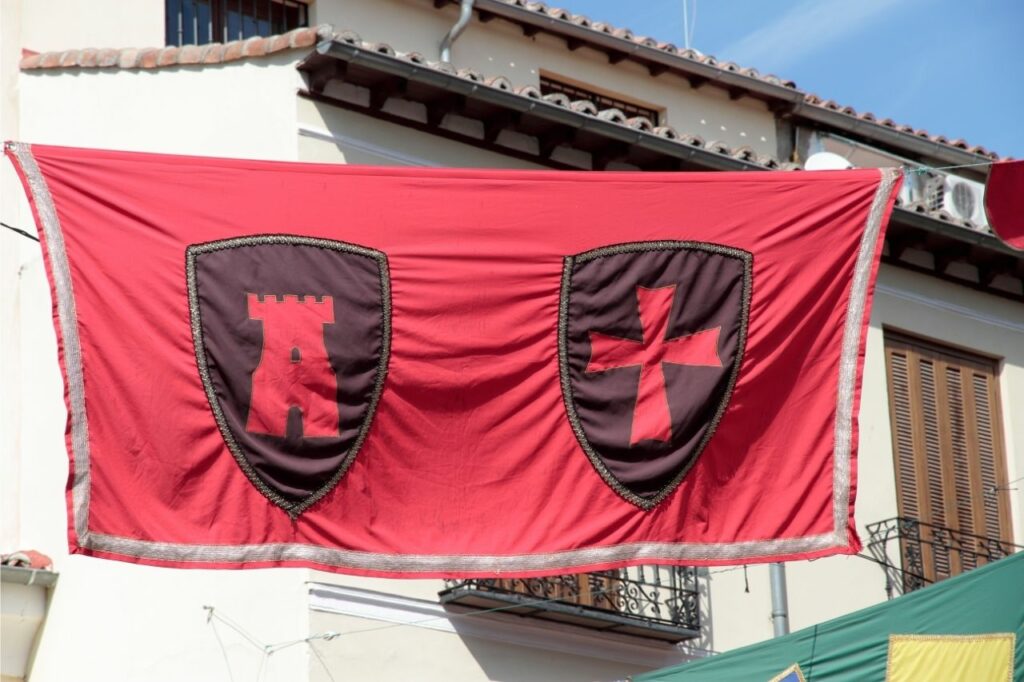
Not every coat of arms automatically falls under legal protection, and this is where things become more nuanced. A coat of arms is only protected if it meets certain criteria, most importantly a clear and distinctive design that allows it to be associated with a specific person, family, or entity. It needs to have recognisable individuality, something that sets it apart and gives it the ability to function as a visual identifier. In practice, both personal coats of arms and those used by organizations can be protected, although the legal framework may differ depending on whether the holder is a private individual or a registered entity.
At the same time, the creative design of a coat of arms is considered an artistic work, which means it can also be protected under copyright law. This is where tradition and modern interpretation meet. Historically, coats of arms were shaped like shields, inspired by medieval protection, symbolizing strength, identity, and the safeguarding of a family’s legacy. That symbolism still resonates today, even if the designs themselves have evolved. Modern coats of arms are often more refined, more minimal, and more adaptable, while still carrying the essence of what made them meaningful in the first place.
In earlier times, elaborate and highly detailed designs were common, often reflecting status and heritage in a very literal way. Today, the approach is more flexible and personal. A coat of arms is no longer bound by strict visual conventions, but instead becomes a carefully designed symbol that aligns with your title and your identity. It is less about complexity and more about clarity, impact, and recognisability.
That is exactly what makes receiving your own coat of arms such a compelling part of the experience. It is not just an accessory to your title, but a visual signature that brings everything together. It represents your identity in a form that can be seen, displayed, and remembered, adding depth and authenticity to your noble presence. And perhaps most importantly, it leaves a lasting impression long after the first introduction.
The History of Coats of Arms
The origins of the coat of arms go back to the Middle Ages, a time when identity had to be visible at a glance, especially in the chaos of battle. What began as a simple emblem on a shield quickly became an essential tool of recognition. Knights and nobles wore heavy armor that concealed their faces completely, making it nearly impossible to distinguish friend from foe. The coat of arms solved that problem. It allowed armies to identify allies instantly, even from a distance, turning a painted symbol into something both practical and powerful.
During the Crusades in the 12th century, this system became increasingly important. As large forces moved across regions and conflicts grew more complex, visual identity became a necessity rather than a luxury. The coat of arms was no longer limited to shields alone. It appeared on helmets, banners, and weapons, transforming into a complete visual language that represented families, lineages, and even entire nations. Holding a shield marked with a recognizable emblem meant more than protection, it meant belonging, status, and unmistakable identity.
Over time, coats of arms evolved far beyond their original function. What began as a battlefield necessity developed into a sophisticated system of symbols, colors, and meanings. With the rise of tournaments and ceremonial events, heraldry gained a new level of importance. It was no longer just about recognition in combat, but about presentation, prestige, and tradition. Specialists in heraldry emerged, dedicating themselves to the study and creation of these emblems, ensuring that each design carried its own distinct character and meaning.
Today, that legacy continues in a more refined and modern form. While coats of arms are no longer needed to distinguish allies on the battlefield, they still serve the same fundamental purpose: representing identity in a way that is instantly recognizable. What has changed is the context. The coat of arms has moved from armor to personal branding, from necessity to expression. And that transformation is exactly what makes it so relevant today. It connects you to centuries of tradition while giving you the freedom to define its meaning in your own way.
Your Individual Coat of Arms with Your Noble Title
If you are considering a noble title, it naturally comes with something that gives it real visual presence: your own personal coat of arms. This is not a generic design, but a unique emblem created specifically for your title, giving you a clear and recognizable identity that goes far beyond just a name. Once you combine your title with a coat of arms, the effect is immediate. The impression becomes stronger, more convincing, and far more memorable, because people do not just hear your title, they see it.
Your coat of arms is exclusively yours and can be tailored to reflect your personal style. Through carefully selected symbols, colors, and design elements, it becomes a visual extension of your identity. To ensure maximum flexibility, all of our coats of arms are available as professional vector files, allowing them to be used across different formats without any loss of quality. Whether you want to print it, display it, or integrate it into personal materials, your emblem remains sharp, adaptable, and ready for any purpose.
If you wish to refine or customize your coat of arms further, this can be done with ease. Adjustments to colors, symbols, or motifs are entirely possible, and even more complex changes can be discussed and implemented with the help of a professional designer. You simply describe your vision, and the design can be adapted accordingly, turning your coat of arms into something that feels even more personal and distinctive.
With years of experience in both noble titles and heraldic design, we have created a wide range of coats of arms and handled countless individual requests. This means you are not limited to a fixed result, but have the option to shape your emblem in a way that truly represents you. Any additional design work can be coordinated directly, giving you full control over the final outcome while ensuring a high level of quality and precision.
In the end, your coat of arms is more than just a design element. It is the visual signature of your noble identity, something that brings your title to life and gives it a presence that words alone could never achieve.