
Description
Information about the family history and the coat of arms
Family history
▼
Family history of Emir of Nadschd
The Emirs of Najd – The Path of the House of Saud
The history of the House of Saud begins in the Wadi Hanifa in the heart of Najd. In 1446, Mani ibn Rabia al-Muraidi, a great-grandson of the family, founded the settlement of Dirʿiyya. His descendants ruled there for generations and secured trade and pilgrimage routes. From this regional emirate, Muhammad ibn Saud formed the first Saudi state in 1727. Dirʿiyya became the capital, the Salwa Palace the seat of government.
Muhammad linked political order with the religious reform movement of Muhammad ibn Abd al-Wahhab. His successors Abd al-Aziz, Saud, and Abdullah extended their rule far beyond Nadschd. In 1818, an Ottoman-Egyptian army conquered Dirʿiyya and ended the first state. However, the family found its way back: Turki ibn Abdullah won Riyadh in 1824 and founded the second Saudi state. Internal disputes and the rise of the Rashids of Ha’il led to Imam Abd al-Rahman going into exile with his family in 1891.
His son Abd al-Aziz, later known as Ibn Saud in the West, returned in 1902 with a small following and took over Riyadh. From there, he gradually united Nadschd, al-Hasa, Ha’il, and the Hedschas. Initially, he bore the title Emir, later Sultan of Nadschd; in 1932, he declared the Kingdom of Saudi Arabia. The discovery of large oil reserves opened up new opportunities for the young state in terms of administration, infrastructure, and international relations.
After Abd al-Aziz, his sons Saud, Faisal, Khalid, Fahd and Abdullah ruled the country. Since 2015, King Salman ibn Abd al-Aziz has been at the helm; Crown Prince Mohammed ibn Salman is already part of the next generation. This spans a family history that stretches from a 15th-century oasis settlement to the present day. The mud buildings of at-Turaif in Dirʿiyya, now a UNESCO World Heritage Site, preserve the vivid centerpiece of this long narrative.
Sources: Saudipedia, King Abdulaziz Foundation for Research and Archives, UNESCO, Library of Congress
Coat of arms & Heraldry
▼
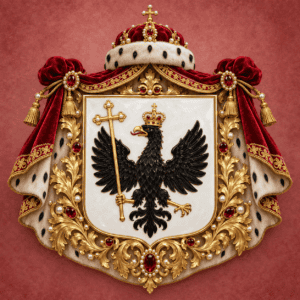
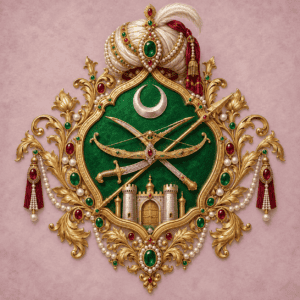
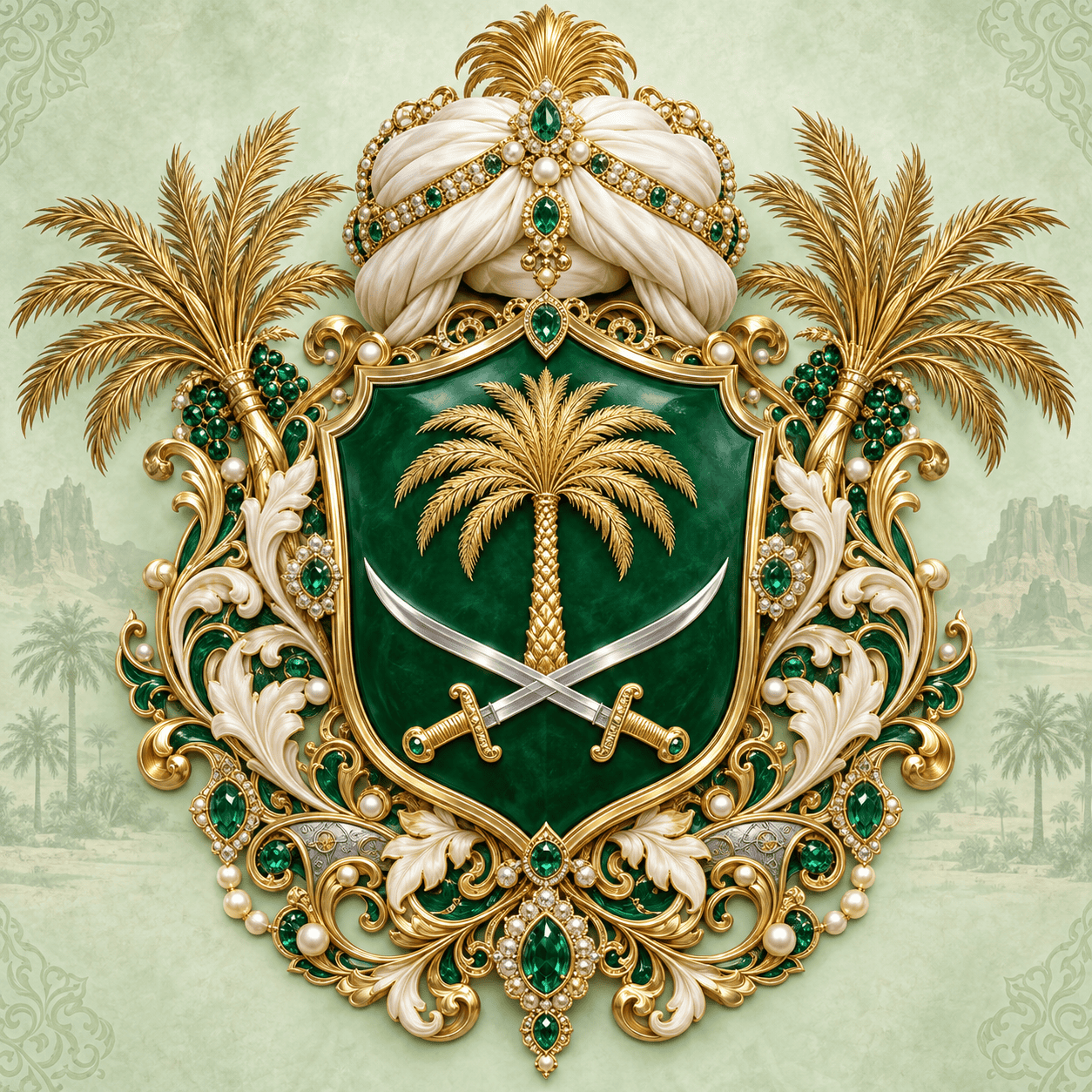
Emir of Nadschd family coat of arms
The composition is attributed to the House of Saud and the Emirate of Najd. Palm trees and crossed Arab swords draw on the dynastic and later state symbolism of Saudi Arabia.
In emerald green, with two crossed silver Arabic sabers with golden handles, a golden date palm tree. Above the shield is a white-gold Emir rank insignia.
In 1727, Muhammad ibn Saud founded the first Saudi state in Diriyya. His descendants again ruled the second Saudi state and, under Abd al-Aziz ibn Saud, united Nadschd with other territories to form the Kingdom of Saudi Arabia, which was proclaimed in 1932.
Sources: Saudipedia, National Symbols of Saudi Arabia, King Abdulaziz Foundation for Research and Archives, UNESCO, At-Turaif District in ad-Dirʿiyah
Overview of your title package
What the title of nobility contains
Discover the fascination of historical noble titles. With each appointment, you receive a first-class package that perfectly combines tradition, personal recognition, and stylish representation:
Your certificate
Authentic design with a historic flair: For each region, we create a certificate of appointment in the distinctive, country-specific style – complete with the appropriate coat of arms of your chosen title.
Share this special moment: Upon request, you will receive a free partner certificate and certificates for your children, so that the whole family can participate in the tradition.
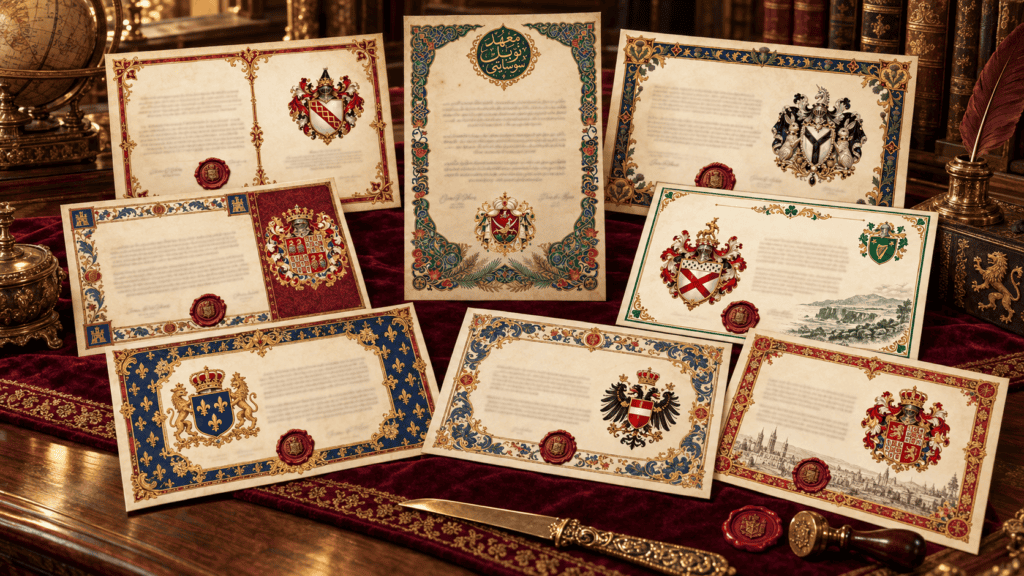
Your own coat of arms
Each title comes with the corresponding historical coat of arms, which you receive as a high-resolution file. You can use it completely freely in private and professional contexts – whether on letterhead, business cards, or seals.

The Companion Book
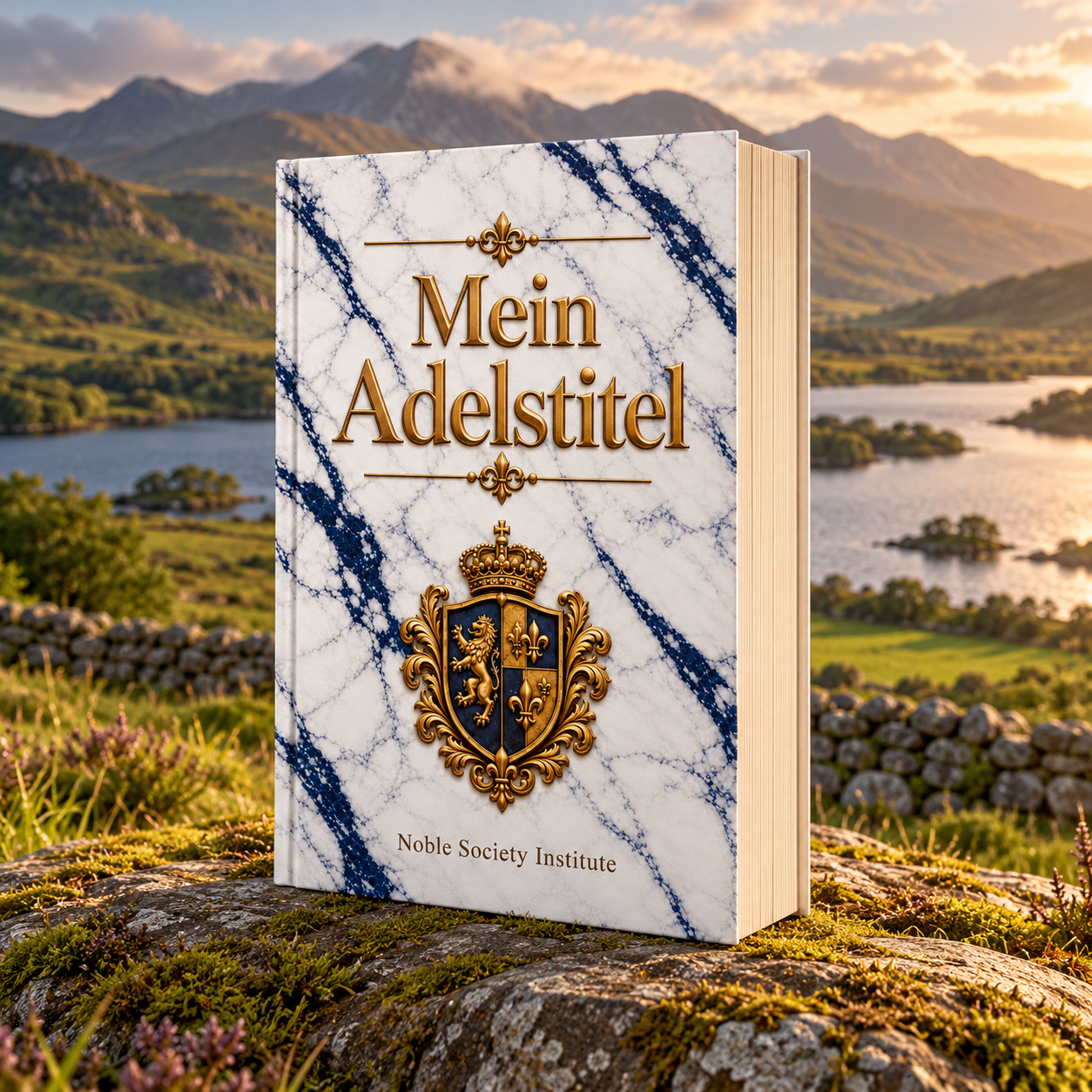
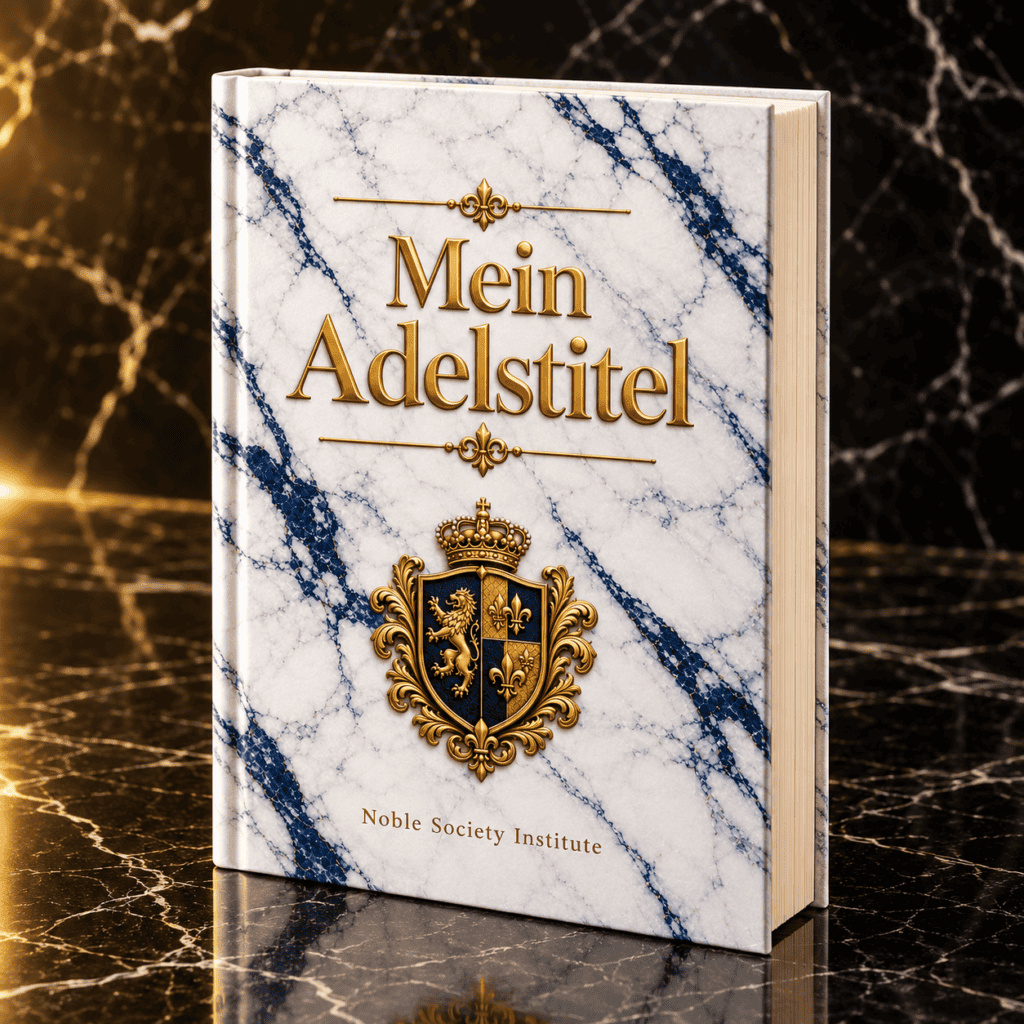
The book „My Title“ takes you in detail into the multifaceted world of your new aristocratic title and offers valuable practical tips for everyday life, stylish guidance, and background information on history.
Our accessories
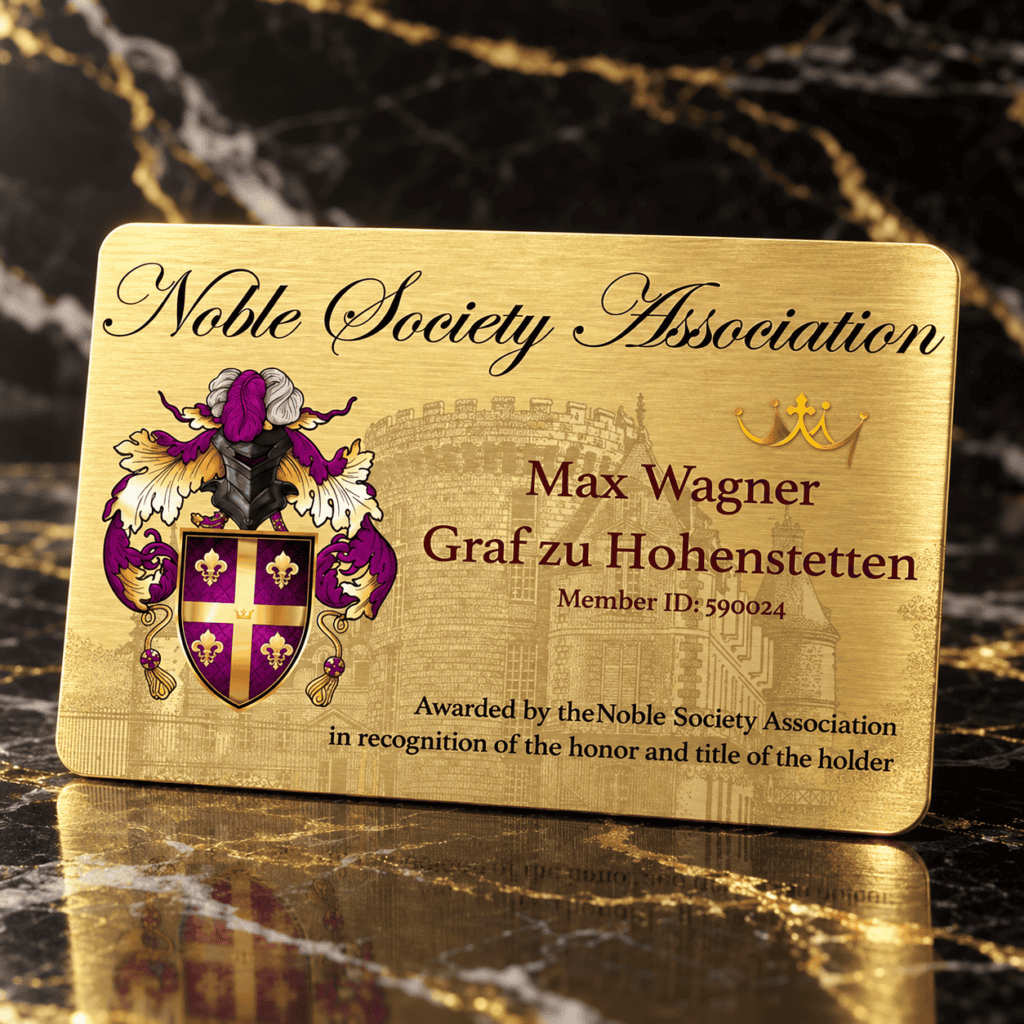
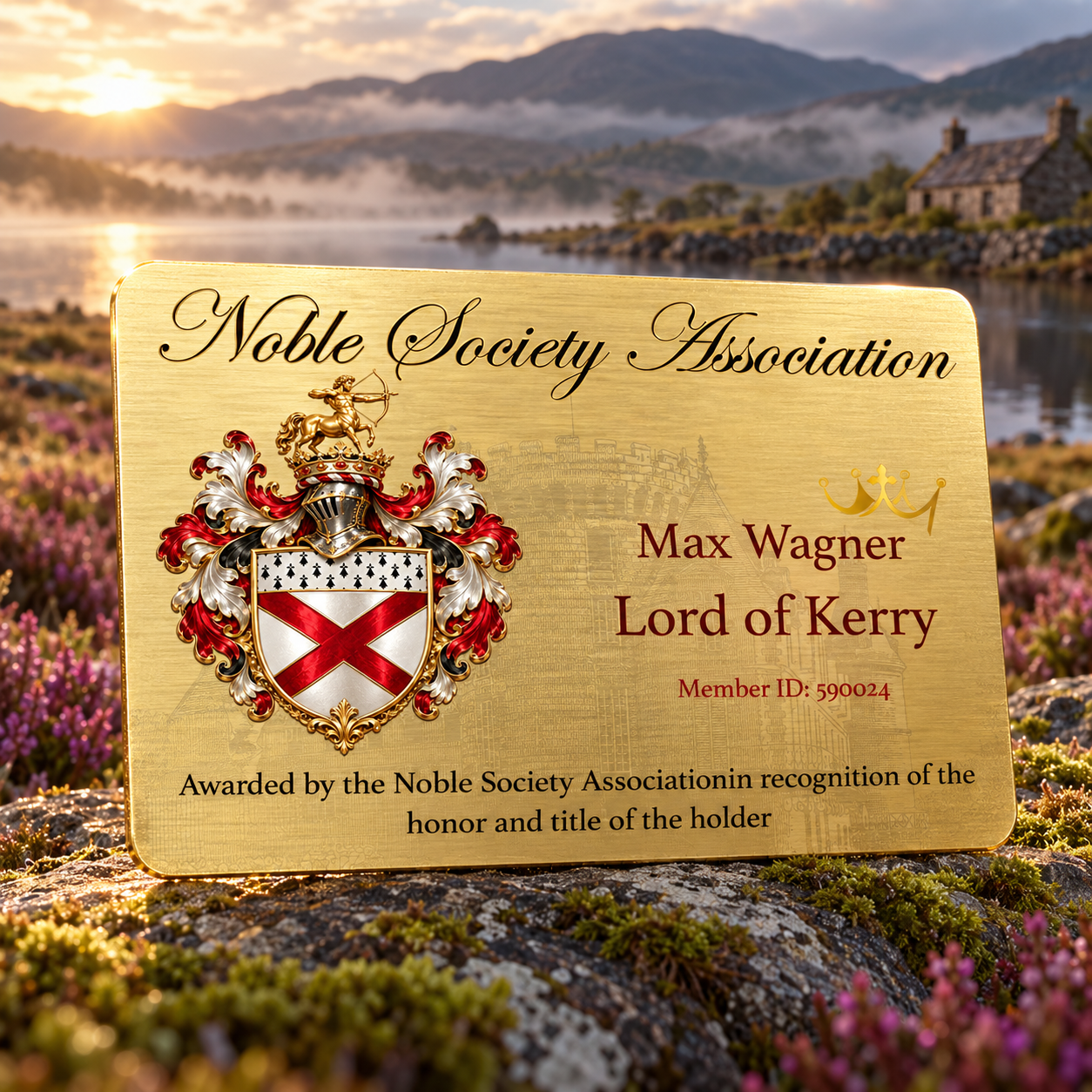
Golden ID Card
Crafted from premium aluminum in business card format, the gold ID Card makes your title look stylish and mobile.
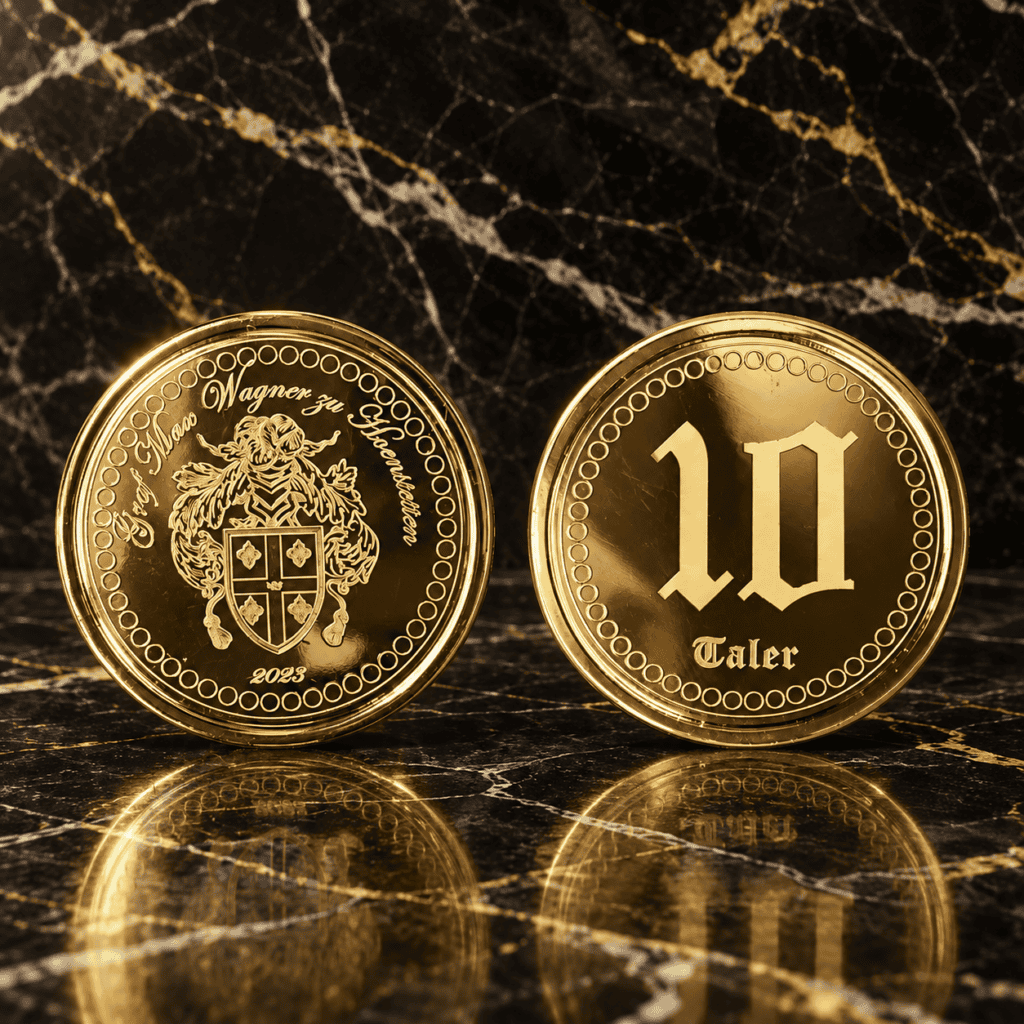
Gold coins
Fine gold and silver-plated medallions combine coats of arms, names and titles in a glossy, unique design.
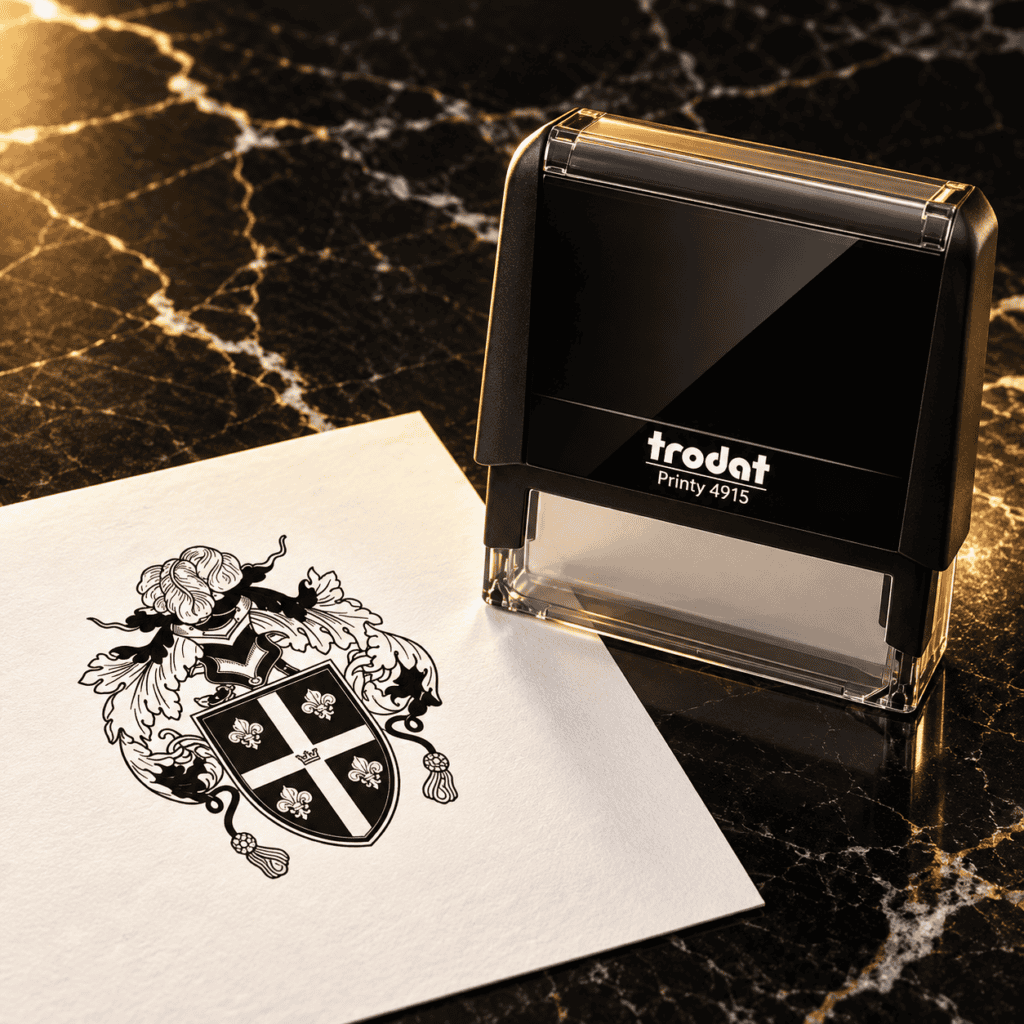
Emblem stamp
The self-inking stamp quickly, cleanly and precisely transfers your personal emblem onto letterhead paper.

My own wine
Choose fine red or white wine with an elegant, personalized label for a stylish look.

Wappen Gläser
The masterfully engraved wine glasses display their coat of arms, name and title in stunning brilliance.
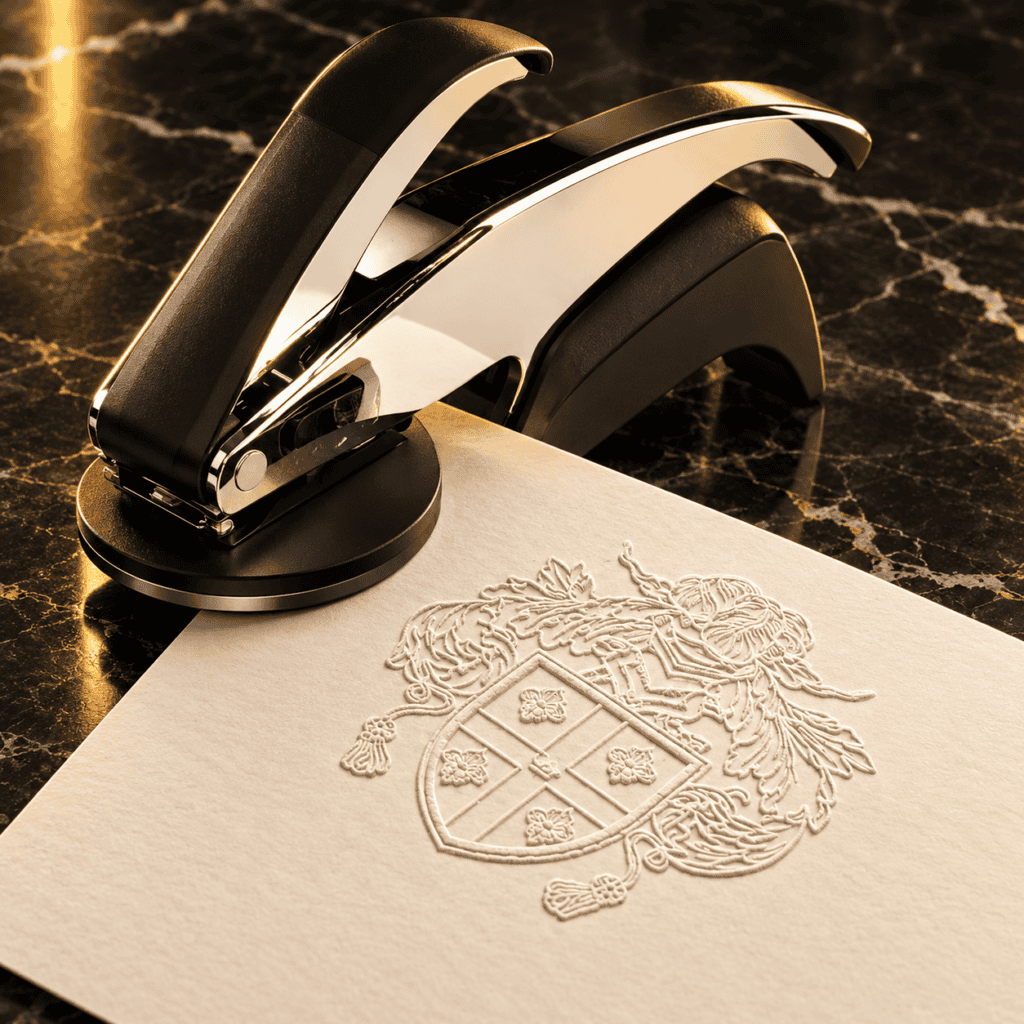
Precision pliers
The elegant embossing pliers embellishes letterheads or documents with a tactile, colourless relief embossing.
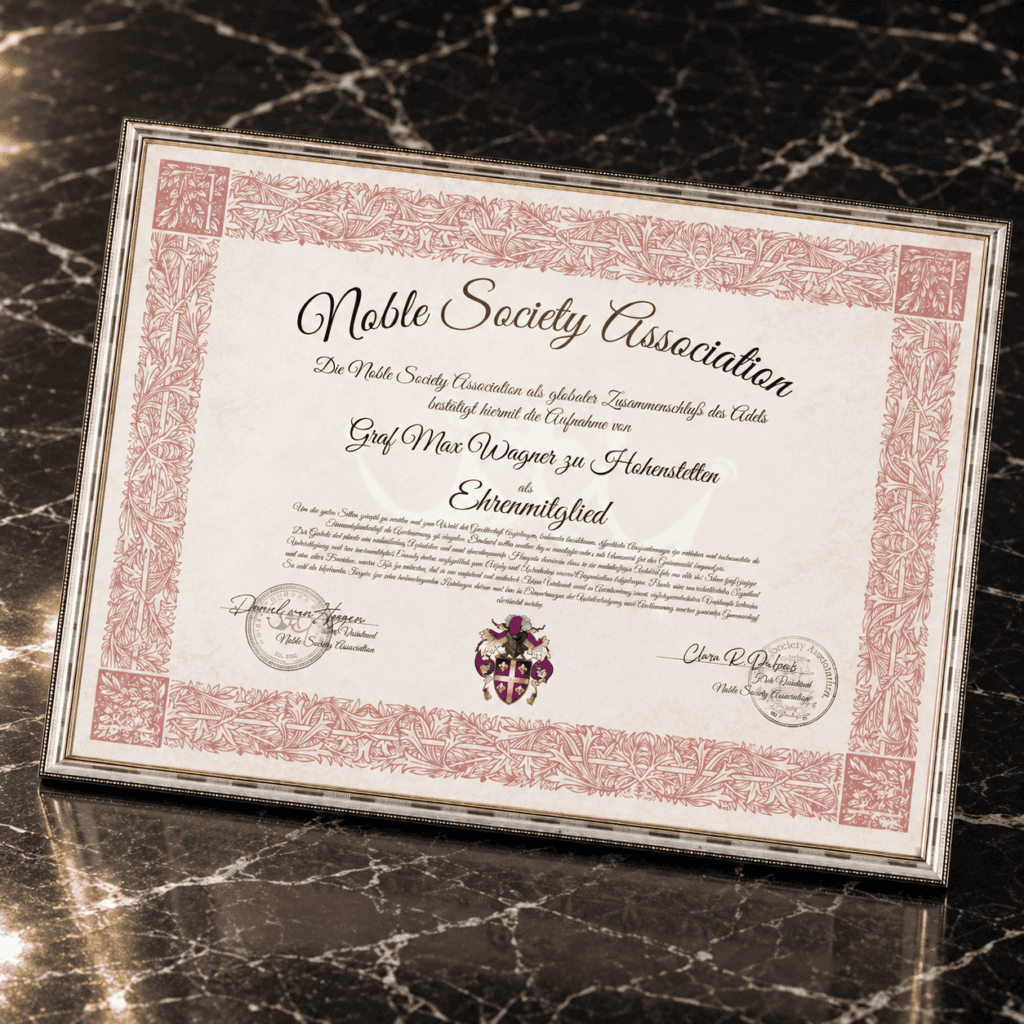
Honorary membership
Membership of the Noble Society Institute enriches your title with another dimension of exclusive representation. Validated by a magnificent certificate in your name, with no ongoing fees or obligations.